The former army chief has 28 days to build a coalition — and every route to a majority comes with a price.
Key Points
- President Isaac Herzog asked Gadi Eisenkot on Saturday to make the first attempt at forming Israel’s next government.
- Eisenkot won the backing of 67 lawmakers, against 46 for Prime Minister Benjamin Netanyahu. Seven backed neither man.
- He has 28 days to assemble a coalition, with a possible 14-day extension.
- The October 27 election left no bloc with a majority: Netanyahu’s bloc won 53 seats, Eisenkot’s won 48, and Arab-led parties won a record 19. Sixty-one seats are needed to govern.
- Eisenkot has ruled out bringing the Arab-led parties into government, leaving him three difficult paths to a majority.
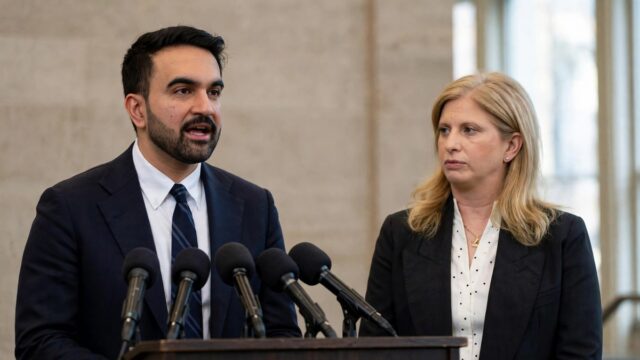
Israel’s president has asked opposition leader Gadi Eisenkot to form the country’s next government, handing Benjamin Netanyahu’s strongest rival the first chance to end the prime minister’s long rule after a deadlocked election.
What happened
President Isaac Herzog announced the decision on Saturday evening, after a week of talks with every party in the 120-seat Knesset. He spoke to both Netanyahu and Eisenkot before deciding. The mandate will be handed over formally at a ceremony at the President’s Residence in Jerusalem later on Sunday, at 5 p.m. local time.
During the consultations, 67 members of parliament recommended Eisenkot for the task, while 46 backed Netanyahu. Seven lawmakers endorsed no one. The count mattered because Herzog’s largely ceremonial role leaves him to judge who stands the best chance of putting a coalition together — and Eisenkot came out clearly ahead on recommendations.
One longtime Netanyahu ally stayed out of the count altogether. United Torah Judaism, an ultra-Orthodox party, declined to endorse either candidate, after the last coalition failed to keep ultra-Orthodox Israelis exempt from military service.
The election on October 27 produced a parliament split down the middle. Netanyahu’s Likud won 27 seats, the most of any single party, but his wider religious-nationalist bloc stopped at 53. Eisenkot’s Yashar party took 21 seats, and the four Jewish-led parties behind him hold 48 between them. Parties representing Israel’s Arab minority won a record 19 seats — 11 for the Joint List and eight for Ra’am — leaving both main camps short of the 61 needed for a majority.
Eisenkot answered the decision within hours. “Now is the time to form a national emergency government. I will do everything to ensure we are worthy,” he wrote on X.
Hours before Herzog’s announcement, Netanyahu had warned in a prerecorded video that a government leaning on Arab-led parties would “dismantle the state of Israel from within”.
Eisenkot, 66, is a former chief of staff of the Israel Defense Forces, a post he held from 2015 to 2019. The son of Moroccan immigrants, he would be the country’s first prime minister from the Mizrahi community, Jews whose roots lie in the Middle East and North Africa. He entered politics only in 2022, sat briefly in Netanyahu’s war cabinet after the Hamas attack of October 7, 2023, and launched his own party, Yashar, in September 2025. His son Gal, 25, was killed fighting in Gaza in December 2023, and two of his nephews were also killed in the war.
Why the Eisenkot mandate matters
This is the first time since the election that the opposition has held the initiative. Netanyahu, Israel’s longest-serving leader, is now fighting to keep a job he has held for most of the past 17 years, and his bloc lost its majority at the ballot box. But the 67 recommendations behind Eisenkot are not the same as a governing coalition — and that gap is the whole story.
Eisenkot has refused to bring the Arab-led parties into a government, even though their support is what pushed his recommendation count past Netanyahu’s. He has set conditions for working with them, including that they recognise Hamas as a terrorist organisation. His own terms for any partner are a Jewish and democratic state, the values of the Declaration of Independence, military service for all, and the dismantling of Hamas.
That leaves him three routes to 61 seats, and each one is hard. He could run a minority government that relies on Arab-led parties voting with him from outside the cabinet — 67 votes on paper, but dependent on parties outside the room. He could strike a deal with the two ultra-Orthodox parties, United Torah Judaism and Shas, which would give him exactly 61 — but that would mean compromise on the military-service exemptions he campaigned against. Or he could share power with Netanyahu’s Likud in a unity government of 75 seats — which would mean dropping the promise to remove Netanyahu that defined his campaign, and he has said he will not serve in a government with the prime minister. Analysts cited by Reuters say all three options are unlikely to come together.
Israel is not the only democracy wrestling with a hung parliament this month: New Zealand’s election also ended too close to call, with the final result there resting on special votes counted weeks later. In Israel, the deadlock has a sharper edge — three years of war have left the country deeply divided, and the president himself warned of “mutual vetoes between the blocs and within the blocs themselves”.
What happens next
Once Eisenkot formally accepts the mandate on Sunday, the clock starts. He has 28 days, until December 6, to present a government that can win a confidence vote in the Knesset. Herzog can grant him a further 14 days, taking the deadline to December 20. Israeli law also allows a government to take office with fewer than 61 seats if it wins that confidence vote.
If he cannot build a majority in that time, Herzog will turn to another candidate — most likely Netanyahu, who stays on as caretaker prime minister in the meantime. If a second nominee also fails, the Knesset itself can put forward a candidate for a final 14 days. Should every attempt fail, Israelis would vote again.
The first test will be whether the Arab-led parties accept an arrangement in which they support a government from outside it. The second will be whether the ultra-Orthodox parties move on conscription. And the third — the one nobody in Jerusalem rules out — is whether the unity option, unthinkable during the campaign, comes back into play if the other talks stall.
The negotiations also unfold against a tense regional backdrop, with fresh blasts reported on Iran’s Hormuz coast this weekend and the war in Gaza still shaping every political calculation in the country.
Sources: Reuters, Al Jazeera, Associated Press via The Indian Express, NDTV. Published: 8 November 2026, Kuala Lumpur time.