The United States has set up Task Force Iron Gate to choke off Iran’s land supply routes, extending a months-long sea blockade to the country’s borders and the Caspian Sea.
Key Points
- US Central Command announced Task Force Iron Gate on Saturday, 7 November, to disrupt Iran’s land-based supply routes.
- The team of about 20 military and civilian staff, based in Tampa, Florida, will target advanced weapons, dual-use technology, sanctioned materials and illicit revenue crossing Iran’s land borders and the Caspian Sea.
- Washington has also formally asked Iraq to close all but two of its border crossings with Iran.
- CENTCOM says its sea blockade has blocked more than $25 billion in Iranian crude oil exports, a figure that has not been confirmed by any outside source.
- Iran has warned of a devastating response if the United States starts a war, while Qatar is pressing for a deal to stop the slide back to full-scale fighting.
What happened
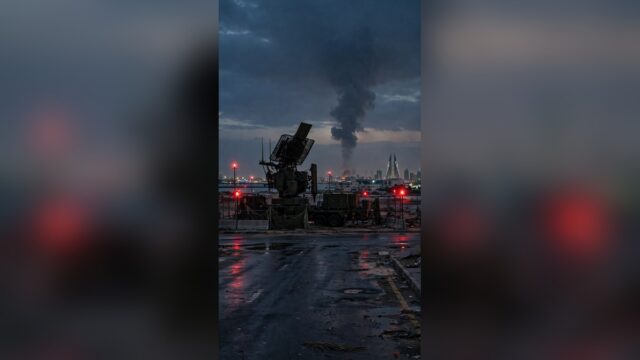
US Central Command, known as CENTCOM, said on Saturday that it had created a new task force to stop Iran moving advanced weapons and other restricted material over land. The unit, called Task Force Iron Gate, will be based in Tampa, Florida, and will work with other American government agencies to monitor, detect and disrupt the flow of weapons systems, dual-use technologies, sanctioned materials and illegal revenue across Iran’s land borders and the Caspian Sea.
CENTCOM commander Admiral Brad Cooper ordered the unit’s formation. “The establishment of Task Force Iron Gate reinforces the success of our ironclad blockade against Iran at sea,” Cooper said in the announcement.
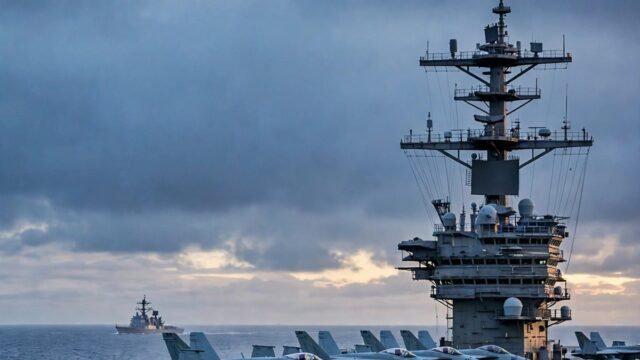
The move takes Washington’s pressure campaign ashore. Since July, American forces have enforced a naval blockade of Iranian ports, turning back ships bound for Iran and stopping vessels leaving them. CENTCOM said on Saturday that enforcement at sea had redirected 147 commercial vessels that complied with its orders and disabled five merchant ships that refused to do so.
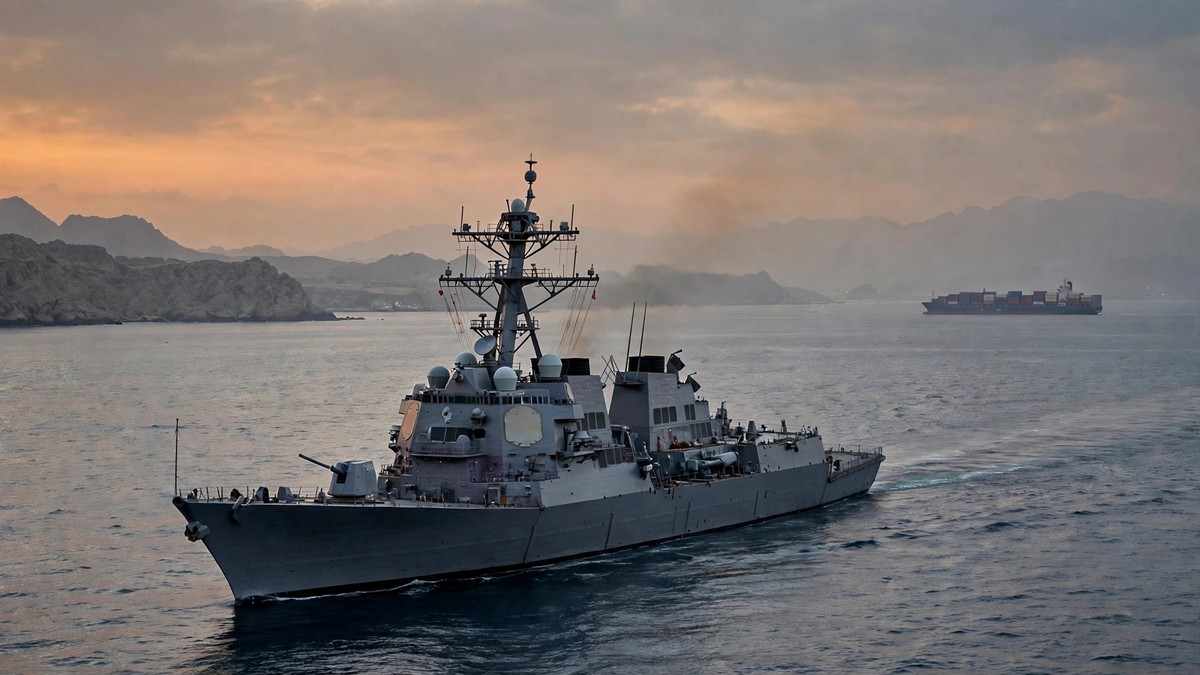
The same day, CENTCOM said its forces had disabled a commercial cargo vessel in the Gulf of Oman. The St Kitts-flagged M/V Huda had stopped at an Iranian port and then tried to leave regional waters, the command said. Its civilian crew ignored repeated warnings and tried to break the blockade, according to CENTCOM, and a US military aircraft fired precision munitions at the ship’s stern. The crew had been told to leave the targeted areas before the strike, CENTCOM said.
A graphic released with the announcement highlights Iran’s borders with Turkiye, Afghanistan, Turkmenistan and Pakistan. Pakistan shares a border of about 900 kilometres with Iran, with road links used for trade. CENTCOM described the new unit as an internal team rather than a fresh military deployment, and it announced no agreement with Islamabad.
Washington is also pressing Iran’s neighbours directly. Iraq’s Foreign Minister Fuad Hussein told Al Jazeera on Saturday that the United States had formally asked Baghdad to close all but two of its border crossings with Iran. An Iraqi official said Washington was threatening sanctions if Iraq did not comply.
Why it matters
The sea blockade has squeezed Iran’s oil trade, but it never closed every route into the country. Iran shares land borders with seven states and has a northern shore on the Caspian Sea, which connects it with Russia and countries in Central Asia and the Caucasus. Those roads and waters give Tehran ways around the ships patrolling its southern ports, and Washington now wants to close them too.
CENTCOM says its naval blockade has prevented Iran from exporting more than $25 billion worth of crude oil in recent months. That figure comes from CENTCOM itself and has not been confirmed by any outside source. Even so, the blockade has clearly bitten: the same command says it has turned back scores of vessels since July, and Iran’s own navy reported on Saturday that two oil tankers had struck mines near the Strait of Hormuz and caught fire.
Tehran is answering the pressure with warnings of its own. Iran’s top security official said on Saturday that the United States would face a devastating response if it started a war, days after Republicans lost control of both chambers of Congress in the midterm elections. The army said on the same day that its forces were stronger than when the war began, and that the Strait of Hormuz would stay closed until Washington accepted Tehran’s demands under a seven-day plan proposed in September and rejected by President Donald Trump.
Iran has also said it is lifting the self-imposed 2,000-kilometre limit on the range of its ballistic missiles, a step that would put more of the region within reach of its arsenal.
Michael Mulroy, a former US deputy assistant defence secretary for the Middle East, told Al Jazeera that Iron Gate builds on what he called Washington’s economic strangulation strategy. If Trump orders an escalation, Mulroy said, the targets would probably be economic and infrastructure sites rather than purely military ones, as part of a wider plan to cut off Tehran’s ability to fight and to fund itself.
The pressure is not only military. On Friday, the State Department’s Rewards for Justice programme offered up to $20 million, with possible relocation, for information about Iran’s nuclear programme, including its facilities, equipment and scientific staff. The offer came even as Trump has repeatedly claimed the programme was obliterated.
What happens next
Qatar, which has been mediating between Washington and Tehran, is urging both sides to step back. Its prime minister has warned against a new escalation and pressed for a good deal rather than a perfect one, as Qatari-mediated talks continue. For now, the talks have not produced an agreement, and each side is raising the cost of the other standing firm.
The test for Iron Gate will be whether it can actually stop goods moving across borders it does not control. The task force is a small coordination team, not a deployment of troops to the frontier, and its success depends on cooperation from Iran’s neighbours, several of which trade heavily with Tehran. Iraq’s answer to the demand to shut its crossings will be the first sign of how far that cooperation goes.
If the land squeeze works, it tightens the vise on Iran’s war economy. If it fails, or if Tehran answers with another strike, the confrontation that has already spread from the Strait of Hormuz to Qeshm Island, Riyadh and Mecca could widen further.
Sources: Al Jazeera, Reuters, Dawn, Gulf News, RFE/RL, Tribune. Published: 8 November 2026, 12:30 +08 (Asia/Kuala Lumpur). All figures attributed to the outlet or body that reported them; unconfirmed claims are labelled as such.