Iran’s Revolutionary Guard says its navy seized a US drone intact near the Strait of Hormuz on Monday, claiming electronic warfare forced the aircraft down south of Qeshm Island.
- Iran’s Revolutionary Guard Navy says it seized a US MQM-170 drone intact south of Qeshm Island on Monday morning, 16 November 2026.
- Tehran says electronic warfare took over the drone’s guidance and forced it to land without damage.
- Iran says it is the fourth drone of this type it has captured intact, and the eighth drone overall brought down in one piece near the strait.
- The United States has not commented on the new claim; the US military rejected an earlier Iranian drone-capture account this month.
- The claim comes as a third US aircraft carrier reaches the region and tanker attacks continue in the strait.
Iran’s Revolutionary Guard says its navy has seized an American military drone intact near the Strait of Hormuz, in the latest claim from Tehran in a fast-moving confrontation over the waterway.
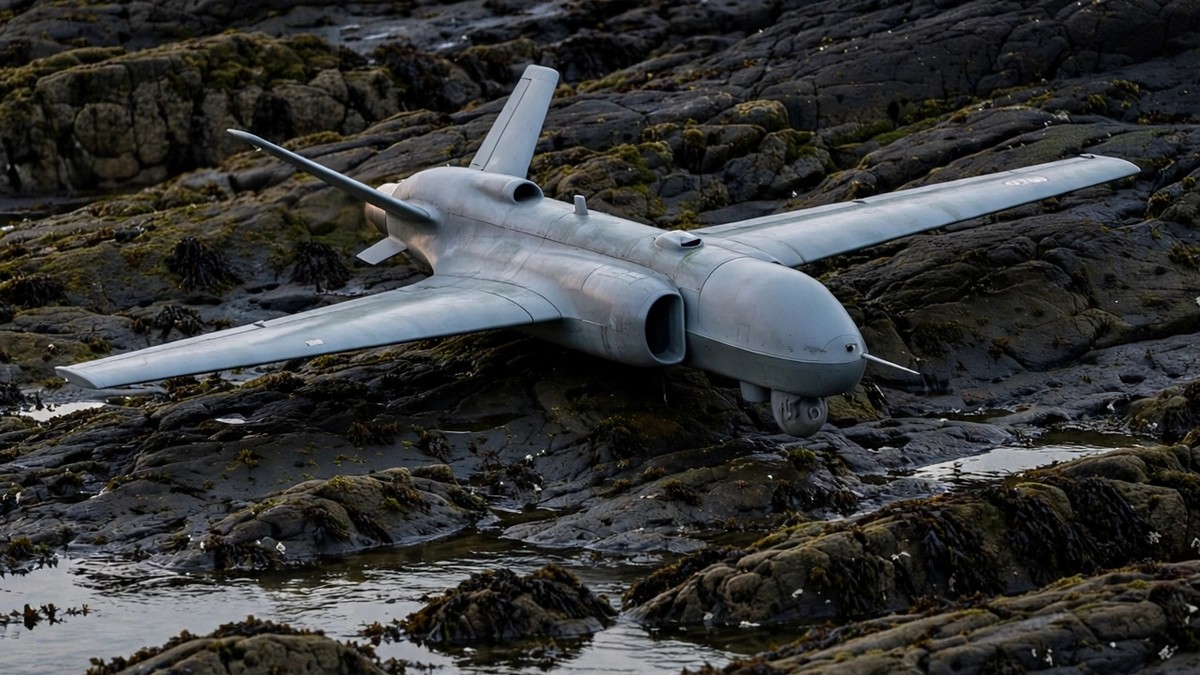
In a statement issued on Monday, the Guard’s navy said its forces took control of a US MQM-170 drone during an electronic warfare operation on Monday morning, south of Qeshm Island, and brought the aircraft down without damage. The drone had been flying in the area to track and identify Iranian air defence and electronic warfare systems, the statement said.
Tehran says the aircraft is the fourth of its type its electronic warfare and drone command has captured intact, and the eighth drone overall its air defences have brought down in one piece in the area around the strait. The Guard also said its forces had intercepted, destroyed or disabled other American drones, including MQ-9s, MQ-1s and LUCAS attack drones.
No American response has been reported. The United States has not commented on the new claim, and no outside source has confirmed it. Washington’s military rejected an earlier Iranian account of a drone capture this month, after Tehran said its Aerospace Force had grounded two more MQM-170 drones over southern Qeshm Island using electronic warfare systems.
What happened to the US drone
According to the Guard’s navy, the drone was operating south of Qeshm Island, Iran’s largest island, which sits along the northern approaches to the Strait of Hormuz. The statement said Iranian forces carried out a successful electronic attack against the aircraft, took over its guidance system, and then landed it safely on the ground.
The MQM-170 Outlaw, built by the American firm Griffon Aerospace, was designed mainly as an aerial target and decoy for testing air defence systems. It has also been flown on reconnaissance missions to probe Iranian defences along the Persian Gulf coast and the strait. Iranian officials say capturing such aircraft intact gives them useful intelligence on the other side’s equipment and methods.
The Guard’s navy told American commanders to stop repeating what it called baseless claims, to face the realities on the ground, and to respect Iran’s sovereignty over the strait.
Why it matters
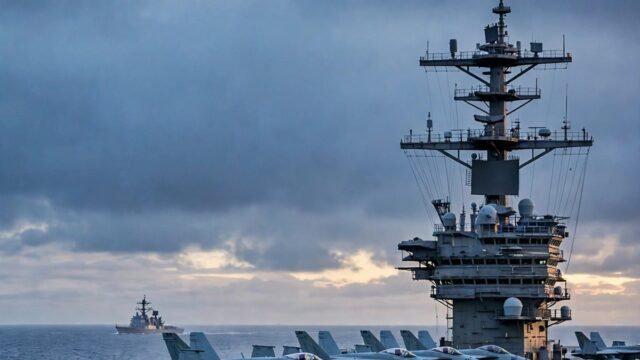
The claim lands in the middle of a sharp escalation around the strait, the narrow channel that carries about one-fifth of the world’s oil. A third US aircraft carrier, the USS Theodore Roosevelt, has just arrived in the region, joining two other carrier groups in the US Central Command area. Tehran says it will not wait for Washington to strike first, a warning its deputy foreign minister issued as the carrier arrived.
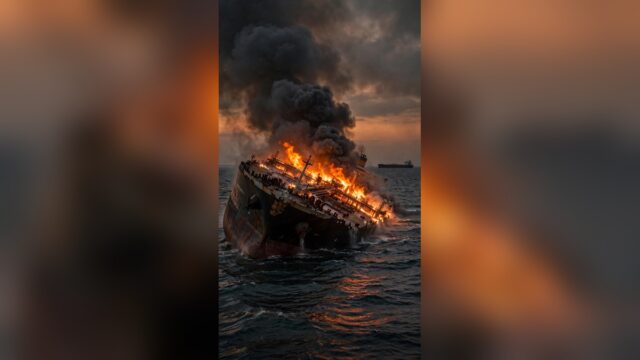
Shipping through the strait has come under sustained attack. Tehran says a supertanker carrying more than two million barrels of crude sank after hitting a naval mine on Sunday, and its navy reported another tanker catching fire after striking a mine east of the strait on Monday morning. Neither vessel has been named, and no outside source has confirmed the sinking.
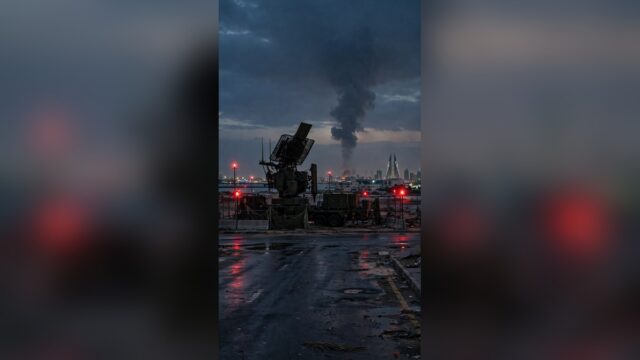
Iran has also claimed a second drone strike on a US radar at a base in Bahrain, and says its forces have struck back repeatedly since the war began in late February. Each new claim raises the stakes, because a captured American aircraft would hand Tehran both a propaganda win and a chance to study US systems — if the claim holds up.
The pattern of claims also matters. Tehran has announced drone captures several times in recent weeks. The United States pushed back on at least one earlier account, which means today’s claim will be judged against that record until Washington responds or evidence appears.
What happens next
The first test is whether the United States answers. A denial would put the claim in doubt, as it did with the earlier account. Silence would leave it standing as Tehran’s word alone. Either way, the Guard is likely to release images or video of the aircraft if it has the drone, as it has done with past captures.
The strait itself will stay tense. Iran has warned tanker owners and crews not to enter what it calls a restricted zone, and says vessels using routes it has not authorised face the same fate as the tankers it says were mined. Britain’s maritime trade office has confirmed at least one tanker was hit by an unknown projectile in the Gulf, and shipping has slowed through the channel.
Washington’s naval build-up points the other way. Three carrier groups and more than 20 surface warships are now enforcing a blockade of Iranian ports, and the US military says it has cleared mines from the main shipping routes. The two sides are testing each other daily — with drones, mines and warnings — and the next incident in the strait may not be far away.
Sources: Press TV, TRT World, Al Jazeera, IRNA, Mehr News, Anadolu Agency. Published 16 November 2026.