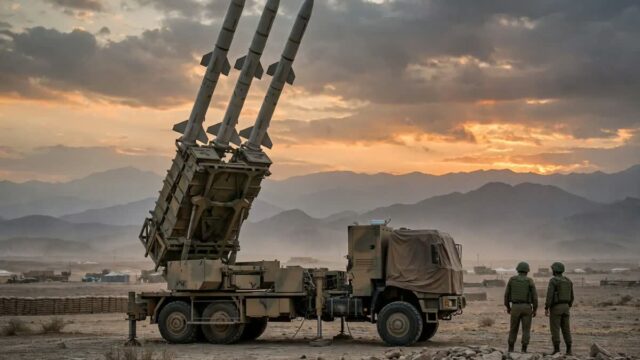
Donald Trump said on Friday that US forces had struck Iran again, taking out an air defence system on Qeshm Island, at the mouth of the Strait of Hormuz.
Key Points
- Donald Trump told reporters on Friday that American forces had struck an Iranian air defence system on Qeshm Island, in what he described as a small-scale operation.
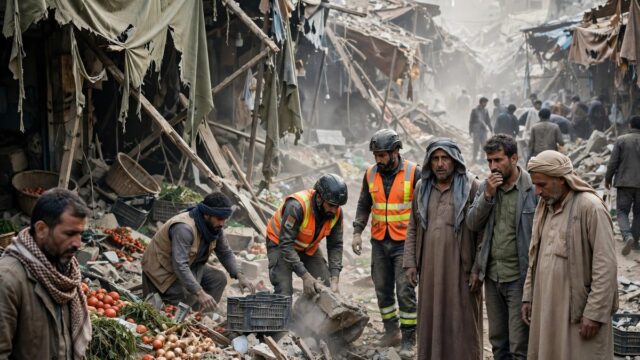
- State media in Iran said residents around Suza heard two blasts on Friday; Suza is a town on Qeshm Island, at the entrance to the Strait of Hormuz.
- Trump called the operation “minor”, saying the target was knocked out in about 15 minutes.
- Iran claims its air defences shot down a US MQ-9 drone over the island; the United States has not confirmed that claim.
- US Central Command offered a reward of up to $20 million for information about Iran’s nuclear programme, as Qatar pressed ahead with mediation.
What happened
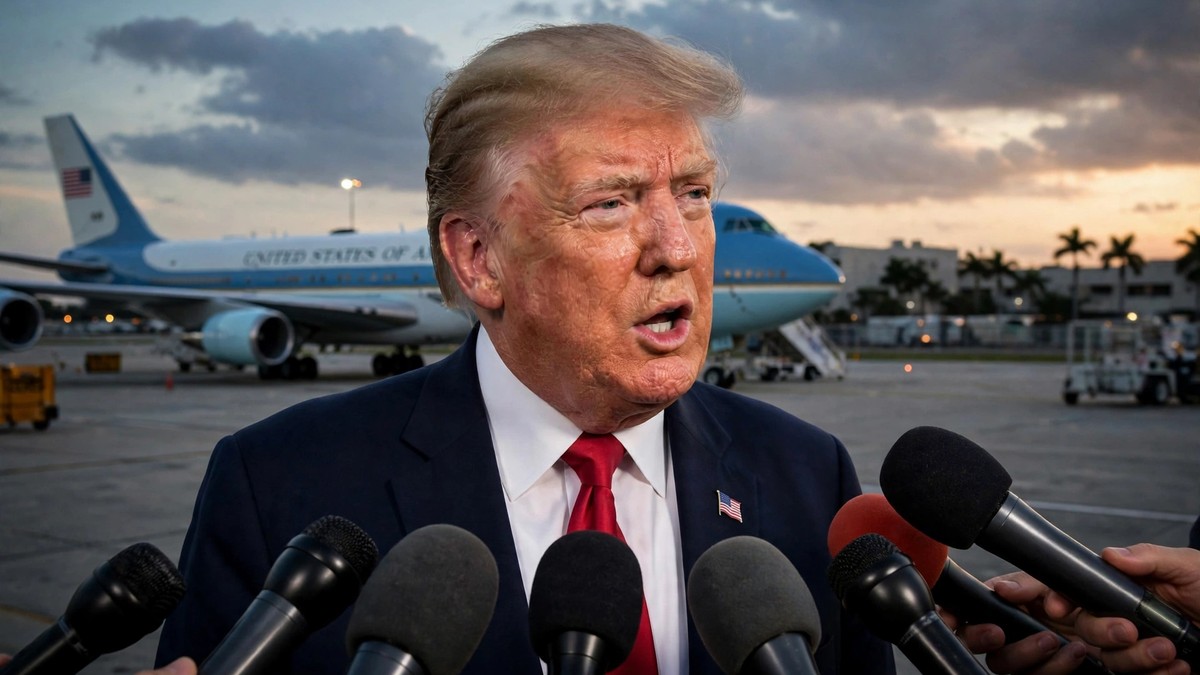
The president spoke to reporters on Friday evening, shortly after stepping off Air Force One in West Palm Beach, Florida. He said American forces had struck an Iranian air defence system and played down the scale of the operation.
“We do minor strikes,” Trump said. “They knocked out — they built a little bit of an anti-aircraft device and we knocked it out in about 15 minutes, maybe five.”
Iranian state media said two blasts had been heard around Suza, on Qeshm Island. The island guards the entrance to the Strait of Hormuz, the narrow waterway that carries roughly a fifth of the world’s seaborne oil and liquefied natural gas.
American officials say Israel’s June 2025 bombardment, followed by the opening phase of the present war, left most of Iran’s air defences destroyed or badly damaged — and Tehran has spent the months since trying to put them back together. Satellite images examined by BBC Verify show construction and digging at two major Iranian military sites, Garmdareh near Tehran and Shahroud in the north, with at least 12 other sites also showing signs of repair.
Why it matters
Friday’s action was the first American strike since Tuesday’s midterm elections, in which Republicans lost control of both chambers of Congress. Trump has said the war in part cost his party the election, blaming voter anger over fuel prices driven up by the conflict.
It was the second American attack on Iran in the same week. The US military said it carried out what it called defensive strikes on Monday, when explosions were heard on Qeshm and Hengam islands and near the mainland port of Bandar Abbas.
Iran’s state broadcaster said the country’s army claimed its air defences had intercepted and destroyed an American MQ-9 drone over Qeshm Island. The Revolutionary Guard had separately claimed on Friday that it destroyed a US MQ-1 drone over the island. Washington has confirmed neither claim. US Central Command described the situation around Qeshm as “relatively calm”.
Central Command put the offer out on X late on Friday: up to $20 million, plus possible relocation, for tips on Iran’s nuclear programme — its sites, its equipment, its scientists, or where any of those have moved. The announcement pointed readers to the State Department’s Rewards for Justice programme.
The nuclear question sits at the centre of the dispute. The International Atomic Energy Agency says Iran holds 440.9 kilograms of uranium enriched to 60 percent purity, a short technical step from the 90 percent level needed for a weapon. Tehran insists its nuclear work is for peaceful purposes only.
What happens next
The strikes came as Qatar stepped up efforts to bring Washington and Tehran toward negotiations. Two Middle East officials said Iran was reviewing proposals put forward by Qatar, the chief mediator, aimed at bridging the gap over the nuclear programme.
What the mediators sketched out was a two-day sequence of confidence-building steps. On day one, Washington would end its blockade of Iranian ports and hand back some of the billions in frozen Iranian money, while Tehran would open the bombed nuclear sites to inspectors from the International Atomic Energy Agency. On day two, Tehran would reopen the Strait of Hormuz under a revised arrangement worked out with Oman. Full talks on Iran’s stockpile of highly enriched uranium would follow.
Tehran, meanwhile, is not ready to talk about its atomic programme until Washington meets a list of demands: the blockade ends, sanctions are lifted, frozen assets are returned, war damage is paid for, and fighting stops across the region — including Israel’s operations in Lebanon.
Trump said on Friday that his administration was in contact with Tehran. “We are talking to Iran. We have been,” he said. “We’ve made a lot of progress with Iran.” On Saturday, Qatar dismissed reports that the talks had failed, saying mediation continues and both sides are still working toward an agreement.
The split inside the administration over what to do next remains open. Defence Secretary Pete Hegseth spoke on Friday with his Qatari counterpart about the latest developments, and Trump held a separate call with Qatar’s emir on easing tensions. Whether the next move is a deal or a bigger strike is still undecided.
Source: Associated Press, Al Jazeera, BBC Verify | 7 November 2026