Tehran says the nine-year-old ceiling is gone — but it has not yet shown a missile that can fly any further.
Key Points
- Iran’s Revolutionary Guard said on Saturday that the self-imposed 2,000km limit on its ballistic missile range “has been lifted”.
- The ceiling dated to 2017 and kept Europe out of reach; lifting it signals Tehran may build missiles that fly further.
- Spokesman Hossein Mohebbi gave no proof Iran already has such a missile, saying the Guard would “demonstrate these capabilities in practice”.
- The announcement came as the US confirmed fresh strikes on Qeshm Island and set up a task force to cut Iran’s land supply routes.
- Qatar is pressing a two-day plan to stop the fighting, while mediators warn the window for a deal is narrowing.
Iran has lifted the self-imposed 2,000-kilometre limit on its ballistic missiles, the Revolutionary Guard said on Saturday, raising the stakes in its eight-month war with the United States and Israel.
What happened
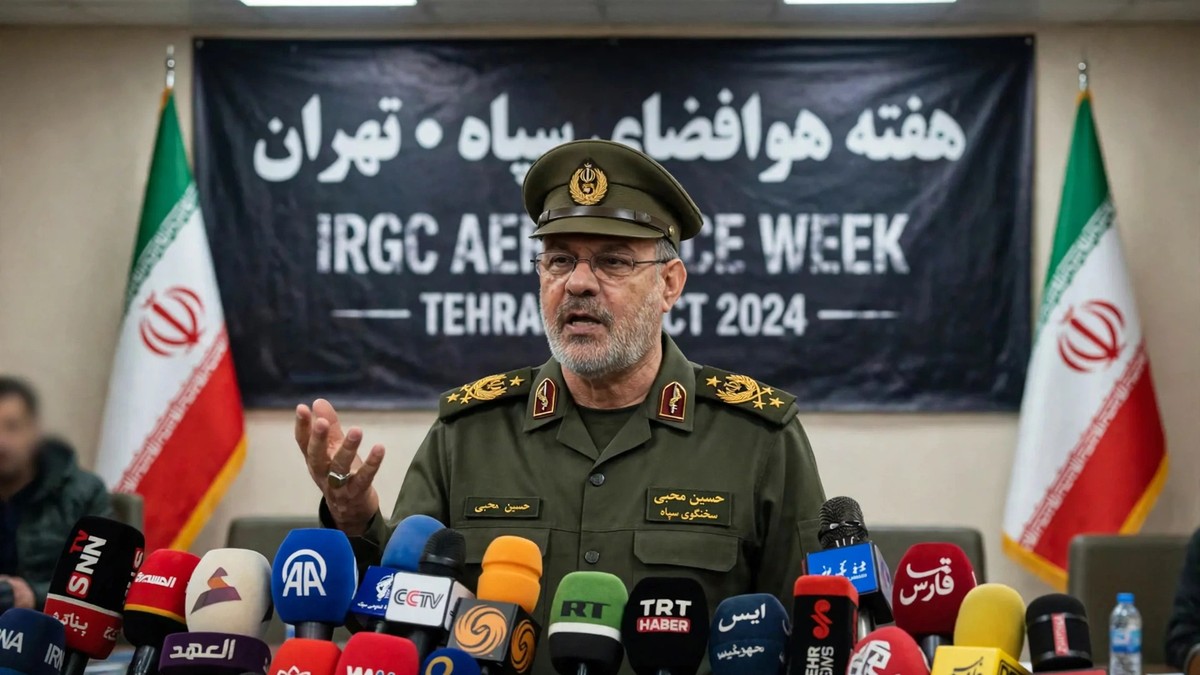
The announcement came from Brigadier General Hossein Mohebbi, spokesman for the Islamic Revolutionary Guard Corps, at a press conference in Tehran marking the Guard’s Aerospace Week. Asked whether the range limit still stood, he answered: “That restriction has been lifted for us.” He added that Iran would show what its missiles can do rather than only talk about it. “We will demonstrate these capabilities in practice,” he said.
The limit was set in 2017 under the former supreme leader, Ali Khamenei, and Iran’s foreign minister had described it as a deliberate ceiling. At 2,000 kilometres — about 1,200 miles — Iranian missiles can already reach the whole Arabian Peninsula, the Levant, most of Egypt and parts of Greece and the Balkans. Scrapping the cap opens the way, in principle, to weapons that reach deeper into Europe and across the Indian Ocean.
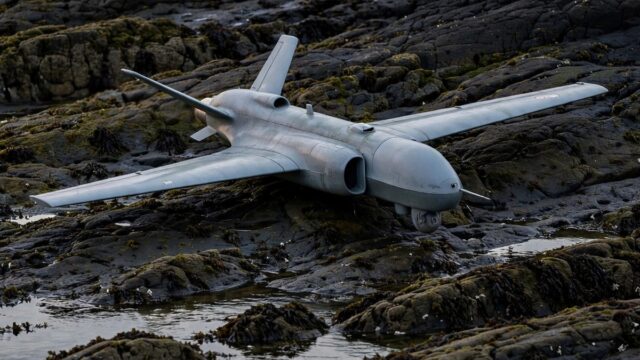
Mohebbi offered no evidence that such a missile exists yet. Iran is not known to have an operational ballistic missile that flies beyond 2,000 kilometres. Its longest declared system is the Khorramshahr-4, also called Kheibar, unveiled in 2023. In March, Iran reportedly tried and failed to strike the joint American-British base on Diego Garcia, in the Indian Ocean, some 4,000 kilometres away. American officials have said technology from Iran’s space programme could be adapted to build longer-range missiles.
Mohebbi also said the Guard’s aerospace division has moved missile and drone production underground, and that work to extend range never stops. “We are constantly improving the range of our missiles, and there is no pause in this work,” he said.
Why the missile range limit matters
The timing is the point. Days earlier, Supreme Leader Mojtaba Khamenei ordered Iran’s forces to answer any threat “without geographical limits” and to widen their target list to cover American and Israeli assets of every kind. The range announcement turns that order into a weapons programme: the next Iranian missile may be built to fly where the old ceiling said it would not.
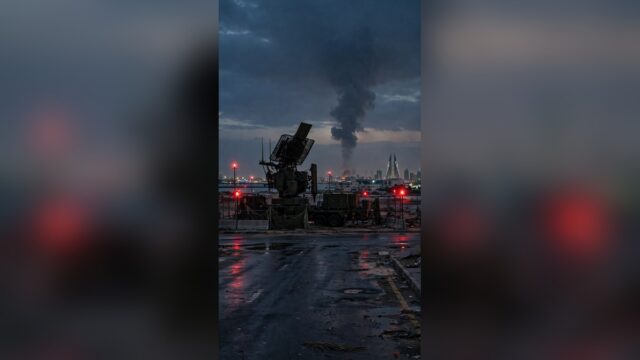
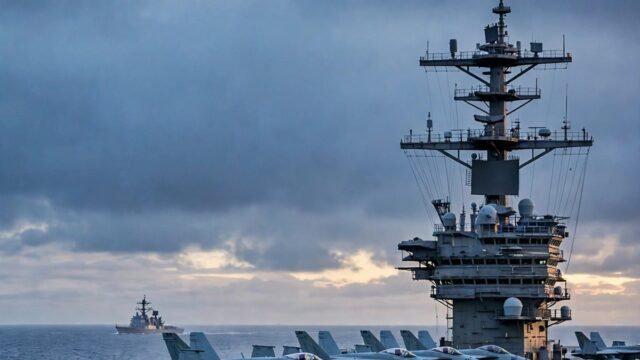
It landed on a crowded weekend. On Friday, President Donald Trump confirmed American forces carried out limited strikes on an Iranian air defence system on Qeshm Island, calling the operation “minor” and saying it took out “a little bit of an anti-aircraft device”. On Saturday, US Central Command announced Task Force Iron Gate, a team of about 20 civilian and military staff in Tampa, Florida, to disrupt weapons, dual-use technology, sanctioned goods and illicit money moving across Iran’s land borders and the Caspian Sea. A Reuters investigation found Iran has built a secret network that imported at least $2 billion in hardware, explosives and heavy-duty trucks since January 2025 — by ship across the Caspian from Russia, by truck from Central Asia and by cargo plane from China.
The same day brought more fire: explosions were heard in four places on Iran’s Hormuz coast, two oil tankers were reported to have hit mines near the strait, and a US aircraft fired on the St. Kitts-flagged cargo ship M/V Huda in the Gulf of Oman, leaving it unable to move. The Houthis in Yemen said they launched six missile and drone attacks on Saudi targets, including Aramco sites and Riyadh’s airport, as Saudi defences downed a cruise missile over Riyadh. None of this means a longer-range Iranian missile exists today. The announcement is a statement of intent, not a test flight, and no launch beyond 2,000 kilometres has been shown or announced. But it removes the last restraint Tehran had placed on its own arsenal, and it puts Europe on notice that the next missile Iran builds may be designed to reach it. Central Command says its sea blockade has stopped more than $25 billion in Iranian oil exports, a figure that has not been confirmed by any outside source.
What happens next
Attention now turns to Washington. NBC News reported that advisers told Trump days before the midterm elections that if he wants to resume major combat operations, he should do so before the new Congress is sworn in in January, because the incoming Democratic majorities could hamper operations through investigations and budget cuts. Trump has not decided, and the Pentagon declined to comment.
Diplomacy is still moving. Qatar is pressing a two-day proposal under which the US would lift the blockade and release some frozen Iranian assets while Iran lets nuclear inspectors back into bombed sites and reopens the strait under a temporary arrangement. Treasury Secretary Scott Bessent has asked China to use its influence with Tehran, according to Washington Post columnist David Ignatius, and Foreign Minister Abbas Araghchi says he has spoken with 12 foreign ministers in 48 hours.
Three things will show which way this goes: whether Iran tests a missile beyond the old limit, whether Washington answers the Qatari plan, and whether the blasts on Iran’s coast — still unexplained — are followed by more. Until then, the facts are narrow: a limit has been lifted on paper, no new missile has been shown, and both sides are still shooting.
Sources: Associated Press, Times of Israel, Gulf News, Times of India, Dawn, Reuters. Published: 8 November 2026, Kuala Lumpur time. The missile-range announcement is the Revolutionary Guard’s statement; no missile beyond 2,000km has been shown or confirmed by any outside source.