President Donald Trump has broken his silence on the FAA ground stop, blaming Joe Biden for the meltdown and demanding Congress fund an air traffic control rebuild, as Democrats hit back at the $50bn demand.
KEY POINTS
- Trump posted on Truth Social on Sunday after two days without a statement of his own, blaming the Biden administration and pressing Congress for one large funding package.
- Transport Secretary Sean Duffy lifted the upgrade request from $30bn to $50bn on Friday.
- Democrats say $12bn was already approved and only a third of it has been spent, and they vow hearings into what went wrong.
- The stop was traced to a cable upgrade in Arkansas that set off a chain reaction at a facility in Texas.
- 1,460 flights were cancelled on Sunday morning, according to FlightAware, and travel was close to normal by Monday.
WHAT HAPPENED
For two days, the president made no public statement of his own about the stoppage that grounded flights across the United States on Friday afternoon. While stranded passengers filled airport terminals, his own posts covered other subjects. That changed on Sunday, when he turned on his predecessor.
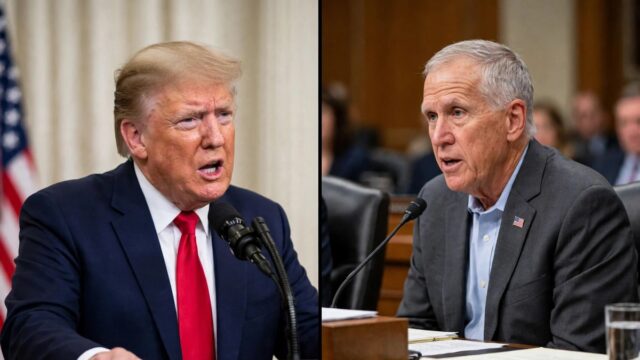
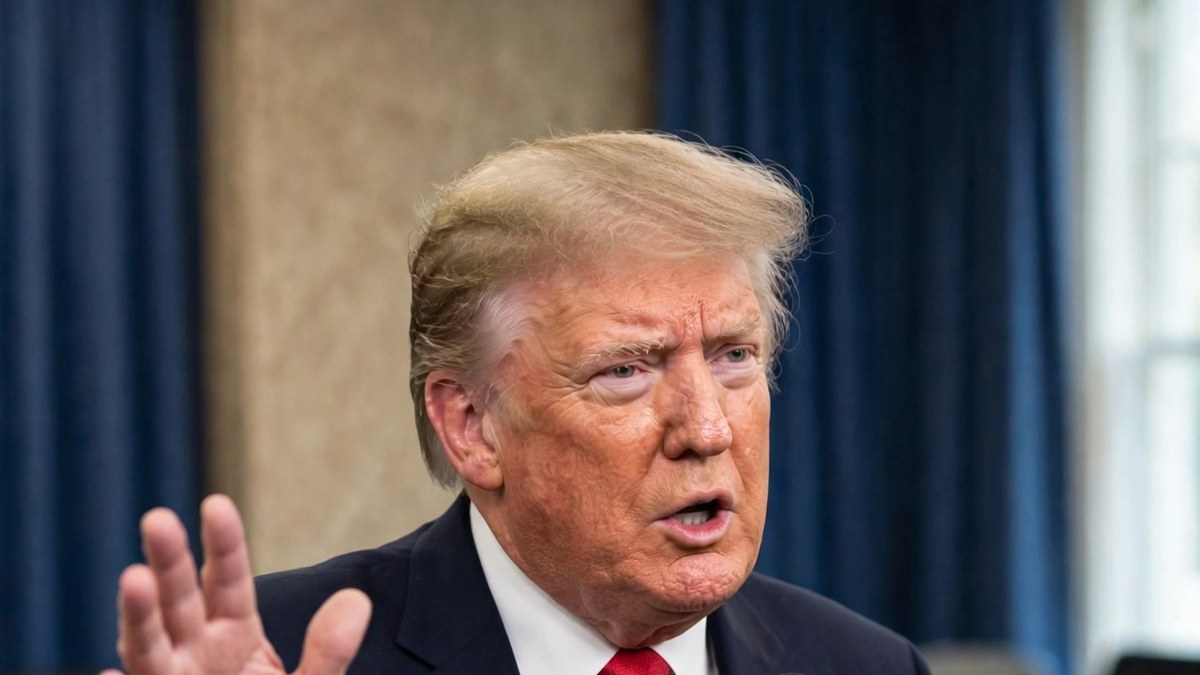
Writing on Truth Social, Trump called the Biden administration “an FAA disaster” and said it had made “an old and broken system worse than when they began”. He argued that Congress should approve the money for a new air traffic control system in one go, rather than in “drips and drabs”, and said the result could be “the BEST SYSTEM anywhere in the World”. He also noted that much of the current system is 50 years old.
His transport secretary, Sean Duffy, spent Sunday on the morning news programmes making the same case. Duffy said the system had seen no serious investment for decades and called it the worst-kept secret in Washington. He also said the country was safe in the air, and that flights should be back at full capacity by the end of Sunday and into Monday.
The cause, officials say, lies in the upgrade work itself. Contractor L3Harris was replacing old copper wire with fibre-optic cable at a site in El Dorado, Arkansas. When the wire was swapped and the router switched on, a fault surfaced at a facility in Amarillo, Texas, and the surge of data overwhelmed the wider network, forcing the nationwide halt. Duffy said the company had taken two routers from the Texas and Arkansas sites for deep diagnostic testing.
WHY THE FAA GROUND STOP BLAME GAME MATTERS
The row is about money, and about who carries the fault for a system both sides agree is old. Duffy raised his funding request from $30bn to $50bn on Friday, without setting out how the extra money would be spent. Congress approved $12.5bn for the Federal Aviation Administration last year as a down payment on a wider overhaul, but Duffy has repeatedly described that sum as only a start.
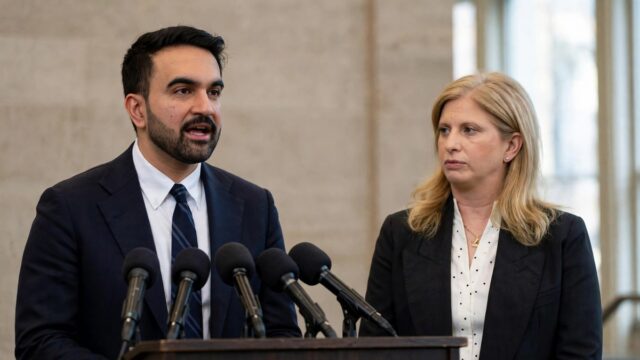
Democrats, who take control of Congress next year after their gains in the 3 November midterm elections, say there will be no blank cheque. Senator Chris Van Hollen, who is challenging Chuck Schumer for the party leadership, said it was “rich” for Duffy to ask for more when Congress had already handed the administration $12bn, of which he said only a third had been spent. “If they need more, they should come up and justify it,” he said.
Representative Jim Himes went further, arguing that the administration helped bring on the failure itself. He blamed Elon Musk’s cost-cutting drive, saying it forced 1,300 Federal Aviation Administration staff to retire or resign and sacked 400 probationary workers. Two Democrats due to chair transport panels next year, Rick Larsen and Andre Carson, said their committees would “hold the administration accountable for what happened to make sure this chaos does not happen again”.
The argument is not new. A Government Accountability Office report in September warned that the FAA had no lifecycle cost estimate or master schedule for its modernisation work, a gap it said could cause disruption or prolong reliance on outdated systems. Biden’s infrastructure law set aside $25bn for the FAA, covering airports, towers and terminals. Duffy himself has said the radar in use dates from the 1960s and 1970s, and other systems from the 1990s.
WHAT HAPPENS NEXT
The immediate crisis is easing. On Sunday morning, the flight tracker FlightAware counted 1,460 cancelled flights touching the United States. On Saturday, more than 6,400 flights were cancelled and over 8,000 delayed by 9:35 p.m. ET. By early Monday, travel was nearing normality, and Duffy said airlines should be running at full capacity.
The political fight is only starting. With the Thanksgiving travel surge approaching, Democrats are expected to use their new majority to demand a detailed spending plan before approving more money, while the administration presses for a single large package. Whether the two sides can agree on a fix for a system that has been flagged as outdated for decades will be one of the first tests of the new Congress.
SOURCE + TIME
Sources: CNN, Associated Press, Dawn, Khaleej Times | Published 16 Nov 2026, 16:52 +08. The cancellation figures are from FlightAware as reported on 15-16 Nov 2026. Claims by Van Hollen and Himes are their own statements, attributed in the text.