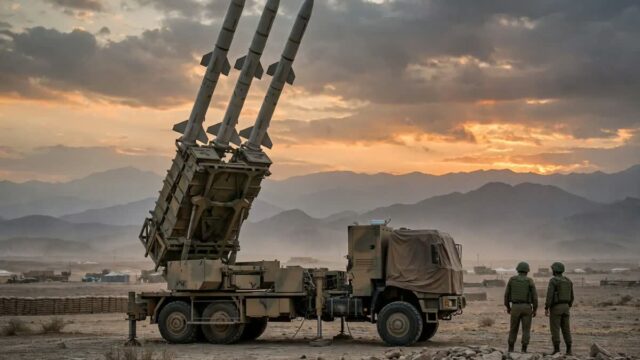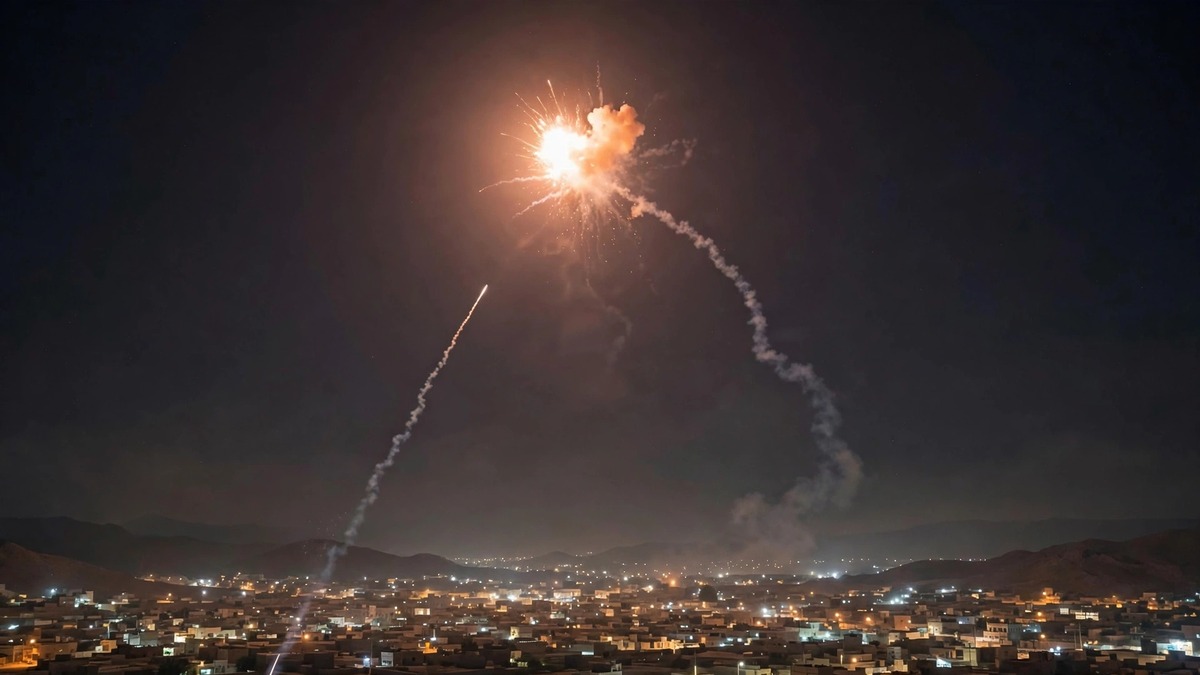
- Saudi-led coalition air defences intercepted and destroyed two Houthi ballistic missiles fired toward Najran province on Friday, 6 November 2026.
- Coalition spokesman Maj. Gen. Turki Al-Maliki said debris fell after the interception and damage was still being assessed.
- Saudi civil defence issued a danger warning for Najran, then lifted it shortly after.
- It is the second day in a row: on Thursday, the coalition said it downed a Houthi missile fired toward the Medina region.
- The Houthis have not claimed either launch, and no casualty figures have been released.
Saudi air defences intercepted two Houthi ballistic missiles over Najran on Friday, the Saudi-led coalition said, marking the second Saudi city targeted by Houthi missile fire in as many days.
What happened
The Saudi-led coalition said its air defences intercepted and destroyed two ballistic missiles fired toward Najran province in south-western Saudi Arabia on Friday, 6 November. Coalition spokesman Maj. Gen. Turki Al-Maliki announced the interception on social media, saying debris came down after the missiles were destroyed and that damage was still being assessed.
Saudi civil defence issued a danger warning for Najran as the interception unfolded, then lifted it shortly afterwards. No casualty figures or details of any damage on the ground have been released, and the Houthis have not claimed responsibility for either launch.
The Najran interception came a day after the coalition said it had downed a Houthi missile fired toward the Medina region on Thursday. Together, the two incidents mean Houthi missiles have now been aimed at two different Saudi cities on two consecutive days.
Why it matters
The back-to-back launches widen the geography of a war that has so far been centred on Iran and the Strait of Hormuz. Najran sits near Saudi Arabia’s southern border with Yemen, while Medina lies far to the north-west — the two targets are hundreds of kilometres apart, which suggests the Houthis are probing Saudi defences across a broad front rather than striking a single corridor.
The timing matters too. The launches come as shipping through the Strait of Hormuz thins out after a surge in attacks on tankers, and as Iran’s military leadership warns that it could act against more than one waterway. Our earlier reporting on the Hormuz shipping squeeze is here: https://worldpulsewire.com/2026/11/06/hormuz-attacks-surge-shipping-thins-out/ — and the Iranian warning about the two straits is here: https://worldpulsewire.com/2026/11/05/ghaani-warns-us-two-straits/
For Riyadh, the incidents are a reminder that the conflict can reach deep inside the kingdom even while the main confrontation plays out at sea and around Iran. For the Houthis, the unclaimed launches keep pressure on Saudi Arabia without a formal claim that would invite a direct response.
What happens next
Three things will show whether this is a one-off flare-up or a new phase. First, whether Saudi civil defence issues further warnings in the coming days, which would signal more launches are expected. Second, whether the Houthis break their silence and claim the missiles, which would turn an unclaimed incident into an open threat. Third, whether the coalition answers with strikes of its own — its past practice after Houthi missile fire has been to hit launch sites inside Yemen.
The damage assessment from Najran will also matter. If debris caused injuries or damage, the pressure on Riyadh to respond grows; if the interception was clean, both sides may let the incident pass. Either way, two cities in two days is a pattern now, and the region will be watching for a third.
Sources: Arab News, Reuters, CGTN, Gulf News. First published 6 November 2026, 18:30 +08.