Key Points
- President Donald Trump signed a proclamation on Thursday designating the Oval Office and the Cabinet Room as a national monument, placing them under the National Park Service.
- It was his first presidential action since Republicans lost control of both the House and the Senate in Tuesday’s midterm elections.
- Major changes to the rooms would need approval from Congress, and Trump said he will seek ratification of the designation.
- The order does not stop a future president from redecorating or changing the furnishings, and a successor could reverse the proclamation itself.
- Democrats mocked the move as Trump’s first act after the midterm rout being about his own redecoration of the office.
Donald Trump has declared the Oval Office a national monument, signing a proclamation on Thursday that would stop future presidents from making major changes to the historic room.
What happened: Trump moves to lock in his Oval Office redesign
President Donald Trump signed a proclamation on Thursday designating the Oval Office and the Cabinet Room as a national monument, in a move he said would protect the historic White House rooms from being torn down or substantially altered by future presidents. The proclamation, titled “Establishment of the Oval Office National Monument”, invokes the Antiquities Act and covers the Oval Office, the Outer Oval Office and the Cabinet Room. It directs the Interior Department, through the National Park Service, to draw up a preservation plan and require documentation and review before any substantial alteration or demolition of the protected spaces.
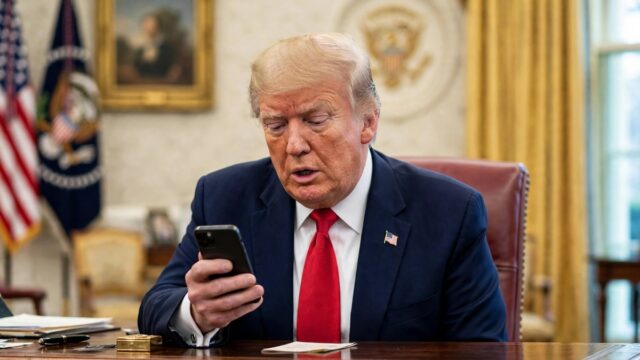
“So we’re making it a national monument, and it will not be allowed to be touched by anybody, destroyed, ripped down by stupid people, in order to build something in a slightly different shape,” Trump said at the signing ceremony in the Oval Office, with a red cap reading VETO sitting on his desk. “It’ll make it impossible for anybody to ever destroy this incredible space.” He added that if anyone ever tried to knock down the walls, “you’ll call me wherever I may be, and I will come back here and I will make sure it never happens.”
The signing was Trump’s first presidential action since Republicans suffered sweeping defeats in Tuesday’s midterm elections, losing control of both chambers of Congress to the Democrats. It was also the third time this week he had used a public event to promote one of his personal building projects, after the approval of his 250-foot triumphal arch and the start of work on his White House ballroom.
Why it matters: a monument with limits — and a political message
The proclamation sounds sweeping, but its legal force is narrower than Trump’s words suggest. It does not prevent a future president from redecorating the rooms, choosing different furniture or making routine operational and security changes, so long as those do not substantially impair the rooms’ historic structure or architectural character. And because it is an executive action, a successor could reverse the proclamation itself — something Trump has done to national monument designations made by his own predecessors.
What it would do is raise the bar for structural change. Trump said major modifications would need approval from Congress, and he intends to send the designation to Congress to have it ratified. “So if they want to say ‘let’s not have Oval anymore, let’s make it square,’ what happens is they have to go back to Congress, and hopefully the Congress will be smart enough not to let that happen,” he said.
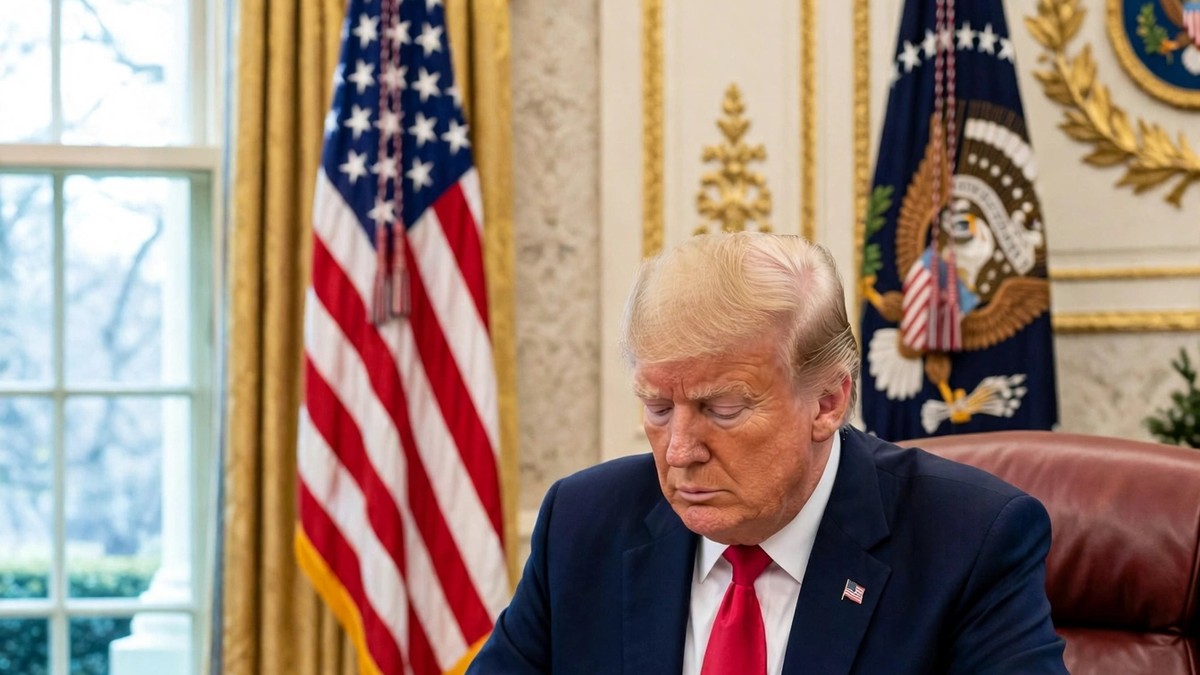
The move caps a year in which Trump has remade the White House in his own image since returning to office in January 2025. He has covered the Oval Office in gold accents, paved over the Rose Garden, torn down the East Wing to make way for a ballroom, and resurfaced the Lincoln Memorial Reflecting Pool. Democrats were quick to mock the timing. With the party reeling from its midterm losses, Trump’s first act was, in their telling, about his furniture — a line of attack that spread quickly online.
What happens next: Congress gets the final say
Trump said he will ask Congress to ratify the national monument designation, which would give it a permanence no executive action can provide. That puts the question in front of a Congress that will be controlled by Democrats from January, after their midterm sweep — a hard audience for a measure designed to lock in Trump’s own redesign.
Even without ratification, the proclamation takes effect immediately, with the Interior Department now required to produce a management plan for the rooms. Whether the designation survives the next presidency will depend on Trump’s successor — and on whether Congress, now in Democratic hands, chooses to endorse it, ignore it, or overturn it.
Sources: Reuters / USA Today | 6 Nov 2026. The proclamation was signed on Thursday 5 November 2026 (US time), two days after the midterm elections.