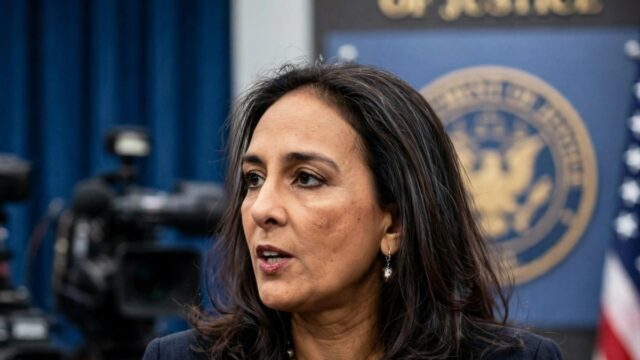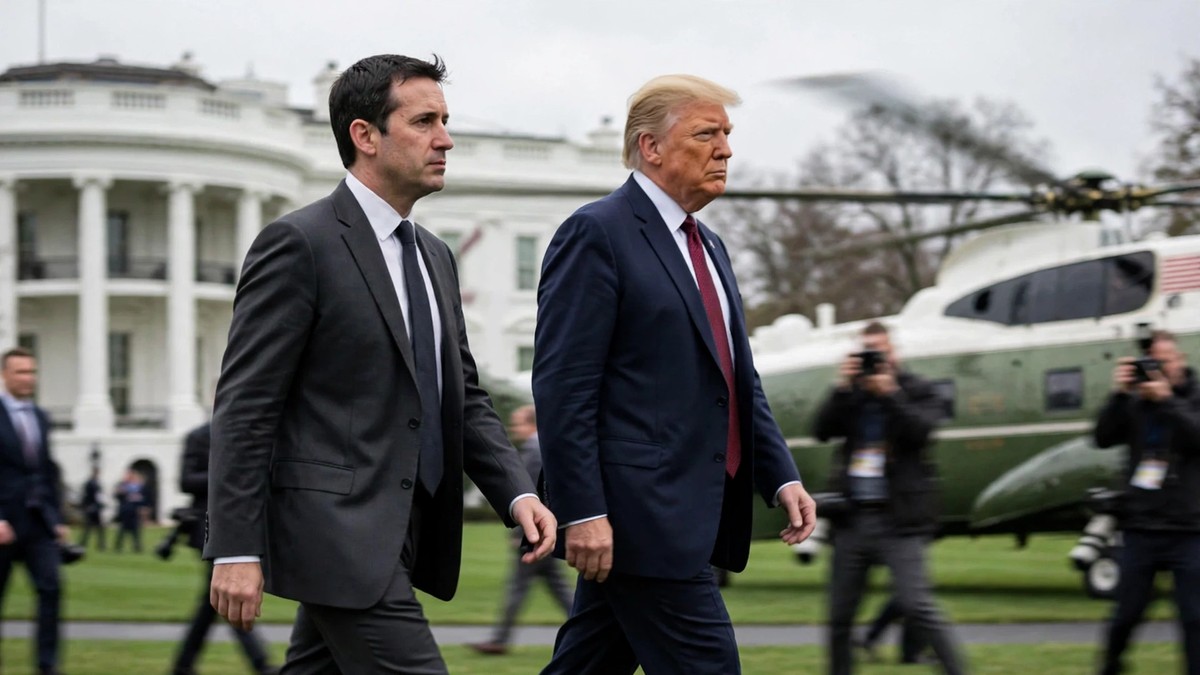
Donald Trump has named Stephen Miller, the architect of his immigration crackdown, as White House chief of staff, replacing Susie Wiles three days after Republicans lost control of Congress.
Key Points
- Donald Trump announced on Friday that Stephen Miller will replace Susie Wiles as White House chief of staff, starting Monday 9 November.
- Wiles, the first woman to hold the job, resigned on Thursday evening and will move to Trump’s political operation.
- Miller, 41, is the deputy chief of staff for policy and homeland security adviser who designed the administration’s immigration crackdown.
- The shake-up comes three days after Democrats won both chambers of Congress in the midterm elections.
- The incoming House Oversight chairman has already vowed to investigate Miller, telling him to “lawyer up”.
What happened
The announcement came on Friday afternoon, in a post Trump put up on Truth Social. “I am pleased to announce that Mr. Stephen Miller, the current Deputy Chief of Staff of the Trump Administration, and one of my most trusted advisors, will become the Chief of Staff starting Monday, November 9, 2026,” he wrote. In the same post, Trump praised Wiles, saying she “has done an outstanding job”, and said she is moving to the Trump Political Operation.
Wiles confirmed on X that Friday was her last day as chief of staff. “Serving President Trump in the White House has been the honour of a lifetime,” she wrote, adding that her commitment to the president “never will” change.
Wiles handed her resignation to Trump on Thursday evening, according to the Associated Press, CNN and The Wall Street Journal. Al Jazeera reported she gave it to him in the Oval Office. Asked by reporters on Friday why he made the change, Trump said: “Because I wanted to make a change… we’ve got to make moves. Sometimes in life you have to make moves.”
Why it matters
Wiles was the first woman ever to serve as White House chief of staff and the longest-serving chief of staff of Trump’s two terms — he went through four of them in his first term. She ran his 2024 campaign and was widely seen as the steady hand in the White House. She is 69 and stayed in the job while being treated for breast cancer, a diagnosis she made public in March 2026; she said in September she was cancer-free.
Her departure is the first big staff change since Tuesday’s midterm elections, in which Democrats took both chambers of Congress. The Wall Street Journal reported Republicans lost at least 41 House seats and at least seven Senate seats. Al Jazeera reported that, as of Friday, Democrats had won 253 of the 435 House seats, with 27 races still to be called.
Miller is the opposite of a steady-hand pick. He has been with Trump since the 2016 campaign, starting as a speechwriter, and became the driving force behind the administration’s immigration crackdown as deputy chief of staff for policy and homeland security adviser. He has pushed an expansive view of presidential power and, with budget director Russell Vought, spent months preparing executive actions Trump could take without Congress. Vice-President JD Vance has already blamed the Iran war for the losses.
Reaction
Democrats signalled a fight before Miller even starts. Robert Garcia of California, who is expected to lead the House Oversight Committee once Democrats take control in January, said the committee will look into Miller — and told him to “lawyer up”. In Garcia’s words, Miller was behind “the unconstitutional ICE raids that have terrorised our communities”.
Inside the White House, the move was welcomed by Trump’s loyalists. Communications director Steven Cheung called Miller a “Trump OG” on X, writing that “there is no bigger advocate for the Trump agenda than Stephen”.
What happens next
Miller takes over on Monday 9 November. It is not yet known who will take over his current duties as deputy chief of staff and homeland security adviser, or what his team will look like.
Democrats take control of the House and Senate in January, when their promised investigations into Miller can begin. The appointment is widely read as a sign Trump plans to spend his final two years doubling down on the policies voters rejected on Tuesday rather than seeking deals with the new Democratic majorities.
Sources: Reuters, Associated Press, Al Jazeera, CNN, The Wall Street Journal | 7 November 2026.