KEY POINTS:
- Harmeet Dhillon resigned as Assistant Attorney General for Civil Rights on Thursday 5 November, and Attorney General Todd Blanche announced he had accepted it.
- She is the first senior Trump administration official to leave since Democrats swept both chambers of Congress in the 3 November midterm elections.
- Dhillon says the decision was her own: she told White House chief of staff Susie Wiles about three weeks before Election Day and was asked to wait until after the vote.
- She led the Civil Rights Division for about 18 months after being confirmed in April 2025, and says she will return to private legal practice.
- More than three-quarters of the division’s staff at the start of President Trump’s second term have since left, according to the Associated Press.
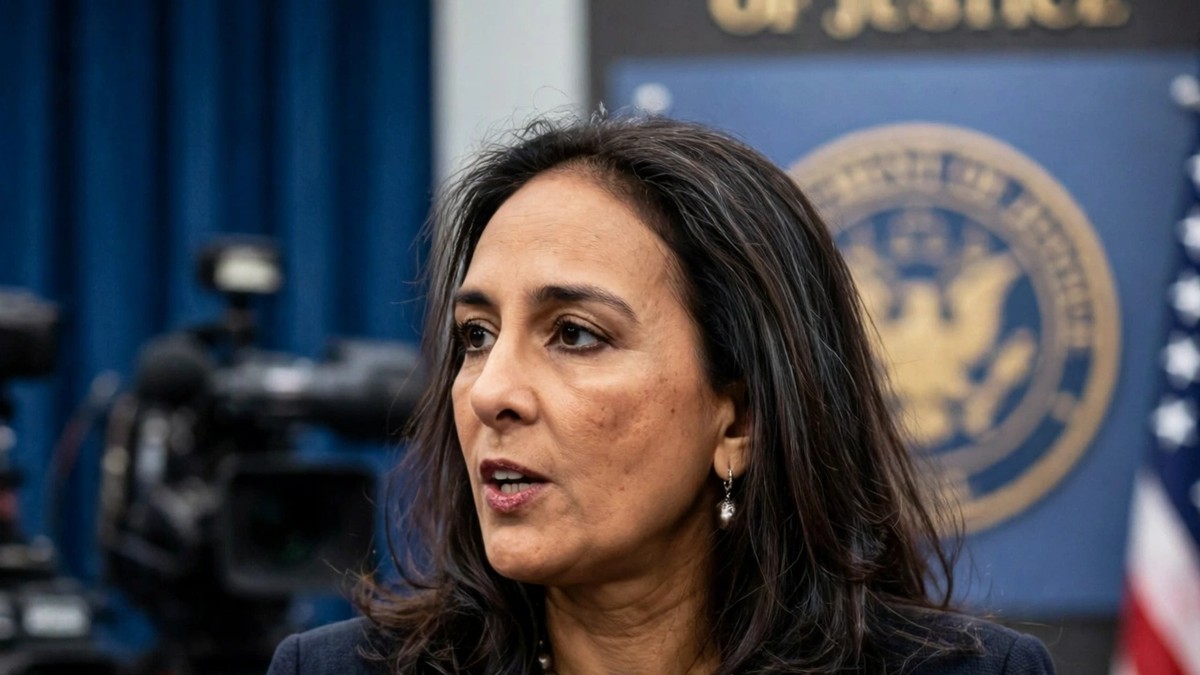
Harmeet Dhillon has resigned as head of the Justice Department’s Civil Rights Division, becoming the first senior Trump administration official to leave after the Democrats’ midterm sweep.
Republicans turn on Pete Hegseth after the midterm rout
Vance blames Iran war for Republican midterm losses
What happened: Dhillon quits as civil rights chief
Harmeet Dhillon, the assistant attorney general who led the Justice Department’s Civil Rights Division, resigned on Thursday 5 November. Attorney General Todd Blanche announced the departure in a post on X, saying he had accepted her resignation and praising her for leading the division “with conviction” over the past 18 months.
Dhillon is the first high-ranking official to leave the Trump administration since Tuesday’s midterm elections, in which Democrats won control of both the House of Representatives and the Senate. Her exit comes as the administration braces for a wave of congressional investigations into its conduct, including shootings by immigration agents and the Jeffrey Epstein files.
In her resignation letter to President Trump, Dhillon said she had told White House chief of staff Susie Wiles in early October that she planned to step down after the midterms. “I wasn’t asked to resign,” she told Fox News Digital. “I resigned three weeks ago, and Susie asked me to please wait until after the midterms.” She said she intends to return to private practice at her firm, the Dhillon Law Group.
Why it matters: a division transformed — and hollowed out
Dhillon, a longtime Trump ally whose law firm worked on the president’s campaign legal team, was confirmed to lead the Civil Rights Division in April 2025. Under her, the division’s enforcement priorities shifted sharply. It dropped proposed court-supervised agreements that would have put police reforms in Louisville and Minneapolis under federal oversight, and it brought lawsuits against top universities accused of fostering antisemitism on campus.
The division also ran the largest election-monitoring effort in the Justice Department’s history during the 2026 midterm elections, an operation that became the focus of a CBS News “60 Minutes” report in October. At the same time, more than three-quarters of the division’s lawyers at the start of President Trump’s second term have left, the Associated Press reported, leaving a much smaller staff to carry out its work.
Critics say the division walked away from its core mission under Dhillon. Kristen Clarke, general counsel of the NAACP and a former head of the division, accused her of abandoning major civil rights cases. Blanche, by contrast, said she had “defended the civil liberties of every American and enforced the law without fear or favour.”
What happens next: a vacancy at a sensitive moment
The departure leaves a vacancy at the top of the division just as Democrats prepare to take control of the congressional committees that oversee the Justice Department. Those panels are expected to scrutinise the department’s actions closely, including its civil rights enforcement record and its handling of the election-monitoring programme.
No successor has been named. Whoever takes the job will inherit a division that is far smaller than the one Dhillon took over, and a docket of unfinished cases — including the university lawsuits and the abandoned police-reform agreements — that the next Congress is likely to examine in detail.
For the administration, the resignation is the first visible crack in the team since the midterm defeat. Whether more senior officials follow Dhillon out of the door in the coming weeks will be an early test of how the White House handles the loss of both chambers of Congress.
Sources: USA Today, Al Jazeera, Associated Press, New York Post | 6 November 2026