KEY POINTS:
- Republican Rep. Thomas Massie plans to force a House vote to impeach Defense Secretary Pete Hegseth when Congress returns next week.
- Several Republican sources told CNN they expect the impeachment measure to pass the House.
- Republicans blame Hegseth for persuading President Donald Trump to attack Iran with no exit strategy, a war they say cost them the midterm elections.
- Trump is standing by Hegseth, saying he is doing “a very good job” and calling the impeachment push “terrible”.
- Removing Hegseth from office would need a two-thirds vote in the Senate, where Republicans still hold the majority until January.
Defense Secretary Pete Hegseth faces a House impeachment vote as soon as next week, as Republicans blame him for persuading President Donald Trump into the Iran war that cost them the midterm elections.
What happened: Republicans turn on Hegseth after the rout
Republicans are moving swiftly to pin the blame for their crushing midterm defeat on Defense Secretary Pete Hegseth, and the House could vote as soon as next week on whether to impeach him.
Rep. Thomas Massie of Kentucky told CNN he plans to trigger a vote to impeach Hegseth when Congress returns next week, and multiple Republican sources said they expect the measure to pass. House Republicans are also expected to vote to directly repudiate the defense secretary in a matter of days.
Massie first introduced articles of impeachment against Hegseth on 15 September, in a 34-page resolution containing eight articles. The charges include waging the Iran war without congressional authorisation, disregarding congressional efforts to end the conflict, and failing to protect civilians. Massie has said the only contingency in which he will not reintroduce the articles is if Hegseth resigns.
Behind closed doors, Republican lawmakers argue that Hegseth, a vocal cheerleader for the war, played a chief role in convincing Trump to attack Iran with no exit strategy and no plan for managing the political fallout. They say he oversold the ability of the United States to win the conflict quickly and easily, and kept pushing for escalation even though continued bombing showed little sign of forcing Iran to surrender.
The war, which reports put at a cost of more than $47 billion to the United States, turned into a quagmire that worsened the affordability crisis and helped drive voters away from the Republican Party on 3 November. Vice President JD Vance said on Wednesday that “the reason we lost is the war”, though he did not blame any individual for it.
Sen. Thom Tillis of North Carolina said on CBS on Tuesday night that “Pete Hegseth has a reckoning”, blaming the defense chief for stalled Pentagon spending legislation.
Why it matters
Hegseth is being lined up as the fall guy for a defeat that party leaders are unwilling to pin on Trump himself. The knives-out campaign comes even though House and Senate Republican strategists privately acknowledge that the party’s problems extended far beyond the war, with losses comparable to 2008 that could take years to reverse.
Trump’s own confidence in Hegseth has not yet wavered. Two days ago he was in the room with him, telling him: “You’re my best guy. You’re the best guy I have,” according to White House officials. Pressed on Wednesday about Hegseth’s job, Trump said the defense secretary was doing “a very good job” and called the impeachment effort “terrible”. He also repeated that he would make the same decision on the war again: “If I had it to do again, I’d have to do it again.”
Trump may also feel he needs Hegseth in place if he chooses to order further strikes against Iran, and the Democrats’ new majority in the Senate would complicate confirming any replacement Cabinet appointee.
Hegseth himself has been defiant. A person close to him told CNN he still expects to stay in his role and is prepared to fight an impeachment effort. Chief Pentagon spokesman Sean Parnell said Hegseth “will not back down or be deterred by politicians seeking to score partisan points”, adding that he is “100% committed to leading the Department until the end of President Trump’s term in office”.
Democrats, who won control of both chambers of Congress on 3 November, are planning wide-ranging investigations into the Iran war once the new Congress convenes in January, and lawmakers are coalescing around Hegseth as their top target.
What happens next
The House vote comes next week, under the outgoing Republican-controlled Congress, which makes Republican support particularly important to the immediate effort. Massie intends to use a privileged resolution to refile the articles, forcing consideration, although lawmakers could vote to table the measure rather than vote directly on impeachment.
If the House does impeach Hegseth, removing him from office would require a two-thirds vote in the Senate, where Republicans retain their majority until the new Congress convenes in January. As of Wednesday, it was unclear whether Democrats would unite behind Massie’s resolution or how many Republicans would support it.
Even if the vote fails, the scrutiny will only grow. Democrats take control in January and plan public hearings in which Hegseth would have to defend every Pentagon decision in the war. One administration official told CNN: “I think he probably knows he’s dead but would like an exit sufficiently dramatic that it gives him a launching pad to run for POTUS.”
For now, the defense secretary who sold the war as quick and easy is fighting for his job — and the party that backed him is deciding whether he is the price of its defeat.
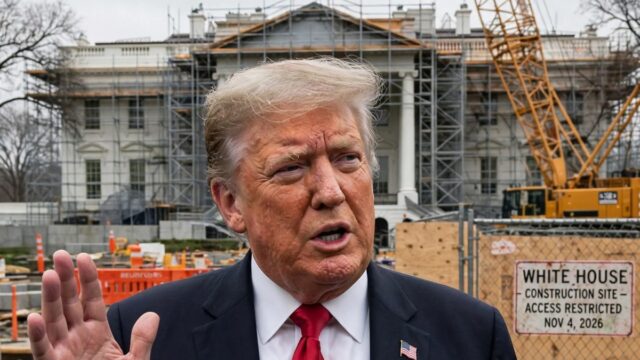
Sources: CNN (original report, 4 November 2026) and TRT World (independent report, 5 November 2026), with corroboration from The Statesman and The Washington Sun. Facts verified against the original report and one independent source. Image is AI-recreated, not the original photograph.