Key Points
- Google has made Gemini Omni 1.2 Flash generally available across the Gemini API and Gemini for business, the first time a model from the Omni family has reached full production status.
- Clips can now run up to 15 seconds, up from 10 seconds, with durations adjustable in one-second steps anywhere between 3 and 15 seconds.
- The price of 720p video generation falls 30% to $0.07 per second, and clips can be drafted at lower resolutions then upscaled to 1080p or 4K.
- Multi-turn conversational editing lets creators swap products, backgrounds, lighting or aspect ratio without regenerating the whole clip.
- The model is available in Flow, Google Vids, the Gemini app for AI Ultra subscribers and Google Ads, and every output carries an imperceptible SynthID watermark.
Google has made Gemini Omni 1.2 Flash generally available, giving creators and businesses 15-second AI video clips, conversational editing and a 30% price cut as the video-generation race heats up.
What happened: Google’s video model goes fully live
Google announced on 5 November that Gemini Omni 1.2 Flash is now generally available across the Gemini API and Gemini for business, the first time a model from the Omni family has reached full production status. The launch, announced by Google DeepMind product manager Anish Nangia, brings the model out of preview and backs it with Google Cloud’s enterprise infrastructure and security, including service-level agreements and Provisioned Throughput for high-volume customers.
The headline change is length. Gemini Omni 1.2 Flash can generate and edit video natively up to 15 seconds long, up from 10 seconds in version 1.1, with durations adjustable in one-second steps anywhere between 3 and 15 seconds. That is enough for a complete product explainer or a full social-media ad spot in a single generation, where creators previously had to stitch shorter clips together and manage the joins.
It is also cheaper. Google has cut the price of 720p video generation by 30% from the previous version, to $0.07 per second, and the workflow is designed to keep costs down further: creators can draft quickly at 360p or 720p, fix a detail with a follow-up edit instead of regenerating the whole clip, and then upscale their best work to 1080p or 4K.
The model is available to developers through the Gemini API and Google AI Studio, to businesses through the Google Cloud console, and to consumers through Google’s own products — scene direction and multi-turn edits in Flow, 15-second clips in Google Vids, video creation in the Gemini app for Google AI Ultra subscribers, and campaign creation in Google Ads. Google says anyone with a Google account can generate up to three 15-second videos a month in Google Vids at no cost.
Why it matters: editing in conversation, not from scratch
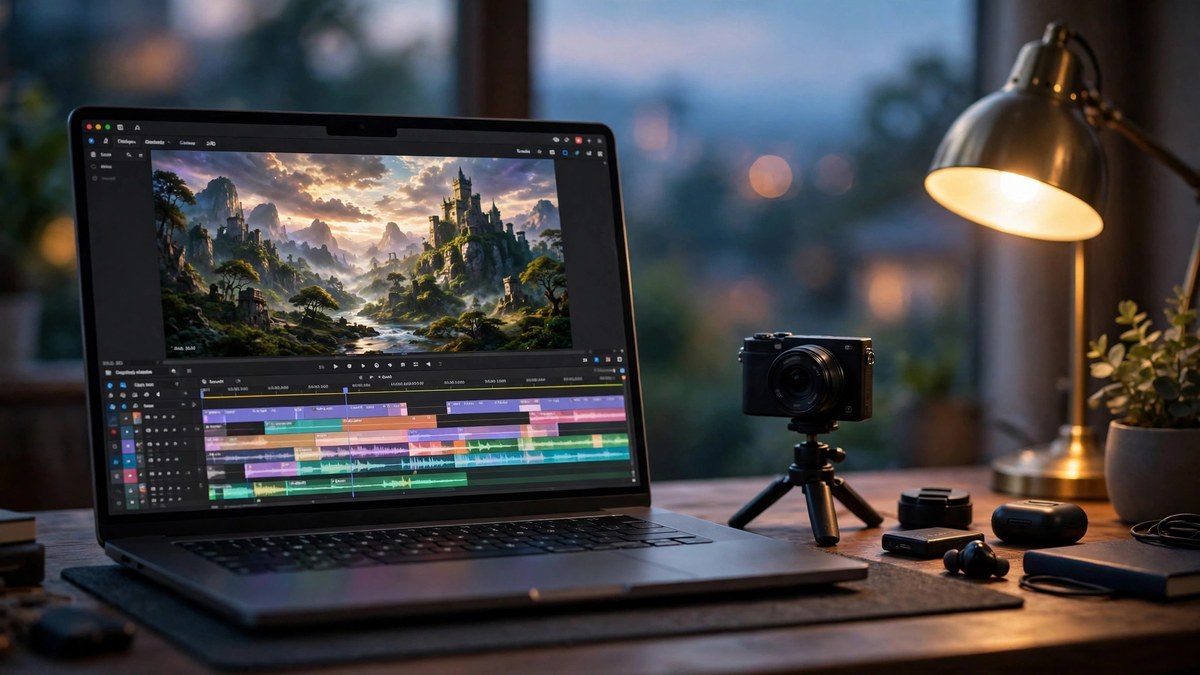
Longer clips and lower prices matter, but the change creators are likely to feel most is conversational editing. Gemini Omni 1.2 Flash can refine the same clip turn by turn — swapping a product or a background, changing the lighting or the weather, or switching the aspect ratio — instead of forcing a fresh generation each time. The editing works across full 15-second clips, so one master clip can spin out ad variants for different audiences and placements without re-briefing the model.
Reference handling has improved too. The model takes character, product or style images, short motion clips of up to three seconds, and audio cues, and holds those details from the first frame to the last. Google says faces, garments, packaging typography and brand colours now stay consistent across camera angles, which makes it practical to turn existing product photography or character sheets into virtual try-on clips, catalogue spins and branded video ads. In one example given by Google, a single model photo combined with front-and-back shots of three outfits produces a 15-second virtual try-on sequence across 360-degree turns and match cuts, with the model’s identity and each garment’s cut and drape held steady.
Speech is more natural as well, with clearer lip-sync, more fluid dialogue and distinct voices for different speakers in the same scene — useful for multi-character dialogue in Flow, explainers in Gemini for business, and avatar-led videos in Google Vids. Camera work is steadier too: the model can direct continuous movements such as sweeping first-person flythroughs, zoom-outs and orbits with fewer unwanted jump cuts. Every output carries an imperceptible SynthID watermark, Google’s marker for identifying AI-generated content.
What happens next: a crowded week for AI launches
The launch lands in a week crowded with AI announcements. OpenAI introduced GPT-6 Cyber, a security-focused model for finding software flaws, and Anthropic began rolling out Personal Finance in Claude, a read-only link between the chatbot and users’ bank accounts. Google’s move keeps it in step: video generation is now a front in the same race, with longer clips and lower prices the battleground.
For businesses, the question now is how quickly the model moves from demos into daily production. Google says companies are already using it for product videos, virtual try-ons and advertising, and the general-availability label — with service-level agreements behind it — is aimed squarely at teams that need to rely on it rather than experiment with it. Google also notes that work continues on weak spots such as fast sports action, rapid script changes and complex physics.
If the model delivers on its consistency promises at the new price, the cost of producing polished video ads could fall sharply — and the gap between a one-person creator and a full production team could narrow further.
Sources: Google Blog / Google Cloud Blog | 6 Nov 2026. Announced 5 November 2026 by Google DeepMind.