Key Points
- First Lady Melania Trump hosted Russian and Ukrainian officials at the White House on Thursday, 5 November, to mark a six-day ceasefire in Oleshky.
- The pause, in the Russian-held city in southern Ukraine, began on 27 October and expired on Sunday, 1 November.
- Both sides signed written agreements recognising Mrs Trump as their exclusive intermediary, after she began working on the deal in September through her representative Marc Beckman.
- Russia’s envoy Kirill Dmitriev said President Vladimir Putin personally ordered the ceasefire carried out; Ukraine’s Dmytro Lubinets presented Mrs Trump with the Order of Princess Olha, First Class.
- Critics, including former Bush administration official Heather Conley, warned the ceremony risked honouring Russia for easing a crisis it created.
Melania Trump brokered a six-day Russia-Ukraine ceasefire in Oleshky, bringing Russian and Ukrainian officials together at the White House on Thursday, 5 November, to mark a pause in the fighting that had already ended.
What happened to the Melania Trump Russia-Ukraine ceasefire
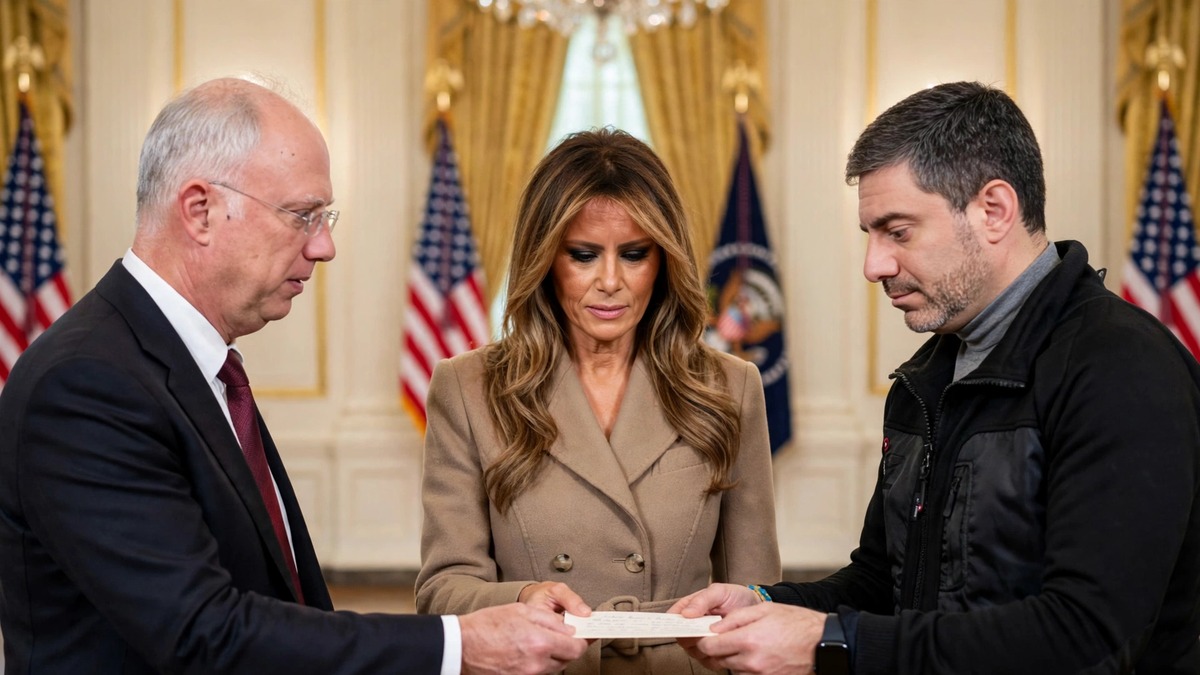
The first lady hosted a ceremony in Washington with Kirill Dmitriev, President Vladimir Putin’s special envoy, and Dmytro Lubinets, Ukraine’s human rights ombudsman, in attendance. The event recognised a six-day pause in fighting around Oleshky, a city in Ukraine’s southern Kherson region held by Russian forces, which allowed humanitarian aid to reach residents who had been cut off and hundreds of people to leave the city.
Mrs Trump told the gathering she had begun working with Russian and Ukrainian officials in September, after learning of the humanitarian crisis in Oleshky, through her representative Marc Beckman. She said both countries signed written agreements recognising her as the exclusive intermediary, leading to a ceasefire agreement on 23 October. The pause itself began on 27 October and ran for six days, expiring on Sunday, 1 November — four days before the White House ceremony.
“We have chosen humanity over war,” the first lady said at the event. “Undeniably, the lives of innocent people must transcend the divisions of war. I hope Oleshky inspires greater peace.” She added: “Every significant transformation begins with a small spark. Ignite hope, foster cooperation and brighten a path toward lasting peace.”
At the ceremony, Mrs Trump handed handwritten letters to Dmitriev and Lubinets, asking each man to carry his letter to his own president. She said she had also written personal letters to both President Putin and President Volodymyr Zelenskyy, and told the room: “The ceasefire in Oleshky would not be possible without President Putin and President Zelenskyy.”
Dmitriev thanked her on Moscow’s behalf. “On behalf of President Putin, on behalf of the people of the Russian Federation, we would like to thank first lady Melania Trump for her distinguished humanitarian role in resolving a key situation and resolving this humanitarian issue,” he said, adding that Putin had personally given instructions to ensure the ceasefire was carried out. Lubinets presented Mrs Trump with the Order of Princess Olha, First Class — Ukraine’s highest award for women — and said: “I have only one request from all Ukrainian nation, please continue doing your wonderful work and support people.” David Arakhamia, a senior Ukrainian lawmaker who also attended, praised the initiative and called for continued humanitarian efforts.
Why it matters
The episode is a rare moment of direct contact between the two sides. NPR noted that Mrs Trump had accomplished something that had so far eluded her husband: helping broker a temporary ceasefire and bringing representatives of both countries together in acknowledgement of the human costs of the war. The White House regards the episode as a diplomatic breakthrough, and it comes as the administration steps up its push for a settlement to end the war, with the United States due to lead a new round of peace talks between Russia and Ukraine in Abu Dhabi next week.
But the praise was not universal. Heather Conley, who worked on European issues in President George W. Bush’s State Department and is now a senior fellow at the American Enterprise Institute, supports efforts to help suffering Ukrainians but said the United States must be careful not to normalise Russia’s behaviour. “In this White House ceremony, we were honoring the Russians that were the cause of both the occupation of Oleshky, the starvation of Oleshky, and now we’re honoring them for allowing aid to come into Oleshky,” she said. “The more we create this equivalency where the Russians and the Ukrainians are equal in this crisis, it is putting this thing upside down.”
The timing also drew attention: the ceremony celebrated a ceasefire that had already expired. The pause was local and temporary, not a step toward ending the war, and whether the model Mrs Trump described can be repeated elsewhere remains untested.
President Trump, who also met Dmitriev at the White House during his visit, told reporters the two sides were close to reaching a wider deal. “It’s going to be an agreement. It’s going to be a big agreement, and it’s going to involve more than Ukraine,” he said. “I could even say it might involve all of Europe. It’s going to be a big, beautiful agreement, and everyone’s going to be thrilled.”
The wider political backdrop in Washington is a capital still absorbing the midterm results. For the other big warning from inside the Republican Party after the midterms, see our report on Senator Ted Cruz warning of “relentless impeachment” for Trump: https://worldpulsewire.com/2026/11/05/cruz-impeachment/
What happens next
The test of whether Oleshky was a one-off gesture or the start of something larger comes in Abu Dhabi next week, when the United States leads a new round of Russia-Ukraine peace talks. If the two sides can repeat the Oleshky formula — a local, humanitarian pause agreed through a trusted intermediary — it could open a path to wider pauses, even if a full settlement remains distant.
For now, the first lady’s role is the story: a six-day pause, two handwritten letters, and a ceremony that put Russia and Ukraine in the same room at the White House. Whether that room produces anything more than a ceremony is the question the Abu Dhabi talks will answer.
For the other big post-midterm exit in Washington, see our report on House Speaker Mike Johnson stepping down as Republican leader: https://worldpulsewire.com/2026/11/05/johnson-quits-house-gop-leadership-race/
Source: NPR; Yonhap News Agency | 6 November 2026