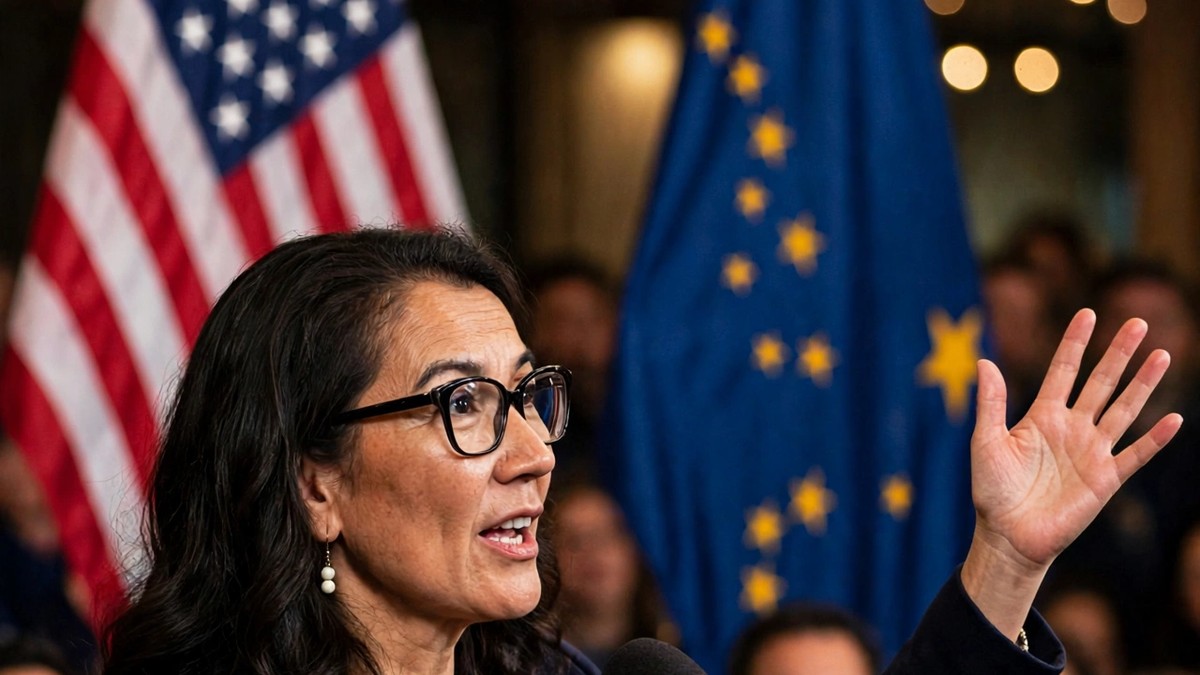
Mary Peltola has stretched her lead over Dan Sullivan to 10,412 votes in Alaska’s Senate race, and NBC’s Decision Desk now rates her likely to win, though the race is still uncalled.
Alaska’s last undecided Senate race is moving in one direction. Mary Peltola, the Democrat challenging two-term Republican Dan Sullivan, now leads by more than ten thousand votes, and the NBC News Decision Desk says she is likely to win. The race has still not been called, and Sullivan has not conceded, but the arithmetic is closing in on him.
Peltola’s campaign declared victory again on Saturday morning, hours after the latest count pushed her advantage into five figures. Her campaign said there was no longer any way for Sullivan to catch her. The Associated Press, which has not yet called the race, puts about 96 percent of the expected vote counted.
Key Points
- Peltola leads Sullivan by 10,412 votes: 138,240 to 127,828, or 49.84 percent to 46.09 percent, with about 96 percent counted.
- NBC News Decision Desk rates the race “likely Democratic”, meaning at least 95 percent confidence Peltola wins.
- Peltola’s campaign declared victory on Saturday; Sullivan has not conceded, and the AP has not called the race.
- She needs 53.8 percent of the remaining ballots to pass 50 percent outright and avoid a ranked-choice count.
- Ranked-choice tabulation is set for Wednesday 18 November; certification is targeted for 25 November.
- A Peltola win would give Democrats a 56-44 Senate majority next year.
What happened
The Alaska Division of Elections released a fresh batch of results on Friday evening, and it changed the shape of the race. The update added 22,511 ballots to the count, and Peltola won 58 percent of them. Her lead jumped from about 5,800 votes to 10,412. All 401 of Alaska’s precincts have now reported.
The official figures behind that lead are 138,240 first-choice votes for Peltola against 127,828 for Sullivan. Republican Gerald Heikes holds 5,885 votes, independent Dan R. Sullivan Jr. has 4,560, and write-in candidates account for 855, out of 277,368 votes counted.
The lead has grown with every release since election night. Peltola was ahead by 626 votes when the first count closed, by 2,517 on Monday, and by about 5,800 on Thursday. Friday’s batch was the biggest jump yet, and it came as the count neared its end, with fewer than 12,000 ballots left to be tallied.
NBC published its Decision Desk analysis on Saturday. It said Peltola was on track to win under either of the two ways the race can end: by clearing 50 percent of first-choice votes outright, or through Alaska’s ranked-choice tabulation if nobody reaches a majority. The network has not made a formal projection — Alaska is the only Senate race of the 2026 midterms it has not yet projected — but its “likely” rating carries at least 95 percent confidence.
Peltola’s campaign announced her victory claim on X early on Saturday, saying the latest results left Sullivan with no route back. Sullivan has not posted publicly since 4 November.
For the earlier count, when Peltola led by only 637 votes, see the earlier count, when Peltola led by only 637 votes.
Why it matters
This is the last Senate race still to be settled, and it fixes the balance of the chamber. If Peltola’s lead holds, Democrats will hold 56 seats to the Republicans’ 44 when the new Senate sits in January.
The question now is the 50 percent line. Peltola stands at 49.84 percent of first-choice votes, about 445 votes short of an outright majority. To clear it without a ranked-choice count, she needs 53.8 percent of the ballots still outstanding. On Friday’s evidence that is within reach: she took 58 percent of the newly reported votes.
If she finishes below 50 percent, Alaska runs its ranked-choice tabulation on Wednesday, eliminating the lowest-placed candidates one by one and moving their voters’ next choices to the candidates still standing. Early readings of the state’s published ballot records suggest that step would not save Sullivan. An Alaska Beacon analysis found he would pick up about 3,066 redistributed votes to Peltola’s 2,160, a net gain of about 906 — far short of the 10,412 he trails by. A separate FairVote analysis put the effect even smaller, shrinking Peltola’s margin by only about three-tenths of a percentage point. Both are preliminary calculations, not the official tabulation.
The slow count is a feature of how Alaska votes. Most ballots arrive by mail, and those postmarked by election day counted if they reached officials by 13 November, with later arrival allowed for valid overseas voters. That is why a race decided on 3 November is still being counted twelve days later.
Alaska has already delivered one upset this cycle. For the governor’s race, where Democrat Jonathan Kreiss-Tomkins won, see the governor’s race, where Democrat Jonathan Kreiss-Tomkins won.
What happens next
The remaining ballots, fewer than 12,000, will keep arriving until Wednesday, when the deadline for overseas mail passes. If Peltola crosses 50 percent on first-choice votes, she wins outright and no ranked-choice count is needed. If she stays below it, the Division of Elections runs the ranked-choice tabulation that same day.
Either way, the final word comes later: state certification is targeted for 25 November. Until then, the race stays uncalled, and Sullivan has given no public sign of conceding. But with the lead above ten thousand votes, the count nearly finished, and the Decision Desk putting her chances at 95 percent or better, Peltola is now waiting on the count to confirm what the numbers already say.
Sources: NBC News, Alaska Division of Elections, Associated Press, Juneau Independent, Alaska Beacon. Time: Sunday 15 November 2026, checked 13:05 +08 (05:05 UTC 15 Nov).