Key Points
- Alaska’s US Senate race is still uncalled, with Democrat Mary Peltola leading Republican incumbent Dan Sullivan by just 637 votes.
- Peltola has 102,962 first-choice votes to Sullivan’s 102,325, with about 74% of the expected vote counted, according to the Associated Press.
- Neither candidate is above 50%, so the race is heading for a ranked-choice tabulation on 18 November if that holds.
- A second candidate also named Dan Sullivan, unaffiliated, has 3,600 votes, and mail ballots can still arrive.
- Certification is set for 25 November, and the Associated Press has not called the race.
Alaska’s US Senate race is still uncalled, with Democrat Mary Peltola holding a lead of just 637 votes over Republican incumbent Dan Sullivan as counting continues and a ranked-choice decision looms later this month.
The contest, one of the last undecided Senate races from the 3 November midterms, flipped overnight: Sullivan led on election night before Peltola moved narrowly in front in results reported after 2 a.m. on Wednesday, Alaska time. With mail and absentee ballots still to arrive, the margin is far too small for either side to claim victory.
What happened in the Alaska Senate race
The Associated Press’s latest count, updated on Thursday morning, puts Peltola on 102,962 first-choice votes and Sullivan on 102,325, with about 74% of the expected vote counted. The Associated Press has not called the race and marks it too early to call.
Those are first-choice votes only. Alaska uses ranked-choice voting: if no candidate passes 50% once all eligible ballots are counted, the lowest-placed candidate is eliminated and their voters’ next choices are redistributed, round by round, until someone holds a majority. The state’s official ranked-choice tabulation is scheduled for 18 November, with certification set for 25 November.
Two other names sit below the leaders. Republican Gerald Heikes trails further back, and unaffiliated candidate Daniel J. Sullivan — a retired teacher who shares the incumbent senator’s name — has 3,600 votes. That second Sullivan has drawn national attention: a New York Times investigation reported that aides to Peltola recruited him to run, a claim Peltola has denied knowing about, and the Justice Department has sued to block certification if Sullivan loses, pending an inquiry into whether votes for the other Sullivan were cast by mistake.
Why it matters
The Alaska result matters beyond one seat because it is the final piece of a midterm story that has already reshaped Washington. Democrats have taken control of both the House and the Senate, and Alaska is one of only two Senate races still uncalled, alongside Mississippi, where Democrat Scott Colom’s lead has grown past 1,000 votes. If Peltola holds on, she would be the first Alaska Native to serve in the US Senate and the first Democrat to win a Senate race in Alaska since Mark Begich in 2008 — a symbolic as well as political milestone.
It also matters because the count itself is the controversy. Alaska accepts mailed ballots for days after election day, and rural ballots that tend to favour Peltola are among those still to be counted. At the same time, the presence of a second Dan Sullivan on the ballot has fuelled claims of confusion, even though no evidence has been presented that voters were misled in numbers that would change the outcome. The ranked-choice process, which Alaska voters have twice now declined to repeal, will decide the seat only if neither leader reaches 50% — which, on current totals, looks likely.
For Republicans, losing an incumbent senator in a state Trump won would deepen a midterm rout already blamed by the party’s own leaders on the Iran war and the cost of living. For Democrats, a Peltola win would widen a Senate majority built on flips in states from Texas to Maine, and confirm that their midterm wave reached even the most Republican-leaning corners of the map.
What happens next
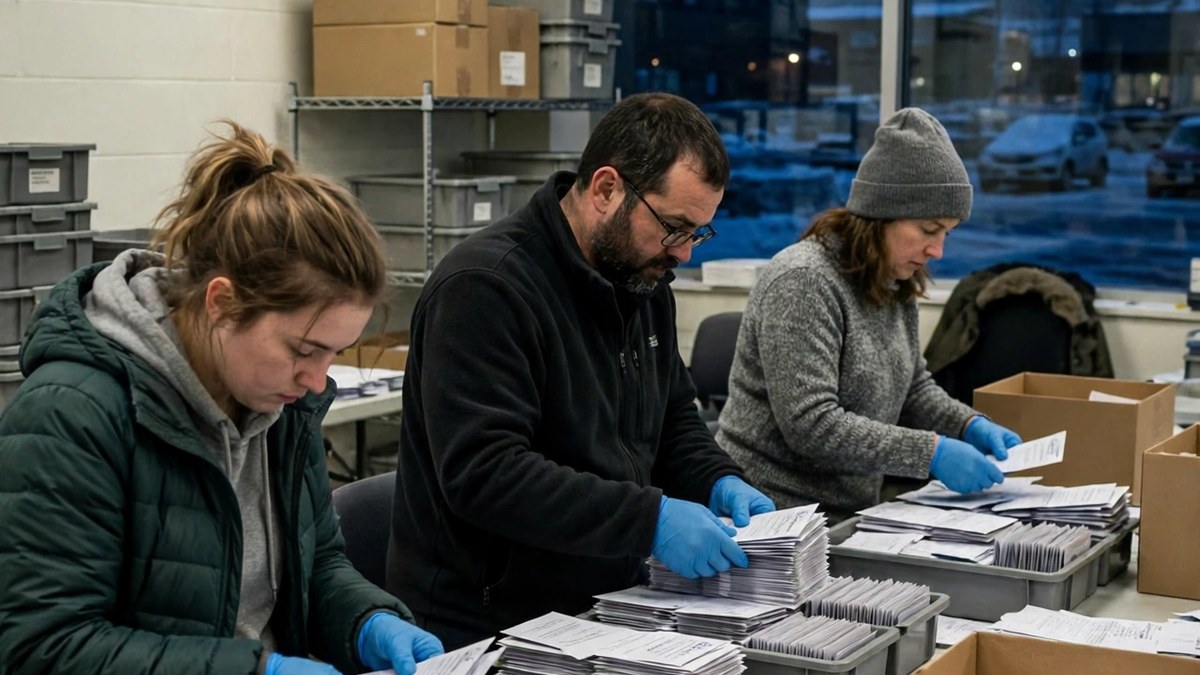
Counting continues county by county, with mailed and overseas ballots still arriving and being checked. The state says it will publish its ballot data file during counting, which would let the Associated Press run its own ranked-choice tabulation and potentially call the race before the official 18 November count.
If neither candidate reaches 50% of first-choice votes, the ranked-choice rounds on 18 November will eliminate the trailing candidates in order and redistribute their voters’ next preferences until one candidate holds a majority. Certification follows on 25 November, unless a court intervenes in the Justice Department’s challenge.
Until then, both campaigns are watching the same slow count: a 637-vote lead, thousands of ballots still to be processed, and a final result that may not be known for two more weeks.
Related reading: Mississippi’s Senate race, still uncalled and Mike Johnson’s decision not to seek House Republican leadership
Source: Associated Press | 5 Nov 2026
Time: Latest AP count, Thursday 5 November 2026; race still uncalled at time of writing.