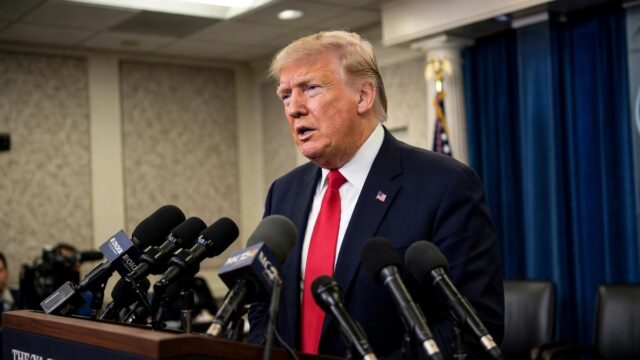
Mike Johnson will not seek the House Republican leadership post in the next Congress, telling staff on 4 November 2026 that he will step aside in Washington after the Democrats’ midterm victory.
The Louisiana Republican, who has served as Speaker since October 2023, informed staff of his decision on Wednesday morning, according to people familiar with the matter. His announcement came one day after voters handed control of the House to the Democrats, ending a Republican majority that Johnson had held together by a narrow 218-214 margin.
Key Points:
- US House Speaker Mike Johnson told staff on the morning of 4 November 2026 that he will not run for election as House minority leader.
- The decision follows the Democrats’ victory in the House in the 3 November midterm elections, which ended the Republican majority.
- Johnson is not leaving Congress: he won reelection in his Louisiana district and remains Speaker until the new Congress convenes.
- House Majority Leader Steve Scalise and Judiciary Committee Chairman Jim Jordan are expected to contend for the party’s top House post, with an internal party election expected next week.
What happened
Johnson’s decision was reported on Wednesday by Reuters, citing a source familiar with the matter, and confirmed by USA Today, which cited two sources familiar with the announcement. The Speaker told staff he would not run for election as minority leader, the post the party’s House leader holds when the party is out of power.
The move closes a three-year run at the top of the House for Johnson, who rose to the speakership in October 2023 after weeks of Republican infighting that removed his predecessor, Kevin McCarthy. Through the 2026 campaign, Johnson had insisted that Republicans would not only hold the House but expand their majority. Instead, the party lost control of both chambers on Tuesday, in a sweeping result that also reshaped the Senate.
Johnson himself survived the night politically. He won reelection in his Louisiana congressional district, and sources familiar with his thinking say he does not plan to resign from Congress. He simply will not seek to lead the Republican conference from the minority benches.
Why it matters
The decision opens an immediate contest for the future of the House Republican Party. With Democrats taking the majority when the new Congress convenes, the Republican leader’s job becomes minority leader, a role focused on holding the party together in opposition and shaping its message ahead of the 2028 elections.
Two names are already at the front of that race. House Majority Leader Steve Scalise, also of Louisiana, and House Judiciary Committee Chairman Jim Jordan of Ohio are both expected to launch bids, according to reporting from Reuters and USA Today. Jordan, a prominent ally of President Donald Trump, was expected to announce his candidacy later on Wednesday, while a person familiar with the situation said Johnson did not want to stand in the way of Scalise’s ambitions.
The contest matters beyond personalities. The next Republican leader will have to rebuild a party that has just lost its governing trifecta in Washington, decide how closely to align with Trump, and craft an argument for voters who delivered a sharp rebuke on Tuesday. The internal party election is expected next week, and the tone of that contest is likely to set the direction of the party’s opposition strategy for the next two years.
The result also changes the balance of power at the top of the House. Democratic leader Hakeem Jeffries is in line to become Speaker when the new Congress convenes in January, a historic first that follows the Democrats’ capture of both chambers. Johnson’s departure from leadership removes one of the most familiar faces of the Republican majority era, and hands the party’s future to a new generation of contenders.
What happens next
House Republicans are expected to hold their internal leadership election next week, when members will choose who leads the conference in the minority. Scalise and Jordan are the expected frontrunners, though other candidates could still enter.
Johnson will remain Speaker until the new Congress begins, presiding over the lame-duck session in which the outgoing Republican majority still holds the gavel. Once the new Congress convenes, the Democrats will elect their Speaker, and the Republican conference will formally install its new leader.
For Johnson, the next chapter is a return to the back benches of a chamber he once led. For his party, the race to replace him is the first test of how it intends to respond to a defeat that has already cost it the House, the Senate, and its hold on Washington.
Related reading: Democrats’ capture of both chambers of Congress and Trump’s own admission that the Iran war hurt Republicans in the midterms.
Source: Reuters / USA Today | 5 Nov 2026
Time: reported Wednesday morning, 4 November 2026 (US Eastern time).