
Spain has a temporary transport minister after a deadly rail disaster forced a resignation — and left the government fighting an election campaign without one of its best-known voices.
Key Points:
- Prime Minister Pedro Sanchez named Economy Minister Carlos Cuerpo to run transport on an interim basis on 4 November 2026.
- Cuerpo takes over after Oscar Puente resigned on 3 November over two deadly train crashes in 2026.
- The latest crash, near Urda on 28 October, killed 69 people; a January crash on the same line killed 46.
- Puente said he decided to step down within minutes of learning of the Urda crash, but waited until emergency work and first safety measures were under way.
- Puente also withdrew from the general election due on 29 November 2026.
- His resignation takes formal effect only once it is published in Spain’s official state gazette.
Spain’s prime minister has put Economy Minister Carlos Cuerpo in temporary charge of transport, a day after Oscar Puente resigned over two deadly train crashes this year that together killed 115 people.
The move, announced in Madrid on Wednesday 4 November, gives Sanchez a caretaker at the top of a ministry under intense scrutiny — with a general election just weeks away and public confidence in high-speed rail badly shaken.
What happened
Puente stepped down on the night of 3 November, at the end of a tense four-hour hearing before lawmakers from a caretaker parliament body. Most parties at that hearing had demanded that he face responsibility for the two disasters, Reuters reported.
He had previously ruled out resigning several times since the latest crash. On Tuesday night he changed course in public, telling lawmakers: “I wish to inform you that I am not only stepping down from my position as Minister of Transport, but that I am also withdrawing my name from the lists for the early legislative elections on November 29.”
Puente, 57, said he had in fact made his decision in the first minutes after the Urda crash, telling only his family and not even Sanchez. He stayed on, he said, until the immediate emergency response was under way, preliminary investigations had begun, and the first steps to compensate victims and improve safety were in place.
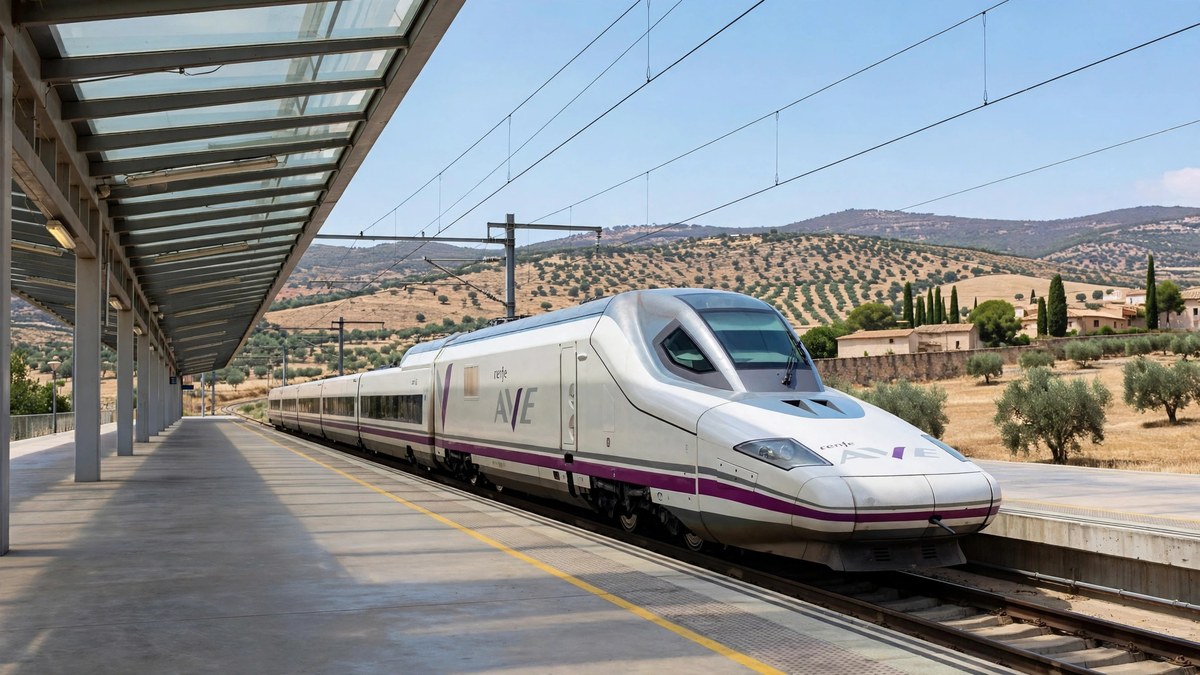
The crash that forced his hand happened on 28 October outside Urda, about 130 kilometres south of Madrid. A high-speed train run by state-owned Renfe ran into the back of a stationary train belonging to private operator Iryo. An automatic safety system had failed, halting all trains on a 63-kilometre stretch of track, yet a control centre authorised the Renfe service to resume its journey, according to authorities.
That was the second disaster on the Madrid-Seville line this year. A collision in Andalusia in January killed 46 people. Puente put the point bluntly in his resignation speech: a transport minister, he said, cannot remain in office after two accidents of such seriousness in less than a year, whether or not he bears direct responsibility.
Before stepping down, Puente announced a package of safety measures. Services on the Madrid-Seville line will be reduced until the Railway Safety Agency reviews the line’s safety system and the government finishes the delayed rollout of the European Rail Traffic Management System. He also promised software that would alert control centres to anomalies automatically, a second operator to confirm any decision taken while the safety system is down, and reforms to control-centre working conditions, including breaks and fatigue monitoring. An aid package of 30 million euros was announced for the families of the dead and the scores of people injured.
Why it matters
The resignation matters for three reasons at once: safety, politics, and trust.
On safety, Spain runs the world’s second-largest high-speed rail network, and two fatal crashes on the same key line in ten months raise a hard question about maintenance and oversight. Critics say investment in maintenance has not kept pace with rising passenger numbers since the network was opened to private operators in 2021. The train drivers’ union Semaf, which has called strikes at Renfe for 10 and 12 November, has complained about worsening working conditions and the use of what it calls “degraded systems”.
On politics, Sanchez has lost one of his most loyal and combative ministers at the worst possible moment. Puente, a lawyer and former mayor who took the transport job in November 2023, was a top contender in discussions about Sanchez’s eventual succession. Polls after the Urda crash showed a slight drop in support for the ruling Socialists, who had hoped to fight the 29 November election on social services and housing. As with other governments facing sudden election pressure — including in the United States, where midterm losses have reshaped the political debate — a single issue can quickly dominate a campaign.
Sanchez praised Puente’s “political dignity” in a brief televised address, saying he had faced the situation, offered explanations and solutions, and then stepped aside. Announcing Cuerpo as interim minister, he said Cuerpo had shown “an enormous capacity for management and integrity” in this parliament.
On trust, the test is now practical, not rhetorical. Passengers need to believe the system that failed near Urda will not fail again, and families of the victims need to see compensation and answers, not just announcements. Cuerpo, who keeps his economy portfolio, must carry both jobs through the election period.
What happens next
Cuerpo will hold the transport portfolio provisionally through to the 29 November election, Sanchez said. Polls indicate the ruling Socialist party could lose that vote, so the interim arrangement may be short-lived — or it may become the starting point for a longer reshuffle, depending on the result.
Three things to watch: whether Puente’s resignation is formally published in the official state gazette, and when; whether the Railway Safety Agency review and the European signalling rollout move quickly enough to restore full Madrid-Seville services; and whether the investigation into the Urda crash assigns responsibility beyond the control-centre operator, as unions and the opposition have demanded.
The wider lesson travels beyond Spain. When a government faces an election in the shadow of a disaster, voters judge not only what went wrong, but how quickly and honestly those in charge respond — a pattern seen again in recent election campaigns elsewhere, where a single crisis has redrawn the contest.
Sources: Reuters via The Straits Times, 4 November 2026; AFP via Bangkok Post, 4 November 2026; CNA/AFP, 4 November 2026. Published: 5 November 2026, Kuala Lumpur time.