Key Points
- California Governor Gavin Newsom announced on Thursday 5 November that he is commuting all 548 death sentences in the state to life in prison without parole.
- California holds the largest death row in the United States, and the move is the largest mass commutation of death sentences in American history.
- 382 of the cases — those involving prisoners with more than one felony conviction — still need review and approval from the California Supreme Court before the commutations take effect.
- California has not carried out an execution since 17 January 2006, when Clarence Ray Allen was put to death by lethal injection at San Quentin.
- Newsom, in the final months of his second and final term as governor, called the decision among the most difficult of his career.
California Governor Gavin Newsom has commuted all 548 death sentences in the state to life in prison without parole, in the largest mass commutation in American history.
What happened: Newsom wipes out every death sentence in California
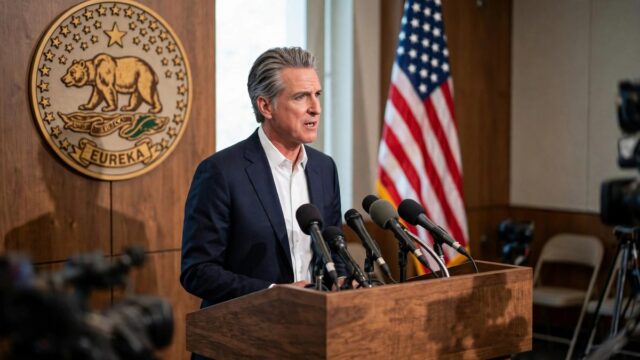
California Governor Gavin Newsom announced on Thursday 5 November that he will commute the death sentences of all 548 people on the state’s death row, replacing them with life in prison without the possibility of parole. He set out the decision in a three-page open letter addressed to “all Californians”, released by his office in the final months of his second and final term as governor.
The move covers the largest death row in the United States, and the largest in the Western Hemisphere. According to the nonpartisan Marshall Project, it is the largest mass commutation of death sentences in American history. If the commutations are approved, the number of people under a death sentence across the whole country would fall by nearly a third.
Not every commutation takes effect at once. The governor’s office says 382 cases will need review and approval from the California Supreme Court, because those prisoners were convicted of more than one felony. The state constitution requires the court’s sign-off in such cases. The remaining cases can be commuted by the governor alone.
In his letter, Newsom wrote: “I take this action because I firmly believe that state-sanctioned killing is incompatible with California’s values, undermines the foundations of our legal system, and diminishes each of us.” He called the decision among the most difficult of his career, and said he understood the pain it would cause victims’ families.
Why it matters
The announcement is the final step in a position Newsom took almost eight years ago. Shortly after taking office in 2019, he signed an executive order imposing a moratorium on executions in California. No one has been executed in the state since 17 January 2006, when Clarence Ray Allen, 76, was put to death by lethal injection at San Quentin State Prison. California has executed only 13 people since 1976.
The death penalty has been fading in California for years. Only five people received death sentences in the state in 2025, down from 42 in 1999. As of April this year, 68% of the people under a death sentence in California were defendants of color, according to the Death Penalty Information Center, a nonprofit that tracks capital punishment. Newsom argued in his letter that the system is unjust and error-prone.
The commutations cover some of the most notorious prisoners in the country. They include Richard Allen Davis, who kidnapped and killed 12-year-old Polly Klaas in 1993; Marcus Wesson, who killed nine of his own children in 2004; Charles Ng, convicted of killing 11 people in California in the 1980s; and Randy Kraft, known as the “Southern California Strangler”. Their sentences will become life without parole.
The decision also lands at a charged political moment. It came two days after the Democrats’ midterm sweep on 3 November, and critics were quick to attack the timing. Victims’ advocates told reporters they were furious and said they will challenge the move in court. Newsom is widely expected to seek the Democratic presidential nomination in 2028, and the decision is certain to feature in that debate.
The death penalty has faced renewed scrutiny in recent weeks following Tennessee’s failed execution of Christa Pike in late September, which left her in constant pain and drew national attention to how executions are carried out. Newsom’s announcement adds to a week of firsts in American politics, coming days after voters delivered a string of historic results in the midterm elections.
What happens next
The immediate question is the California Supreme Court. The court must decide whether to approve the 382 commutations that require its review, a process that could take weeks or months. Until then, those prisoners remain under a death sentence on paper, even though no execution has taken place in the state for nearly 20 years.
Legal challenges are also expected. Victims’ advocates have said they will go to court to try to block the commutations, and the state constitution gives the Supreme Court a direct role in the multi-felony cases. If the court approves them, Florida — with 235 people on death row as of 5 November — would become the state with the largest death row in the country.
Newsom’s term as governor ends in January. The commutations would stand as one of the defining acts of his eight years in office, and the debate over them is unlikely to end when he leaves Sacramento. Supporters, including Amnesty International, have praised the move and called for the death penalty to be abolished everywhere. Opponents say it overrules juries, judges and voters, and denies justice to victims’ families.
For the 548 people on death row, the practical effect is clear: if the courts allow it, none of them will face execution. They will instead spend the rest of their lives in prison, with no chance of parole.
Sources: Reuters (original report, 5 November 2026) and CNN (independent report, 5 November 2026), with corroboration from NBC News, the New York Post and The Marshall Project. Facts verified against the original report and one independent source. All figures are as announced on 5 November 2026; 382 commutations still require California Supreme Court approval. Image is AI-recreated, not the original photograph.