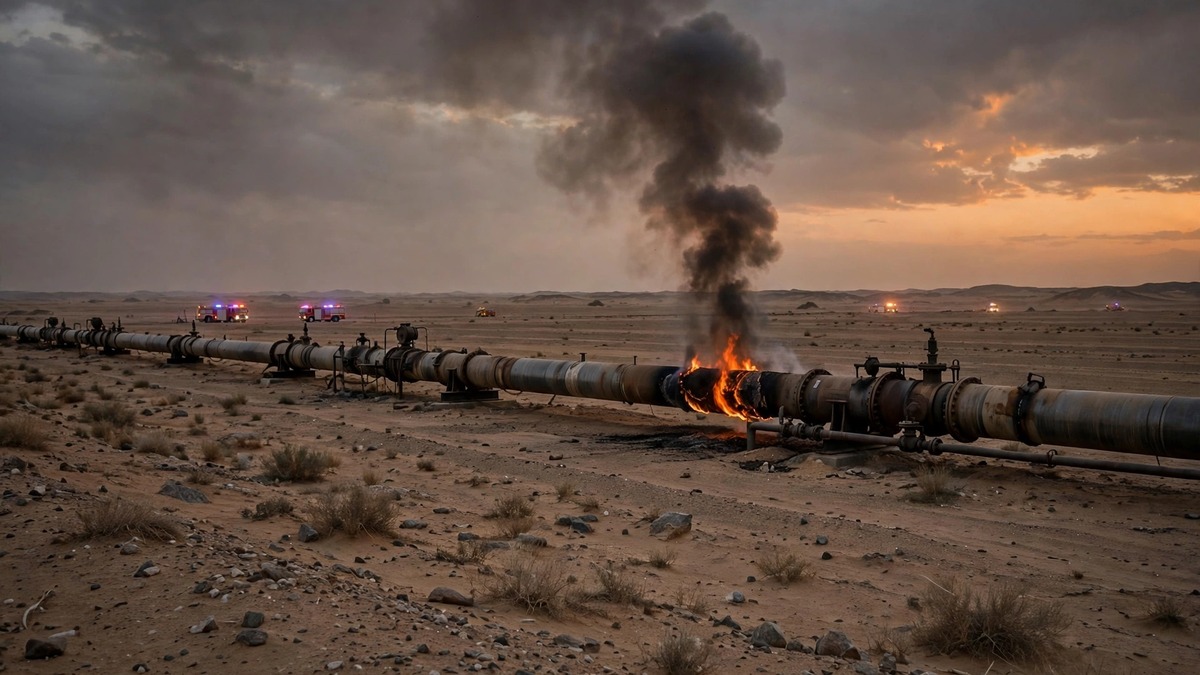
The Saudi pipeline carrying oil around the Strait of Hormuz was targeted in the Medina region on Monday, sparking a limited fire that emergency teams extinguished, with no casualties and operations unaffected.
KEY POINTS
- Saudi Arabia’s Energy Ministry says the East-West pipeline was targeted in the Medina region on Monday, causing a limited fire that was extinguished.
- No injuries or fatalities were reported, and pipeline operations were unaffected, according to the Saudi Press Agency.
- The ministry did not name who was behind the attack, and the Houthis have not claimed it; the group has repeatedly struck Saudi oil infrastructure.
- The 1,200km line is Riyadh’s bypass around the Strait of Hormuz, now moving about 4 million barrels a day to the Red Sea — around 4 percent of global supply.
WHAT HAPPENED
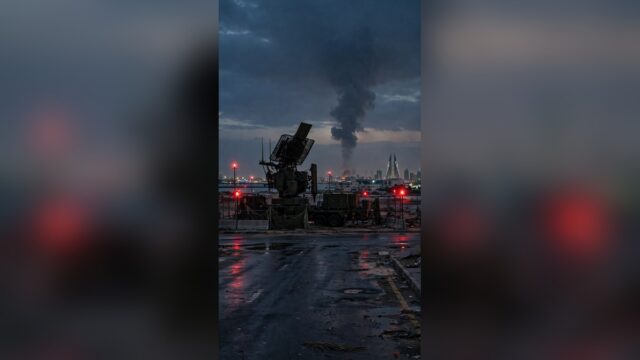
Saudi Arabia said on Monday that its East-West oil pipeline was targeted in the Medina region, in the west of the country. An official source at the Energy Ministry said the attack caused a limited fire, and emergency response teams put it out. The Saudi Press Agency carried the statement.
“No injuries or fatalities were reported, and pipeline operations were unaffected,” the agency said.
The statement gave no details about the weapon used or who carried out the attack, and it did not say exactly when on Monday the pipeline was hit. As of Monday evening, the Houthis had not announced any operation against Saudi Arabia that day. Their military spokesman’s comments were limited to saying that 103 airstrikes had hit areas under their control.
The line has come under attack before. It was shut down for several days in September after drone attacks that Saudi Arabia said were launched from Iraq. NDTV reported it was also targeted last month in an attack attributed to the Houthis, after which repair work was carried out.
The strike fits a wider pattern of attacks on Saudi energy sites. On Sunday, the Aramco Tower in Riyadh, the oil company’s administrative building in the capital’s financial district, was damaged in an attack the Houthis claimed, according to Reuters. A Saudi official inspected the building early on Tuesday. The Houthis have also stepped up strikes on Aramco facilities in recent weeks, including the company’s headquarters in Dhahran. On Saturday, Saudi air defences intercepted a Houthi cruise missile heading for the Riyadh region, and a drone was stopped late on Friday.
Meanwhile, the Saudi-led coalition said on Monday it had destroyed a factory used by the Houthis to make ballistic missile components and a chemical plant used to produce missile fuel.
WHY THE SAUDI PIPELINE MATTERS
The East-West pipeline is the kingdom’s escape route from the Strait of Hormuz. The 1,200km (745-mile) line runs across the Arabian Peninsula from the Gulf coast to the Red Sea port of Yanbu, letting the world’s largest crude exporter ship oil without passing through the strait. Since the war on Iran disrupted flows through Hormuz, Riyadh has rerouted about 4 million barrels a day through it, equivalent to about 4 percent of global supply, according to Al Jazeera.
That is why the line keeps being hit. With Iran pressing its claim over Hormuz, its navy says it has halted tankers using what it calls unauthorised routes and claims 11 tankers targeted in 10 days. The pipeline is the one route that keeps Gulf crude moving west, and striking it pressures the same energy lifeline from the other side.
The timing matters too. The attack came on the same day President Trump met Qatar’s prime minister at the White House to discuss ending the eight-month war, with no breakthrough expected. It also came as Iran’s president repeated that Tehran is ready for dignified talks, while Washington keeps its strike threat on the table.
WHAT HAPPENS NEXT
The immediate question is who Riyadh blames. The ministry’s statement named no one, and the Houthis have not claimed the attack. If Saudi Arabia attributes it to the Houthis, retaliation against Houthi missile and drone sites, already under way with the coalition’s strikes on weapons factories, is likely to intensify. If it points elsewhere, the diplomatic fallout could be wider.
The second question is whether the pipeline can be hit again. It was repaired after the September shutdown, and Monday’s fire was put out without stopping flows. But repeated strikes on the same line show it is now a standing target, and each one tests the route the world is relying on while Hormuz stays constricted.
For now, oil kept flowing. The longer the war drags on, the more the pipeline, and the Red Sea route it feeds, will sit at the centre of it.
SOURCE + TIME: Sources: Saudi Press Agency, Al Jazeera, Reuters, Gulf News, Yemen Monitor, Times of India liveblog. Published 10 November 2026, 09:00 +08. The attacker behind Monday’s strike has not been named by Saudi Arabia, and the Houthis have not claimed it.