United States forces disabled the cargo ship M/V Huda in the Gulf of Oman on Saturday, after its crew ignored repeated warnings and tried to breach the naval blockade of Iran.
Key Points
- US Central Command said a military aircraft fired precision munitions at the stern of the St Kitts-flagged M/V Huda on Saturday, leaving the cargo ship disabled in the Gulf of Oman.
- CENTCOM said the crew had ignored repeated warnings and tried to breach the naval blockade of Iran several times after the ship called at an Iranian port.
- Iran’s Revolutionary Guard said two oil tankers struck mines and caught fire in and near the Strait of Hormuz on Saturday night. That claim has not been confirmed by any outside source.
- The United Arab Emirates rescued 22 crew members from a cargo ship that caught fire in the Gulf of Oman on Sunday. All were reported stable, and officials did not name the vessel.
- CENTCOM says it has redirected 147 commercial vessels since July and disabled five merchant ships that refused to comply with the blockade.
United States forces disabled the cargo ship M/V Huda in the Gulf of Oman on Saturday, after its crew ignored repeated warnings and tried to breach the naval blockade of Iran.
What happened
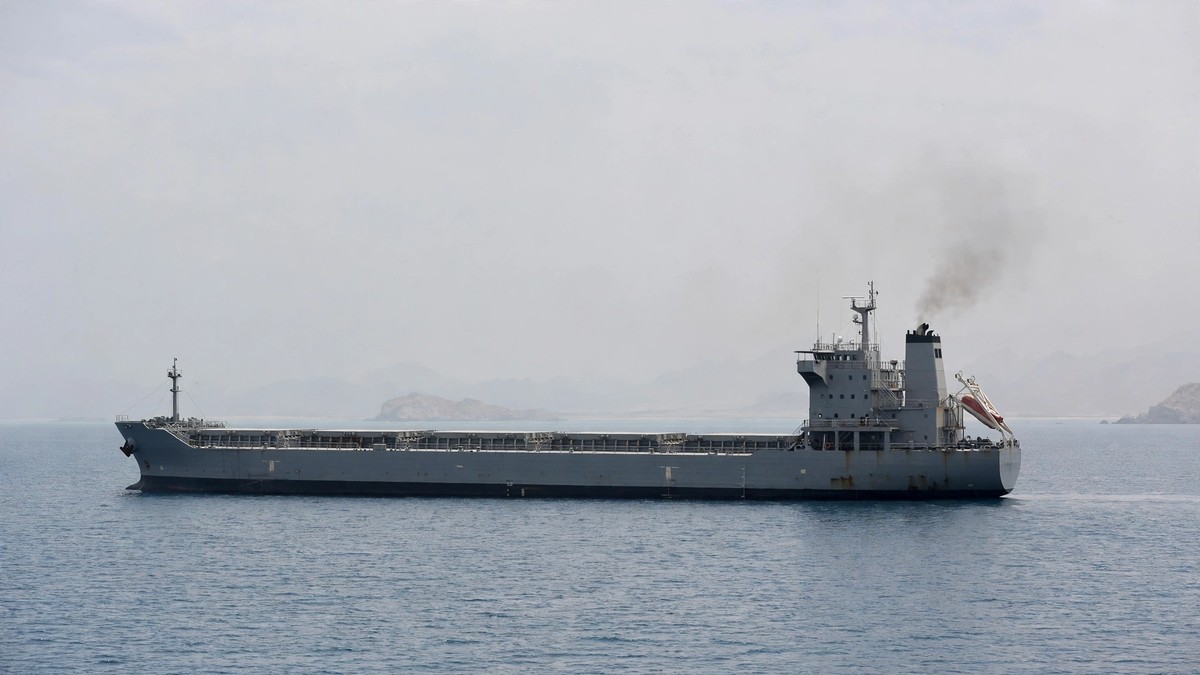
A United States military aircraft fired precision munitions at the stern of the M/V Huda on Saturday evening, according to US Central Command. The strike left the St Kitts-flagged bulk carrier unable to move in the Gulf of Oman, about 18 nautical miles east of Khor Fakkan in the United Arab Emirates, according to UK Maritime Trade Operations.
CENTCOM said the ship’s civilian crew had ignored repeated warnings and tried to breach the naval blockade of Iran several times. The vessel had called at an Iranian port and was trying to leave regional waters when it was stopped. The command said its forces had told the crew to leave the targeted parts of the ship before the strike, so no one would be hurt there. It gave no details about the crew’s condition afterwards.
The Huda is a dry bulk carrier of 24,993 deadweight tonnes, built in 1999 and under Turkish management, according to the maritime publication Maritime Executive. It was the first ship the United States has reported disabling since 10 October, when it struck another bulk carrier, the Ocean Molica, in the same waters.
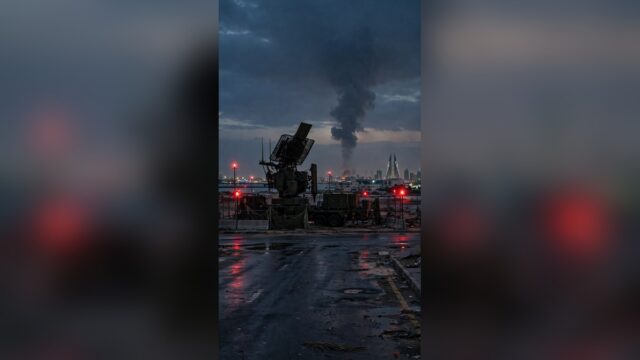
Shortly after the strike on the Huda, Iran’s Revolutionary Guard announced that two oil tankers had struck mines and caught fire, one inside the Strait of Hormuz and one east of it. The announcement came on Saturday night, according to the Xinhua news agency. The claim has not been confirmed by any outside source, and the Guard gave no names for the tankers or details about their crews.
Separately, the United Arab Emirates National Guard said on Sunday that its coast guard had rescued all 22 crew members from a cargo ship that caught fire in the Gulf of Oman. The crew, all Arab nationals, were in stable condition after receiving first aid, and were handed to the relevant authorities. The National Guard did not name the ship, say what caused the fire, or link the rescue to the American operation, and no verified information connects the two events. UK Maritime Trade Operations said it had received a report of a tanker catching fire on Saturday about eight nautical miles northwest of Khasab, Oman, and that its crew had been evacuated.
The events came a day after the United States confirmed new limited strikes on Iran’s Qeshm Island, and on the same weekend that Tehran said it would no longer observe the 2,000-kilometre ceiling it once placed on its own ballistic missiles. Washington has also set up Task Force Iron Gate, a new unit to take its blockade of Iran ashore and block land supply routes, while Houthi missiles damaged the Aramco Tower in Riyadh on Sunday morning.
Why the Gulf of Oman clash matters
Saturday was the first day since the war began in late February on which both sides announced action against commercial ships in the same waters. The United States disabled a vessel for breaching its blockade, and Iran said mines had struck two tankers near the world’s most important oil chokepoint. The Strait of Hormuz normally carries about one-fifth of the world’s oil, so any threat to shipping there reaches far beyond the Gulf.
The blockade itself is tightening. CENTCOM says that since July it has redirected 147 commercial vessels that followed its orders, disabled five merchant ships that refused, and destroyed 10 Iranian oil tankers it links to a Revolutionary Guard shadow network. Each enforcement action raises the stakes for shipowners, crews and insurers deciding whether to sail near Iran at all.
The human cost is already visible. The International Maritime Organization’s public incident register recorded 129 confirmed incidents across the Strait of Hormuz and the wider Middle East as of 5 November, along with 24 confirmed seafarer deaths. Those figures predate Sunday’s rescue, and they do not cover the latest claims from either side.
The clash also shows how the confrontation is widening. What began as a naval blockade now reaches land borders and the Caspian Sea, while Iran answers with mines, missiles and warnings of retaliation without geographical limits. With indirect talks between Washington and Tehran still producing no deal, every new incident at sea makes a wider conflict harder to avoid.
What happens next
The first question is the fate of the Huda’s crew. CENTCOM has not said whether anyone was hurt, whether the crew stayed aboard, or whether the vessel was later boarded. The second is whether Iran’s claim about the two tankers is confirmed. If mines did strike two tankers in one night, shipping through the strait faces a new danger that insurers and oil markets will price in at once.
The third is what Washington does next. CENTCOM says its forces will keep enforcing the blockade strictly, and the new Task Force Iron Gate suggests the pressure will grow on land as well as at sea. Iran’s Revolutionary Guard has dismissed the expanded blockade plan as wordplay, while Tehran warns that any renewed attack will bring retaliation without geographical limits.
Explosions were also reported on Saturday in Qeshm and Jask, on Iran’s southern coast, according to the Fars news agency. Those reports have not been confirmed. If the attacks at sea continue into a new week, the Gulf’s shipping lanes — and the oil that flows through them — will stay at the centre of the crisis.
Sources: US Central Command, Gulf News, Maritime Executive, Tribune, India TV — 8 November 2026, 11:50 PM +08. All figures are attributed to the outlet or body that reported them; unconfirmed claims are labelled as such.