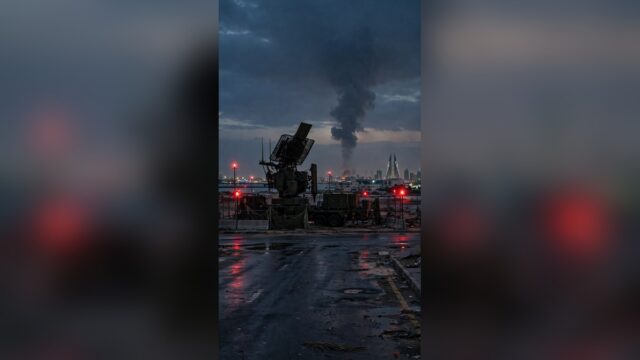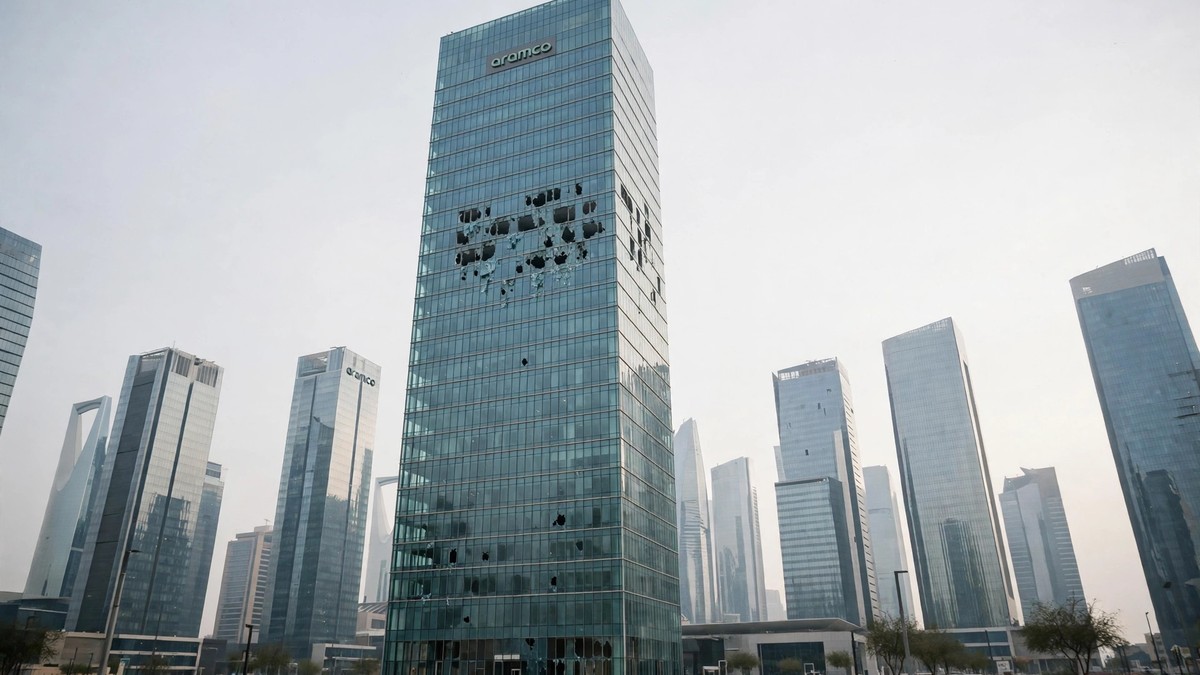
Falling debris from intercepted Houthi missiles damaged the Aramco Tower in Riyadh on Sunday, in the first strike to reach the Saudi capital’s financial district.
Key Points
- On Sunday morning, the Energy Ministry confirmed that falling debris had struck an Aramco administrative building in Riyadh, causing limited damage and no casualties.
- Witnesses told AFP the building is the Aramco Tower in the King Abdullah Financial District, where windows were blown out across several floors. A Reuters witness reported the same damage.
- The Saudi-led coalition said its air defences destroyed two ballistic missiles fired towards Riyadh at 09:05 local time, then two cruise missiles and a drone about 20 minutes later.
- Houthi military spokesman Yahya Saree said on Saturday the group had carried out six operations using ballistic and cruise missiles and drones, and named Aramco facilities in Riyadh and Khurais and King Khalid International Airport among the targets.
- Sunday was the fourth straight day of attacks on Saudi Arabia. The coalition says it has stopped at least 15 missiles and drones this month.
Falling debris from intercepted Houthi missiles damaged the Aramco Tower in Riyadh on Sunday, in the first strike to reach the Saudi capital’s financial district.
What happened
Loud explosions rang out across Riyadh on Sunday morning, shortly after the kingdom’s Civil Defence sent out an early-warning alert about a possible threat. The alert was later lifted, with the authorities saying the danger had passed.
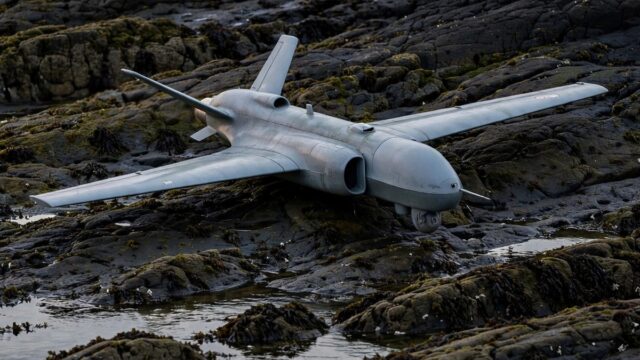
The Saudi-led coalition, which has been fighting Yemen’s Houthis, said its air defences had stopped two ballistic missiles launched towards the capital. Coalition spokesman Maj. Gen. Turki al-Maliki said in a social media post at 09:05 local time that the two missiles had been intercepted and destroyed. About 20 minutes later, he said two cruise missiles fired towards Riyadh and the southern regions had also been brought down. Arab News reported that a drone was destroyed as well.
At 11:45 local time, the ministry confirmed the attempted strike, saying shrapnel had fallen on an Aramco building in the capital and caused limited damage, with no one hurt. An official source gave no location for the building and did not say what had struck it.
Witnesses filled in that gap. Several people told the AFP news agency that the building struck was the Aramco Tower in the King Abdullah Financial District, the cluster of glass towers in the north of the capital. One witness said the tower had “been targeted, that’s the sure thing”. Two others confirmed damage to the glass building, and a fourth said broken glass and damage were visible on part of the tower’s facade across more than one floor. A Reuters witness confirmed the damage, describing shattered windows on several floors of the tower, one of the tallest buildings in the district.
Aramco did not immediately comment, and there was no immediate statement from the Houthis about Sunday’s attack.
Sunday was the fourth straight day of attacks. A day earlier, the coalition said its air defences had shot down a Houthi cruise missile bound for the Riyadh region. On Friday, it said it had stopped two drones over Riyadh and Makkah, and two ballistic missiles aimed at Najran. A day earlier, a missile aimed at the Madinah region was intercepted. The coalition says it has stopped at least 15 missiles and drones this month.
The strike came a day after the Houthis said they had gone after the capital’s most sensitive sites. Their military spokesman, Yahya Saree, said on Saturday that Yemeni forces had carried out six operations, one of which targeted King Khalid International Airport, oil tanks and a distillation tower belonging to Aramco in Riyadh, along with a facility in the Dawadmi area and Saudi military gatherings in the kingdom and in Yemen. Saree also said Houthi forces had targeted Saudi troops in Najran and in Yemen’s Al-Jawf and Ma’rib provinces, and claimed those attacks caused numerous deaths and injuries. That claim has not been confirmed by any outside source.
Why the Aramco Tower strike matters
Until Sunday, every missile fired at Riyadh in this round had been stopped in the sky. Now one has left its mark on the ground — on a tower in the King Abdullah Financial District, the financial heart of the Gulf’s biggest economy. The district holds the offices of banks, funds and global firms, and the Aramco Tower carries the name of the world’s largest oil company. Damage there, even minor, sends a message that the financial centre is no longer out of reach.
The strike also shows how far the Houthi campaign has escalated. The group has moved from drones and single missiles to coordinated salvos of ballistic and cruise missiles aimed at the capital, and it is now openly naming Aramco sites as targets. Each day of attacks raises the cost for Riyadh and tests whether its air defences can hold off a sustained campaign.
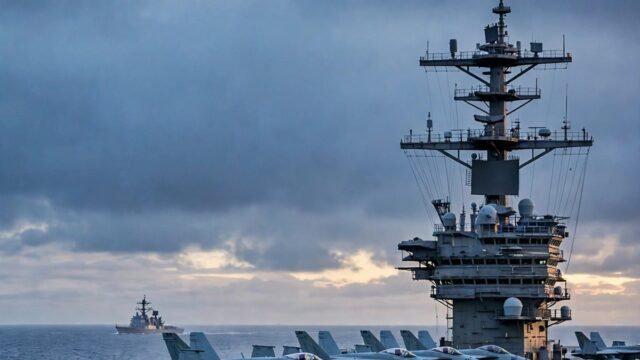
The timing matters too. The attack came as the United States set up Task Force Iron Gate, a new unit to take the US blockade of Iran ashore and block its land supply routes, and days after Washington offered up to $20 million for information about Iran’s nuclear programme. Tehran, meanwhile, has said it will no longer observe the 2,000-kilometre ceiling it once placed on its own ballistic missiles. The confrontation is widening on every front — at sea, on land, in the air over Riyadh and in the talks, where Qatar is still mediating between Washington and Tehran without a deal in sight.
What happens next
The first question is whether the Houthis claim Sunday’s attack. They announced Saturday’s targets in advance, but had said nothing about the Riyadh strike by the time the damage was confirmed. A claim would confirm that the financial district is now a deliberate target.
The second is how Riyadh answers. Saudi airstrikes near the Yemeni capital were reported on Saturday, and a further response is likely if the attacks continue into a fifth day.
The third is what this means for the wider war. Fighting has now broken a truce brokered by the UN that had mostly held since 2022, while the indirect talks between Washington and Tehran have still produced no agreement. Every new strike makes a return to full-scale fighting more likely and a deal harder to reach.
Sources: Reuters, Arab News, The National — 8 November 2026, 11:24 PM +08. All figures are attributed to the outlet or body that reported them; unconfirmed claims are labelled as such.