Fresh blasts were heard across four places on Iran’s Hormuz coast on Saturday evening, Iranian state media reported, hours after the United States confirmed a strike on Qeshm Island.
Key Points
- Explosions were heard on Qeshm Island and in the port cities of Jask, Sirik and Bandar Abbas on Saturday evening, according to Iranian state media; the cause is unclear and no damage or casualty figures have been released.
- State agency IRNA reported two blasts on the eastern side of Qeshm, followed by several more near Jask port; state television later added Sirik and Bandar Abbas.
- Tasnim, citing an unnamed Iranian official, said the Qeshm blasts were linked to activity in the Strait of Hormuz and that the island itself had not been attacked; that claim has not been confirmed by any outside source.
- The blasts came on the same day the US confirmed a strike on Qeshm, Iran’s navy said two tankers hit mines near Hormuz, and Washington announced a new task force to cut Iran’s land supply routes.
What happened: blasts in four places along the coast
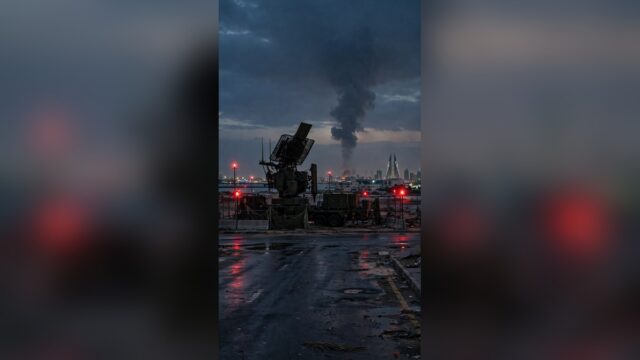
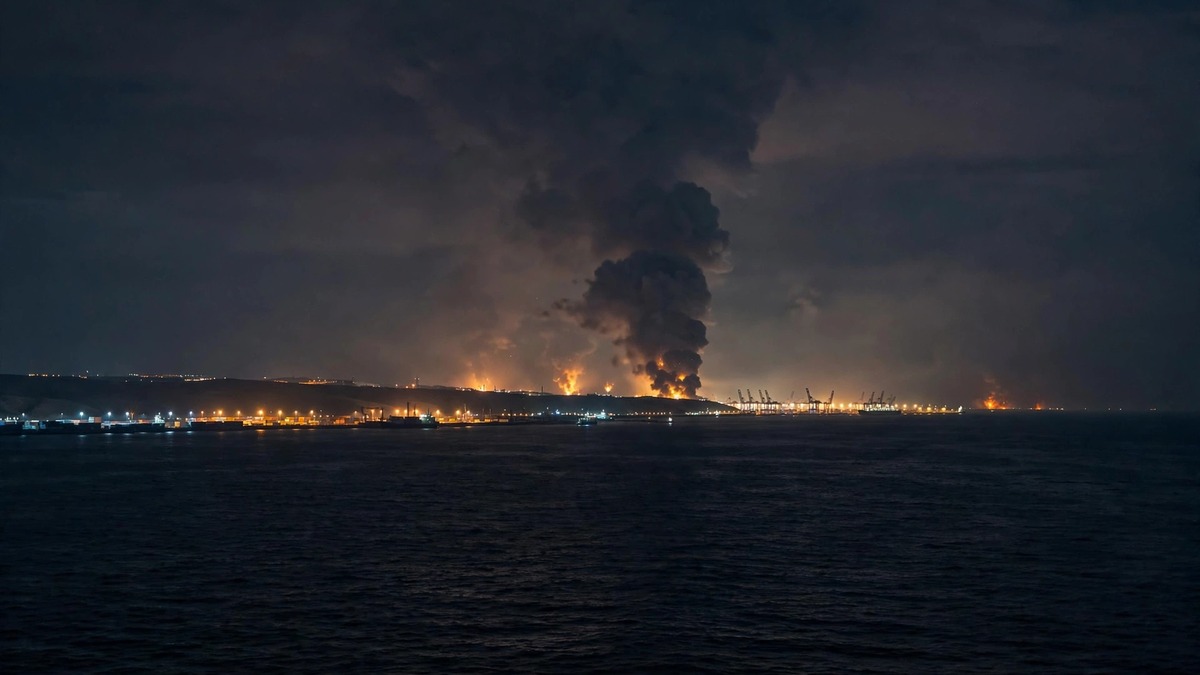
The first reports came from Qeshm Island, the large island that sits inside the Strait of Hormuz. Iran’s official news agency IRNA said two explosions were heard on the eastern side of the island on Saturday evening. Shortly afterwards, several more explosions were reported near Jask port, further east along the coast in Hormozgan province. Iranian state television then widened the list, reporting blasts in Bandar Abbas and Sirik as well. All four places sit close to the strait, the narrow waterway that carries about a fifth of the world’s oil.
No official explanation has been given for the sounds. State television did not name a cause, and no Iranian authority has said who was behind them or what was hit. No information on damage or casualties has been released.
One Iranian account offered a partial explanation. The semi-official Tasnim news agency, citing an unnamed Iranian official, said the two explosions on Qeshm were related to activity in the Strait of Hormuz and that no attack had been carried out on the island so far. The agency did not say what in the strait was behind the sounds, and the claim has not been confirmed by any outside source. A state television reporter suggested the blasts could be linked to Iranian military operations to defend the strait, though no official confirmation has established that.
An Israeli outlet reported that casualties were being spoken of at Jask port, without giving a number, and that a senior Iranian official had threatened retaliation against American interests in the region. That report has not been confirmed by any outside source, and no statement from the US military or government about Jask or Qeshm has appeared in any of the reports.
Why it matters: a crowded day of strikes, mines and a wider blockade
The evening blasts were not the first explosions on Qeshm that day. Earlier on Saturday, President Donald Trump confirmed that the United States had carried out what he called a “minor strike” on an Iranian air defence system on the island in the early morning hours. Tasnim said two missiles struck the island during that strike. Our report on that strike is here: Qeshm Island missile strikes — https://worldpulsewire.com/2026/11/07/qeshm-island-missiles/
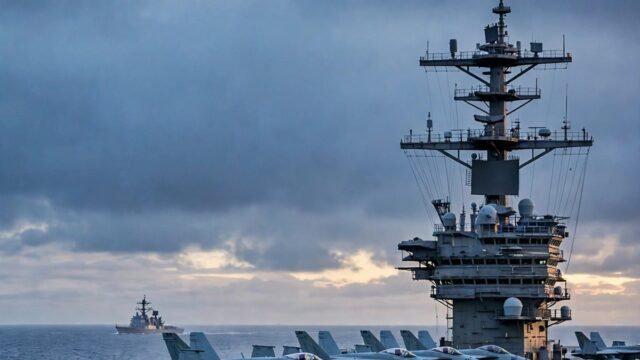
The sea around the strait was unsettled on Saturday too. Iran’s Revolutionary Guard navy said two oil tankers struck mines near the Strait of Hormuz and were burning, after passing through what it called an unsafe part of the waterway with their navigation systems switched off. That account comes from Iranian sources alone. The US military, for its part, said it disabled a commercial vessel in the Gulf of Oman after the ship’s crew ignored repeated warnings and tried to break the American naval blockade of Iranian ports. Central Command said a US aircraft fired precision munitions at the stern of the St. Kitts-flagged M/V Huda to disable it. The blockade has been in force since July; Central Command says it has redirected 147 commercial vessels, disabled five merchant ships that refused to comply, and prevented Iran from exporting more than $25 billion in crude oil. The wider shipping picture, including the surge in attacks in the strait, is covered here: Hormuz shipping surge — https://worldpulsewire.com/2026/11/06/hormuz-attacks-surge-shipping-thins-out/
Washington also moved on Saturday to widen the pressure beyond the sea. Central Command announced a new task force, named Task Force Iron Gate, to disrupt Iran’s movement of weapons and other sanctioned material across its land borders and the Caspian Sea. The 20-strong unit, based in Tampa, Florida, will coordinate with other US government agencies and focus on dual-use technology, sanctioned materials and illegal revenue streams. “Strengthening CENTCOM’s collaboration with US interagency partners will further constrain Iran’s ability to finance terrorism, rebuild weapons factories, and replenish their military,” Admiral Brad Cooper, the commander of Central Command, said in a statement.
The war, which began when the United States and Israel carried out a wave of strikes in late February, has been deadlocked for months. Britain’s maritime agency reported at least 11 ships attacked in and around the strait in the week ending November 6, three of which sank, and said transits through the waterway are running about 65 percent below pre-conflict levels. The fighting has also spread beyond the strait: on Saturday, Saudi air defences downed a Houthi cruise missile heading for Riyadh, as reported here: Riyadh cruise missile — https://worldpulsewire.com/2026/11/07/houthi-cruise-missile-riyadh/ — and Iran’s Revolutionary Guard has said it is ready to change the country’s nuclear doctrine if ordered, as reported here: IRGC nuclear doctrine — https://worldpulsewire.com/2026/11/07/irgc-nuclear-doctrine-change/
What happens next
Three questions now decide what follows. First, what caused the Saturday evening blasts — and whether more are heard tonight. Until an official cause is given, every account remains partial. Second, whether Washington says anything about the blasts: no US statement about Qeshm or Jask has appeared so far, and the evening’s only confirmed American action was the disabling of the M/V Huda. Third, whether the diplomacy can catch up. Qatar is pressing a two-day proposal under which the US would lift the blockade and release some frozen Iranian assets while Iran allowed international nuclear inspectors back to bombed sites and reopened the strait under a temporary arrangement. Iran is reported to be willing to discuss aspects of its nuclear programme that had previously been off the table, and Foreign Minister Abbas Araghchi said he had spoken with 12 foreign ministers in 48 hours. Qatar’s prime minister said on Saturday that mediation remained active and the US was still willing to find a solution.
For now, the facts are narrow: blasts were heard in four places along Iran’s southern coast, no cause has been confirmed, and no damage or casualty figures have been released. What is not yet known — what exploded, who was behind it, and whether it happens again — is exactly what the region is waiting to find out.
Sources: IRNA, Reuters, Al Jazeera, Tasnim, Jerusalem Post, Haaretz, Turkiye Today, ANI. Events: Saturday evening 7 November 2026, Qeshm Island, Jask, Sirik and Bandar Abbas, Iran. First published: Sunday 8 November 2026. The blasts, the Tasnim official’s account and the tanker mine report are Iranian accounts; the M/V Huda disabling and the Task Force Iron Gate announcement are the US military’s accounts. Casualty reports from Jask have not been confirmed by any outside source.