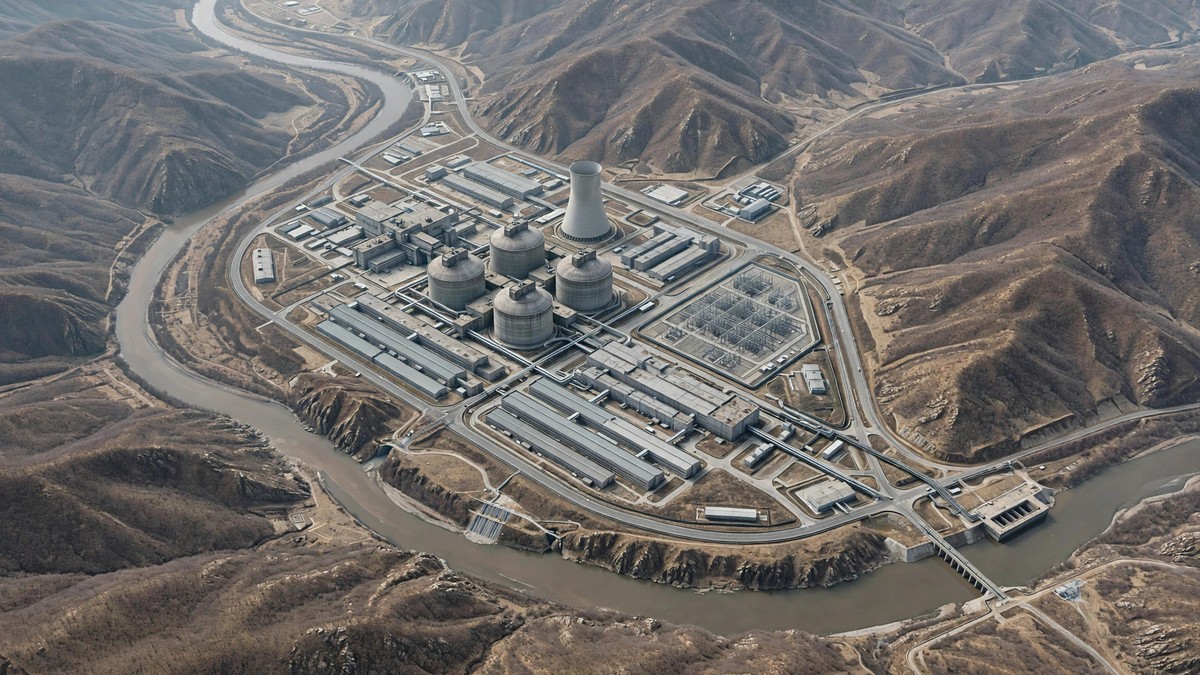
North Korea has finished building an extension to its uranium enrichment plant at Yongbyon, the UN nuclear watchdog said on Wednesday, adding to its output of material that can fuel a nuclear weapon.
The announcement lands on the day the leaders of the United States, China and Russia meet in Shenzhen, with cutting nuclear arsenals on the agenda. It is also a measure of how little the outside world can see inside North Korea. The watchdog’s inspectors were expelled in 2009, and it now tracks the programme from satellite pictures.
Key Points
- North Korea finished an extension to its original uranium enrichment plant at Yongbyon, with the outside work complete by late October.
- Building began in mid-September, the head of the UN nuclear watchdog, Rafael Grossi, told its board in Vienna on Wednesday.
- Grossi told the board the programme’s expansion “remains a cause for serious concern”.
- The site’s 5-megawatt reactor, which makes plutonium, is probably still running, in its seventh fuel cycle. A second, light-water reactor has run since April.
- The agency’s inspectors were ordered out of the country in 2009 and have not been back since. The agency watches the programme by satellite.
What happened
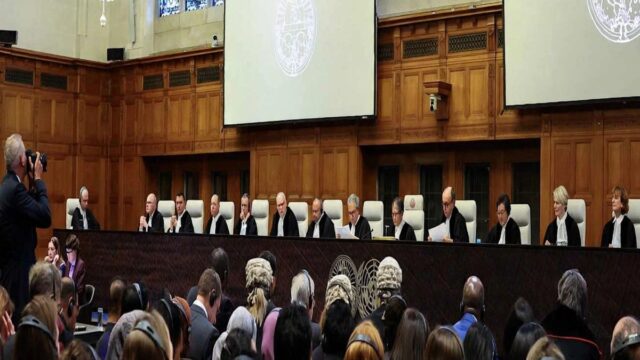
Grossi gave the update in his opening statement to the quarterly meeting of the International Atomic Energy Agency’s 35-nation Board of Governors in Vienna. “Since mid-September 2026, a further extension to the original Yongbyon enrichment facility has been under construction with the new extension externally complete by late October 2026,” he said.
He did not say what is inside the new building, or whether it is running yet. The word “externally” matters: the agency can see the shell from above, not the centrifuges that may sit within it. Grossi added: “The ongoing expansion of the DPRK’s uranium enrichment programme remains a cause for serious concern.”
The update fits a pattern Grossi has described to the board before. He has already told governors about enrichment plants running at Kangson and Yongbyon, a second enrichment facility being built at Yongbyon, and further growth in North Korea’s output of weapons-grade material. Kangson sits just outside Pyongyang to the southwest. Yongbyon is the bigger complex, further up the country from Pyongyang. A third site, at Kusong, is also believed to enrich uranium.
A report Grossi sent to the board in September added a detail that frames the new building. The agency had identified a second uranium enrichment facility at Yongbyon, one Pyongyang had purportedly shut down after talks and then switched back on in 2021. In the same report, Grossi said the new Yongbyon facility could hold up to 28 centrifuge cascades, and that work at an expanded plant at Kangson had begun in January.
The new building was not the only news from Yongbyon. The 5-megawatt reactor there, which North Korea uses to make plutonium from spent fuel, probably keeps running and has reached its seventh irradiation cycle. Once a cycle ends, the spent fuel comes out for reprocessing. A light-water reactor at the same site has been running since April this year.
None of this comes from anyone on the ground. The agency has had no inspectors in North Korea since Pyongyang expelled them in 2009. It reads the programme from satellite images and open sources, which is why Grossi’s language is careful: “observed indications” and “probably”, not certainty.
Why it matters
Uranium enrichment and plutonium are the two routes to the core of a nuclear weapon, and North Korea is widening both. The September report put numbers on the scale. A 2025 study by the James Martin Center for Nonproliferation Studies estimated that 28 cascades holding 4,592 centrifuges at Yongbyon could turn out about 85 kilograms of weapons-grade highly enriched uranium a year, enough for three or four more warheads. That is an estimate of capacity, not a measured output, and the agency has not confirmed how much material North Korea actually holds.
Kim Jong Un has made no secret of the direction. State media quoted him saying production capacity for weapons-grade material had more than doubled over the past five years, and promising to strengthen the country’s nuclear forces further. Estimates of the arsenal itself vary widely. One 2025 estimate put it at about 60 warheads. South Korea’s defence minister said in August that it could be 80 to 120, citing private research groups.
The history explains the alarm. North Korea carried out six underground nuclear tests between 2006 and 2017, the last in September 2017, and declared itself a nuclear weapons state in 2022. It says it will not give up the arsenal. It is under layers of UN sanctions for the banned programme, and it is the only country ever to walk out of the Non-Proliferation Treaty.
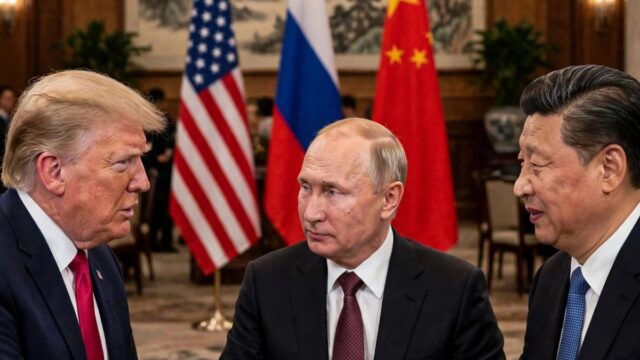
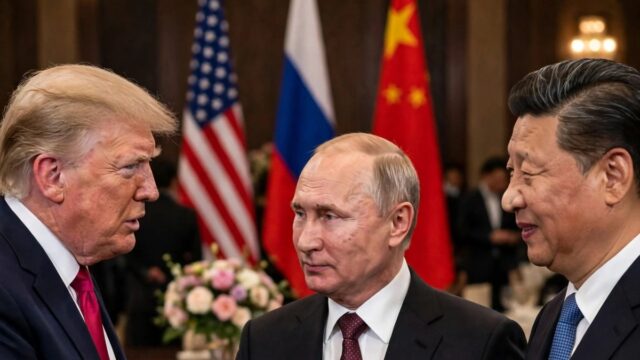
The timing sharpens the point. Trump landed in Shenzhen on Wednesday for a first-ever three-way meeting with Xi Jinping and Vladimir Putin, and the White House says he will raise cutting nuclear arsenals. The last arms pact between the United States and Russia, New START, expired in February, leaving the two biggest arsenals without caps for the first time in more than half a century. Analysts expect the Shenzhen talks to carry more symbolism than substance. Grossi’s report is a reminder of what sits outside that room: a fourth nuclear-armed state, still building, still unwatched from the inside.
What happens next
The three leaders meet in Shenzhen on Thursday. Any mention of North Korea in what follows the meeting will be the first sign of whether the Yongbyon news reached the table. The White House has said Trump also plans to raise the war in Iran, where the United States struck targets this week.
For the watchdog, the work does not change. It will keep watching Yongbyon from orbit and reporting to its board each quarter. The next question it will try to answer is whether the new extension starts running, and what its centrifuges, if any, are producing. Until inspectors are allowed back in, no one outside North Korea will know for sure.
Sources: Reuters, The Korea Times, Türkiye Today. Time: 19 November 2026, 03:50 +08.