Iran said on Wednesday it struck US drone and missile sites at an air base in Kuwait, as Bahrain faced Iranian attacks for a third time this week and Houthi missiles were fired at Riyadh.
Key Points
- Iran’s army said it targeted US drone and missile installations at Ali Al Salem Air Base in Kuwait; Kuwait said its air defences were countering hostile drones and reported no damage.
- Bahrain said it intercepted Iranian aerial attacks for a third time this week; residents received two shelter alerts before an all-clear.
- Two cruise missiles launched by the Houthis headed for the Saudi capital on Wednesday; the coalition reports that neither one reached its target.
- The coalition says it struck 60 Houthi military sites across four governorates in Yemen on Tuesday, while the Houthis say the strikes killed at least 17 people.
- The attacks followed a US fighter-jet strike on an Iranian missile site on Qeshm Island on Tuesday.
What happened
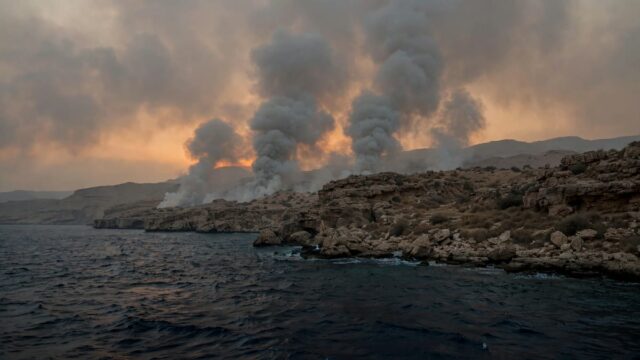
The new round began on Tuesday, when an American fighter jet hit a missile launch site run by Iran’s Revolutionary Guard on Qeshm Island, in the Strait of Hormuz. Washington said the strike answered an Iranian attack earlier that day on an American radar site in Bahrain.
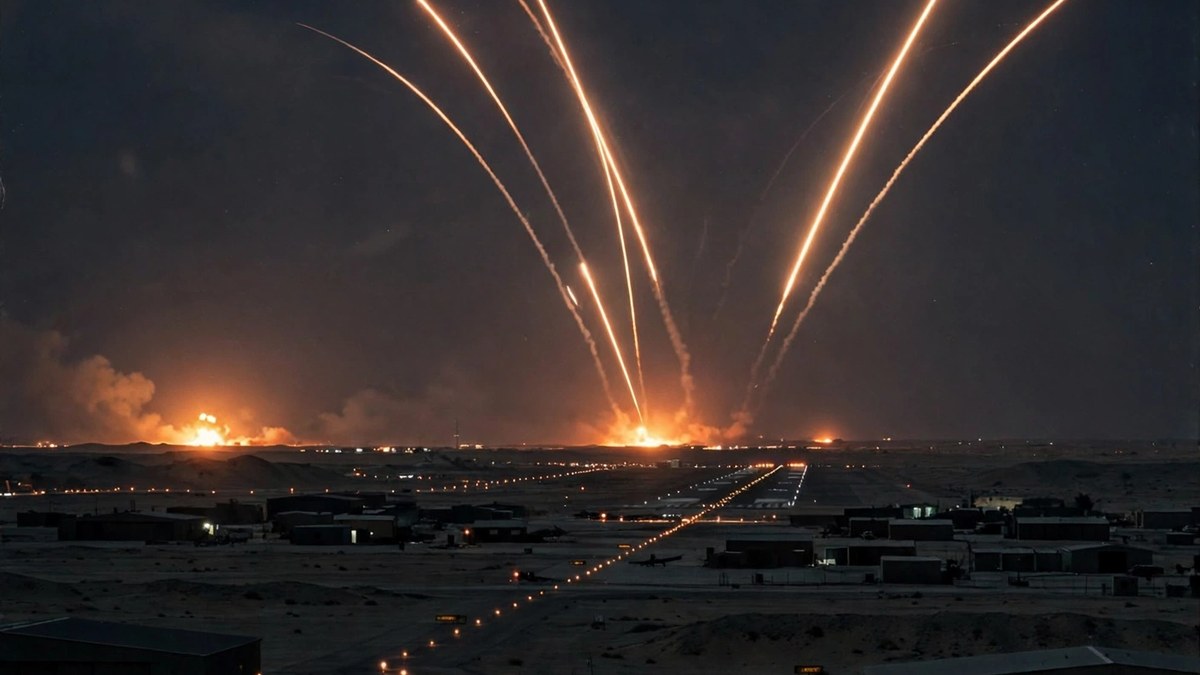
Early on Wednesday, Iran’s army said it had aimed at drone and missile installations used by US forces at Ali Al Salem Air Base in Kuwait. Kuwait’s army said its air defences were engaging hostile drones. It reported no damage.
Bahrain said its defences stopped Iranian aerial attacks for the third time in a week. The interior ministry sent residents two shelter warnings in the early hours, then gave the all-clear a short time later.
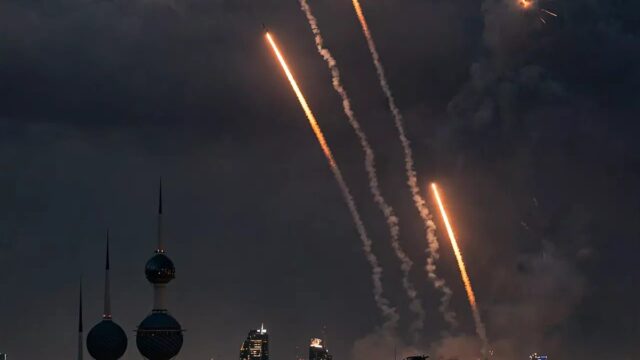
At the same time, Yemen’s Houthis fired two cruise missiles towards Riyadh. The coalition says both missiles were stopped by its air defences before reaching the capital. People in the Saudi capital heard a powerful explosion, and the authorities sounded alerts in Jazan, Najran and Khamis Mushait, in the south near the Yemeni border, before saying the danger had passed. The Houthis’ spokesman, Yahya Saree, said the group had aimed at oil pumping stations near Riyadh and a radar site in southern Saudi Arabia. Saudi officials have not answered those claims.
The coalition had already stepped up its own campaign on Tuesday, saying its strikes hit 60 Houthi military sites in the governorates of Sanaa, Hodeidah, Amran and Saada, including tunnels used to store ballistic missiles and workshops that build drones. The Houthis say at least 17 people were killed in those strikes.
Iran said its recent attacks were a response to American drone surveillance and to an attack on Iranian communications towers.
Ali Al Salem has been hit repeatedly in the nine-month war. The Associated Press has reported that Iran has struck the base at least 30 times, damaging or destroying at least 15 aircraft hangars, along with warehouses and 10 buildings near a residential area.
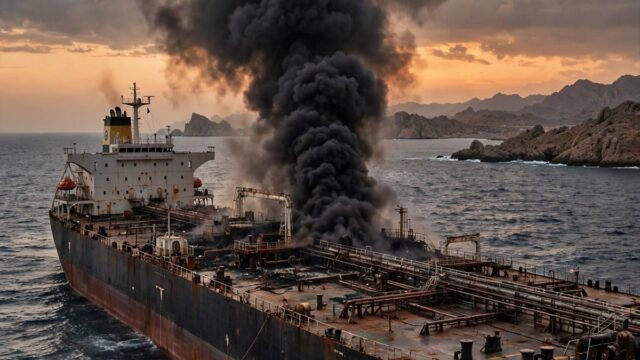
Commercial shipping has also been pulled into the conflict. An ADNOC vessel was attacked in the Strait of Hormuz on Tuesday evening, leaving one crew member missing and 11 injured.
Why Iran’s widening attacks matter
This is the first Iranian attack on Kuwait since September. Until now, the recent fighting had centred on Bahrain, home to the US Navy’s Fifth Fleet. The strike on Ali Al Salem shows the conflict reaching a second Gulf state that hosts American forces — and a base Iran has hit many times before in this war.
The missiles aimed at Riyadh show the war’s other front reaching deep into Saudi Arabia. A capital city was the target, even if both missiles were stopped. The Houthis have been stepping up attacks on Saudi military, civilian and oil sites since hostilities reignited in July.
The sea lane is under pressure too. The Strait of Hormuz carries a large share of the world’s oil, and attacks on tankers there raise the cost of the war for everyone using it. Kuwait’s air defences engaged hostile drones overnight as the fighting widened.
Diplomacy is struggling to keep up. Qatar and Oman are still trying to mediate, but talks have stalled, and Washington has sent a third aircraft carrier and thousands more troops to the region. President Donald Trump has offered contradictory hints about his next steps.
No damage has been reported so far at Ali Al Salem or in Bahrain, and US Central Command has not commented on the latest attacks. That picture could change as assessments come in.
What happens next
All eyes turn to Shenzhen on Thursday, when Trump meets China’s Xi Jinping and Russia’s Vladimir Putin for the first time as a trio. Iran is on the agenda, along with nuclear arms, trade and AI. US officials do not expect the meeting to produce an agreement.
Qatar and Oman are expected to keep pushing for talks, but the cycle of strikes and counter-strikes makes a pause harder with each round. The next signs to watch are a statement from US Central Command, damage assessments from Kuwait and Bahrain, and whether Iran or the Houthis launch further attacks.
Sources: Associated Press, Reuters, Al Jazeera | 18 November 2026