Key Points
- Iranian officials said American forces struck several sites on Qeshm Island on Tuesday evening. They reported no damage to homes, shops or infrastructure.
- Hours earlier, Iran fired drones at a United States radar base in Bahrain, the third Iranian attack on American targets there in days.
- At least five vessels were reported hit in and around the Strait of Hormuz on Tuesday, and three tankers were said to have struck mines.
- The USS Theodore Roosevelt carrier group has arrived in the region, joining two other American carriers.
- Talks to end the eight-month war have stalled, and analysts say both sides are now testing how far escalation can go.
Iranian officials said on Tuesday that American forces struck several sites on Qeshm Island, in the Strait of Hormuz, hours after Iran fired drones at a United States radar base in Bahrain.
The two sides traded blows across the Gulf in a single day: Iran struck an American target in the morning, the United States answered on Iranian soil in the evening, and ships kept burning in the waterway between them. It was the sharpest day of fighting in weeks, and it broke a roughly two-month lull in direct Iranian attacks on American bases.
What happened
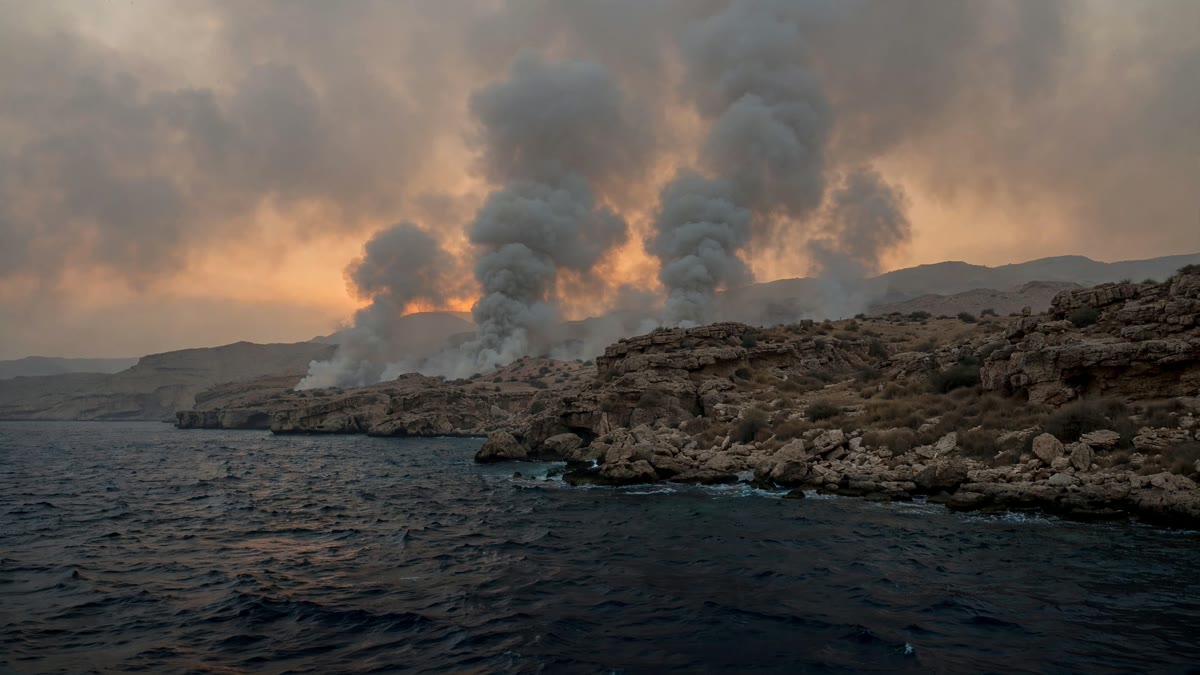
The island was hit after dark. Residents heard five or six explosions northwest of Qeshm city, and smoke was seen rising over the island, Iranian media reported. Ahmad Nafisi, the deputy governor of Hormozgan province, told the official IRNA news agency that American forces had hit several locations on the island.
“The American attack on locations on Qeshm island caused no damage to residential, commercial, or infrastructural areas,” Nafisi said. He added that the situation was under control and that relief and service agencies were on full alert.
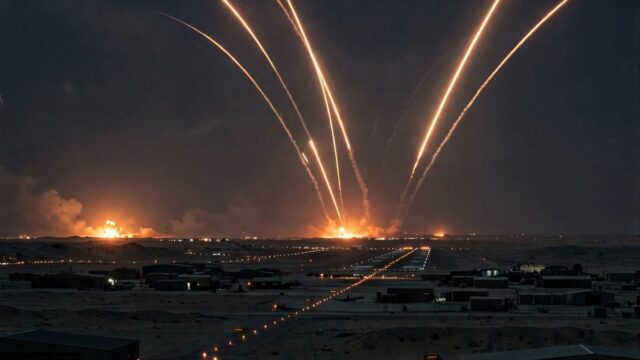
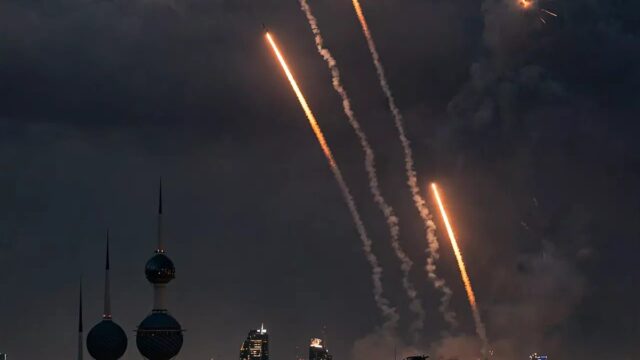
The day had begun the other way round. In the morning, combat drones from Iran’s Revolutionary Guard Corps targeted a radar system used by American forces at Sheikh Isa Air Base in Bahrain. The Guard’s Sepah news site called it a precision operation and said it was an answer to repeated violations of Iranian airspace by American drones. Bahrain sounded an alert as the drones came in and said its air defences had intercepted them. The American military said no equipment was damaged and no personnel were hurt.
It was the third Iranian attack on American targets in Bahrain in recent days. On Friday, Iran targeted an early-warning radar facility in the country. On Sunday, it fired at a radar system at an American helicopter base. American forces have struck Qeshm before, including on 2 November.
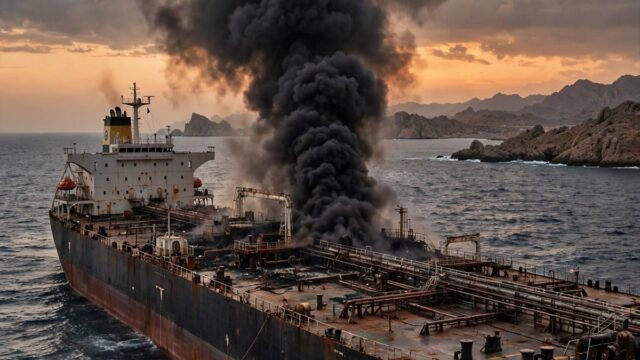
Shipping took the worst of the day’s damage. At least five vessels were reported hit in and around the Strait of Hormuz on Tuesday. Three oil tankers hit naval mines as they tried to cross the strait, according to Iran’s armed forces. The British military’s United Kingdom Maritime Trade Operations said a tanker was attacked twice north of Oman, and that the second strike set it on fire. Oman evacuated 24 crew members from the Panama-flagged Tara Gas tanker after a fire broke out about two nautical miles off the Musandam Peninsula. Iran’s Fars news agency reported that two ships struck mines and caught fire, though it was not clear whether one of them was the vessel in the British report.
Iran also claimed two successes in the air. The Revolutionary Guard said it had shot down an American MQ-1 Predator drone south of Qeshm, the 18th such drone it claims to have downed since the war began. Iran’s army said separately that it had destroyed an American-made LUCAS attack drone over the strait. Neither claim has been confirmed by any outside source.
Why it matters
The pattern is what has changed. For months, Iran waited for American attacks and then answered them. Tehran-based security analyst Mostafa Najafi told The Associated Press the attacks could signal a change in that approach: instead of waiting to be hit and then answering, Tehran is now going after the bases themselves.
Hamidreza Azizi, an Iran analyst at the International Crisis Group, wrote that Iranian leaders are weighing whether “breaking the blockade through escalation is less costly than accepting its continuation.” In his words, the risk of a wider war no longer rests only on whether President Donald Trump decides to attack Iran again. It also rests on whether Tehran concludes that holding back costs more than striking out.
Not everyone thinks the new approach will work. “Shooting at ships causes fear, but is not effective enough to change the strategic equation,” Sascha Bruchmann, a Bahrain-based defence analyst with the International Institute for Strategic Studies, told the AP. “Tehran knows it needs to do something, but I wouldn’t overestimate what we saw against Bahrain this week. This is not it — yet.”
The stakes are written into the strait itself. In normal times, roughly a fifth of all the oil traded worldwide passes through that narrow waterway. The United States has kept a naval blockade on Iranian ports for months, while escorting tankers through the waterway. American commanders say those escorts have helped Gulf oil shipments return to roughly prewar levels, and that the blockade is squeezing Iran’s crude exports. Since the summer, American forces have helped Gulf states ship 1.5 billion barrels of oil through Hormuz, the military said.
The American buildup keeps growing. Two other carriers, the USS George H.W. Bush and the USS George Washington, are already there; the USS Theodore Roosevelt group is the latest to arrive. Together with smaller warships, the American naval force in the Persian Gulf, the Arabian Sea, the Red Sea and the Mediterranean is now larger than the one that opened the war, according to an analysis by Israel’s Institute for National Security Studies. Central Command would not say whether all three carrier groups will stay.
What happens next
Nothing about the Qeshm strikes has been explained in public yet: not what was hit, nor what weapons were used, nor what Washington intends next. The American account of the operation, if one comes, will be the first test of how the two sides describe the same night.
The diplomacy is not moving. Negotiations to end the war have stalled despite intense mediation by Qatar. Doha warned on Tuesday that Iran’s attacks on Bahrain “undermine diplomatic efforts”, and its foreign ministry spokesman said any further escalation posed an “extremely grave danger” to the chances of a deal. Egypt called the attack “blatant aggression”. Saudi Arabia and the United Arab Emirates also condemned it.
What to watch in the coming days: whether Iran strikes Bahrain a fourth time, whether the three American carrier groups remain in place, whether tankers keep moving through Hormuz, and whether either side finds a way back to talks. Iranian officials have called the current state of the war “no war, no peace”. Tuesday showed how thin that line has become.
Sources: AFP, The Associated Press, Al Jazeera. Time: Tuesday, 17 November 2026.