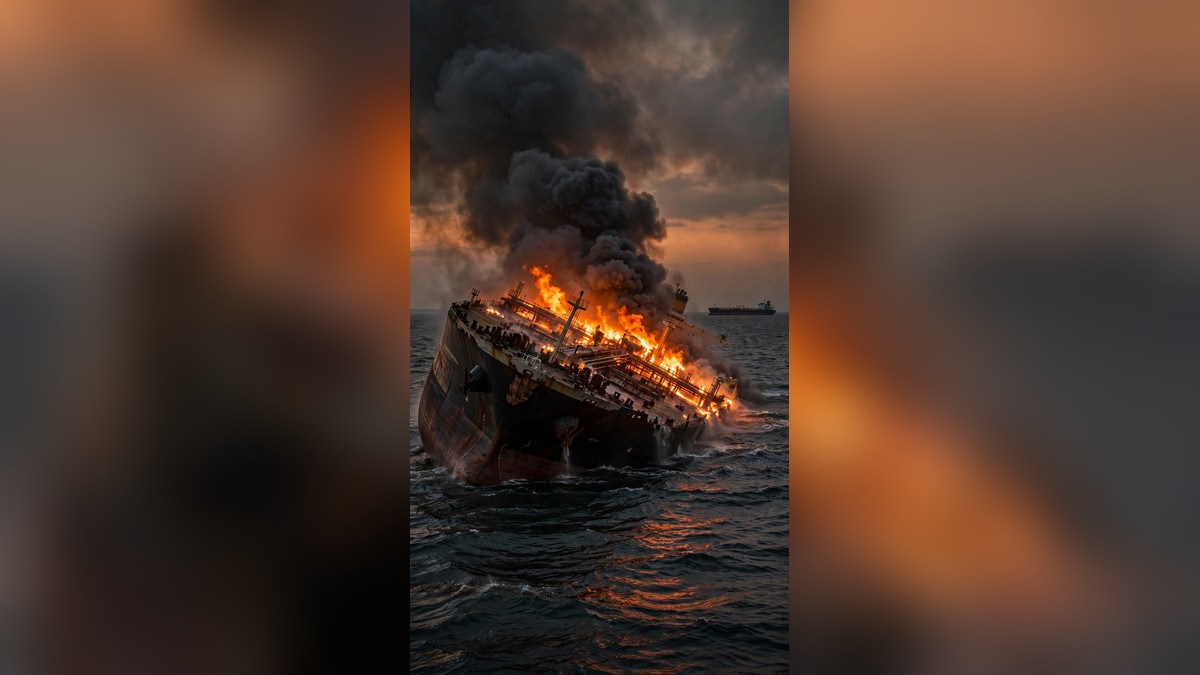
A supertanker carrying more than two million barrels of crude oil has sunk in the Strait of Hormuz after striking a naval mine, Iran’s Revolutionary Guard claims, in the sharpest escalation of the tanker war.
Key Points
- Iran’s Revolutionary Guard says two tankers hit naval mines in the Strait of Hormuz on Sunday; it claims one, a supertanker carrying more than two million barrels of crude, sank.
- Iran’s navy says another tanker struck a mine east of the strait on Monday morning, caught fire and was left immobilised.
- No vessel has been named, no crew details have been given, and none of the claims has been confirmed by any outside source.
- Shipping through the strait slowed over the weekend, and the UAE says three of its oil company vessels came under attack last week.
- A third US aircraft carrier, the USS Theodore Roosevelt, has arrived in the region as the UN warns the standoff is hitting the world economy.
What happened
Iran’s Revolutionary Guard said on Sunday that two oil tankers struck naval mines while crossing the southern part of the Strait of Hormuz on a route Tehran does not authorise. In a statement carried by Iranian state television, the Guard said the two vessels were hit by “massive explosions and fire” after entering the waterway without permission.
“One of these vessels – a super tanker carrying over two million barrels of crude oil – sank in the southern waters of the Persian Gulf,” the statement said. It gave no names for the ships, no countries of origin and no information about their crews.
Hours later, Iran’s navy reported a further incident. It said an oil tanker struck a naval mine east of the strait and caught fire. On Monday morning the navy said the vessel had entered a restricted area, switched off its tracking system and been left unable to move after the blast. It warned that ships entering prohibited waters without coordinating with Iran’s armed forces faced the same risk.
Iranian outlets put the weekend total at six tankers caught in mine incidents since Sunday, with the Guard saying the southern passage of the strait has been mined and warning that any vessel ignoring its instructions will be “firmly dealt with”. The Guard has described the measures as a response to the American naval blockade of Iranian ports.
None of the claims has been confirmed by any outside source. Britain’s maritime trade office said it was aware of a report from Indian shipping authorities about an attack on a tanker in the Gulf, but it was not clear whether it was the same incident as the one announced by Tehran. The office said the crew were safe, while the damage and any environmental impact were unknown.
The American military, which has been escorting ships through the waterway, recently said it had cleared mines from the main routes. United States Central Command said last month it had helped Gulf countries move 1.5 billion barrels of oil through Hormuz since the summer.
Why the supertanker sinking matters
If the sinking is confirmed, it would be the first time a vessel of this size has gone down in the tanker war, and a sharp step up from the fires and damage reported in earlier incidents. A supertanker can carry enough crude to supply a medium-sized country for days, so the loss of more than two million barrels in a single blast underlines how exposed shipping in the strait has become.
The timing matters too. The strait normally carries about a fifth of the world’s oil, and Tehran has restricted traffic through it since the war with the United States and Israel began in late February. It shut the waterway again in July after American strikes resumed, briefly reopening it after a June understanding between the two sides.
Shipping data already shows the pressure. Traffic through the strait slowed over the weekend, according to a Reuters report on Monday, and the United Arab Emirates said three vessels operated by its national oil company came under attack while crossing the strait last week. More than 130 vessels a day used the route before the war.
The human cost is also mounting. The United Nations told the Security Council on Friday that 134 confirmed incidents against commercial shipping had been recorded in the strait and the wider region as of 11 November, with 25 seafarers killed and many more hurt or missing. October was the worst month for shipping attacks since February.
The economic fallout is spreading well beyond the Gulf. The head of the United Nations task force on fertiliser shipments warned at the COP31 climate talks in Turkiye that prices for fertiliser had risen 30 percent since the blockades began, putting 45 million people at risk of severe food insecurity and pushing 30 million more into poverty. A third of the world’s fertiliser used to pass through Hormuz.
Oil markets, for now, have stayed calm. Brent crude fell 0.6 percent to $95.30 a barrel early on Monday, with Middle East shipments almost back to pre-war levels despite the attacks on shipping. The International Energy Agency said on Friday that the world oil market would return to surplus in the final quarter of the year.
What happens next
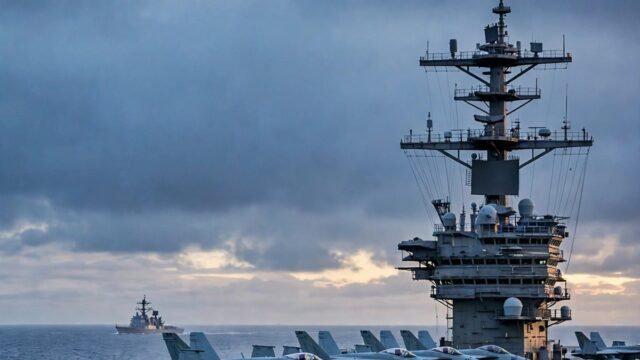
The military build-up around the strait continues. The USS Theodore Roosevelt has arrived in the Middle East, a United States official told Al Jazeera, joining two other American carriers already operating in the region. The arrival takes the American naval presence to its highest level since the war began.
Diplomacy, meanwhile, remains stuck. Iran’s deputy foreign minister, Kazem Gharibabadi, said on Sunday that Tehran would not wait for Washington to strike first, and that Iran was preparing for three outcomes at once: talks, a blockade or war. He also said Iran had proposed a two-day plan to end the fighting and reopen the strait, but that Washington had not answered Tehran’s conditions.
United Nations Secretary-General Antonio Guterres pressed on Monday for a “serious diplomatic process” to end the war, telling journalists at the ASEAN summit in Manila that the standoff between the two sides was having “devastating consequences” for the world economy, with high fuel prices and difficult access to fertiliser felt far beyond the region.
For shipping, the immediate question is whether the mine incidents continue. The Guard has warned fishing boats to stay clear of the wreckage and told tanker owners and crews to keep out of the area it calls a prohibited mine zone. Until an outside source confirms what happened to the supertanker, the claim remains just that – a claim – but the pattern of attacks on vessels in the strait is now unmistakable.
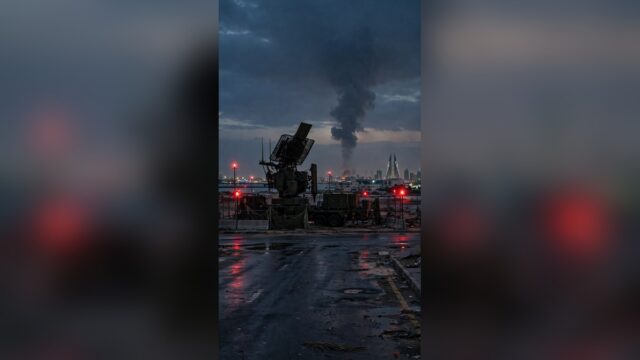
The sinking follows the fifth tanker hit in Hormuz in 24 hours. Iran has also said it will not wait for the US to strike first. Iran also claimed a second drone strike on a US base in Bahrain.
Sources: Reuters, AFP, Al Jazeera, ANews, Shafaq, Turkiye Today, CGTN, UKMTO. Published 16 November 2026. The sinking and the mine strikes are claims by Iran’s Revolutionary Guard and navy and have not been confirmed by any outside source.