Key Points
- At least 18 more flights across nine European countries were hit by hoax bomb threats on Friday, 6 November — the third wave this week.
- The threats then spread to television: RTE in Ireland, Sky in Britain and Nova TV in Bulgaria received emails warning a bomb would explode in 45 minutes.
- The emails, titled “MESSAGE TO THE WEST” and signed “Mikhail Andropov”, warned “this is only the beginning”.
- RTE went off air for up to three hours while police swept its Dublin campus; Nova TV’s Sofia newsroom was evacuated and checked.
- No explosives have been found on any plane or at any site all week, and every affected aircraft landed safely.
- More than 50 flights have now been hit this week, and no one has been publicly identified as behind the threats.
Hoax bomb threats that have disrupted dozens of European flights this week spread to television stations on Friday, forcing evacuations and taking a major Irish broadcaster off air for hours.
What happened
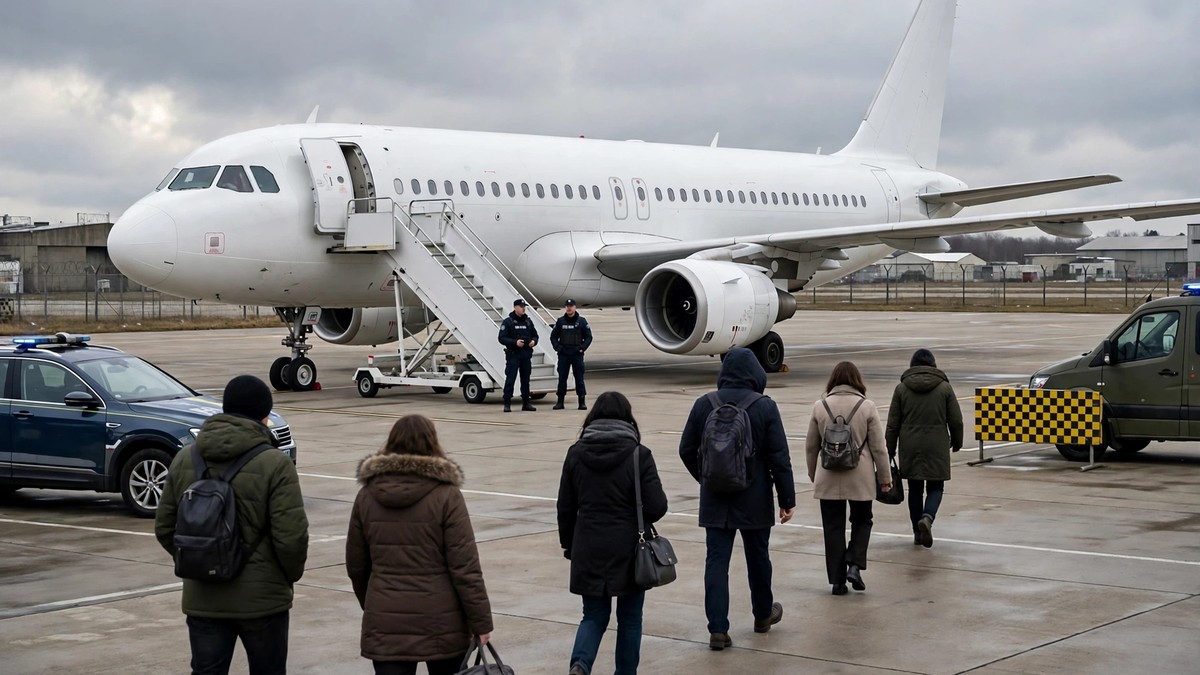
Friday brought a third wave of hoax bomb threats to European aviation — and then the campaign jumped to a new target. At least 18 flights travelling to or from nine countries — Bulgaria, Cyprus, Czechia, France, Hungary, Italy, Portugal, Romania and the United Kingdom — were hit with fresh threats during the day. Prague airport alone received nine of them, and a Wizz Air service from Prague to Rome was diverted to Venice. Hungary scrambled fighter jets to escort three passenger planes within an hour, and four threatened flights over French territory landed safely at Orly in Paris. Every affected aircraft landed without incident, and searches found no explosives on any of them. The 18 flights were a tiny fraction of the 26,709 services Eurocontrol had scheduled across Europe on Friday — but each one meant diversions, delays and full security sweeps.
The new front opened in the morning, when emails titled “MESSAGE TO THE WEST” reached television stations across the continent. Irish broadcaster RTE, Britain’s Sky and Bulgarian private station Nova TV were among those targeted, the companies said. The message was blunt: “We want the whole world to know about us, which is why one of our operatives has planted an explosive device in your building. It will detonate in 45 minutes. The clock is ticking.”
RTE’s programmes were replaced by music and a pre-recorded message, some for as long as three hours, and its campus in south Dublin stayed closed while police checked it building by building. Police also came to the Nova newsroom in Sofia, which was evacuated, checked and declared safe; broadcasting there was not interrupted and staff returned to their desks. No bombs were found at any affected site.
The emails were signed with the name Mikhail Andropov, and the writer claimed to be one of the leaders of a group behind this week’s plane hoaxes. “But this is only the beginning. What happened this week is just a small part of what awaits Europe in the near future,” the message added. A separate email reported to have gone to 18 media outlets claimed responsibility for the alerts and warned of attacks on aircraft, cruise ships, metro stations and trains — but its authenticity has not been verified.
Why it matters
The move from planes to newsrooms changes the shape of the campaign. Until Friday, the threats had aimed at travel: diversions, emergency landings and fighter-jet escorts. Now they have hit the places that report the news, forcing a national broadcaster off air and emptying newsrooms in three countries. Irish Prime Minister Micheal Martin said security agencies in Europe had not yet determined whether the threats to air travel and media organisations were being made by individuals or as part of a coordinated attack. “It just illustrates how relatively simple it can be to cause disruption and to undermine the normal operation of society through unconventional activities of this kind, which are designed to cause disruption, designed to cause fear and anxiety,” he told RTE radio. “We have to remain calm,” he added.
The scale keeps growing. At least seven flights were targeted on Tuesday, and Thursday’s wave forced at least 27 planes to land across Europe — read our report on Thursday’s diversions — before Friday’s 18 took the week’s total past 50. Air France-KLM chief executive Ben Smith said on Thursday he had never previously seen threats reported in such a coordinated fashion. The British government has called the week’s incidents “malicious hoax threats”. Even a false alarm is expensive: a sweep means unloading passengers and baggage, searching the aircraft and reloading, which can push crews past duty limits and lead to missed connections and cancellations.
Nobody has been publicly identified as behind the threats, and there is no public evidence linking them to any specific state or organisation. Earlier emails sent to airports in Rome and Sofia were signed “Fighters of the Male State”, a Russian far-right movement whose founder has not claimed the messages. The name on Friday’s emails shares a surname with Yuri Andropov, a former Soviet leader, and the title echoed a biography of him — but it is unclear whether that points to Russian involvement or is an attempt to point the finger at Moscow. Investigators have told reporters they have no evidence so far that a terror group or a state is directing the hoaxes, while some security analysts say the coordination bears the marks of hybrid warfare.
What happens next
Three things to watch. First, the investigations: police and aviation authorities in several countries are now working through the threats and sharing information, and no suspect has been named publicly. Second, the pattern: if a fourth wave comes, the question is whether it stays with planes and media or moves to the other targets named in the unverified email — cruise ships, metro stations and trains. Third, the response: airlines and airports must decide how long they can keep treating every threat as real — which they must — without the disruption itself becoming the victory the senders want. The one reassuring fact so far is simple: no device has been found anywhere, and every plane has landed safely. Read our earlier coverage of the week’s first waves.
Sources: Reuters, The Guardian, BBC, Associated Press, AFP | 7 November 2026