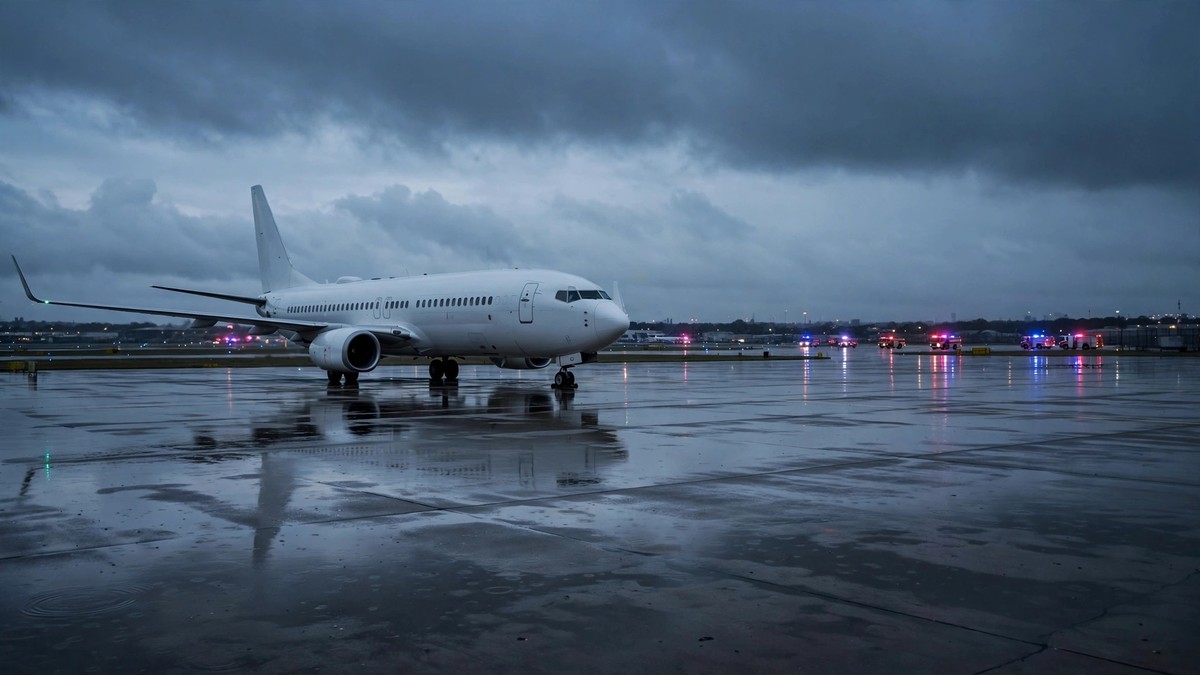
A wave of bomb threats forced dozens of passenger planes to divert across Europe on Thursday, with fighter jets scrambled and airports searched — and no explosives found on any aircraft.
Key Points
- At least 27 passenger planes were forced to land across Europe on Thursday, 5 November, after a wave of suspected bomb threats, according to Reuters.
- Aer Lingus flight EI402, carrying 151 passengers and six crew from Dublin to Rome, diverted to the Évreux military air base in Normandy and landed safely.
- Three aircraft landed at Bulgarian airports, a LOT flight landed in Brussels, and Finnair jets were escorted by fighter jets to Rome and Vienna.
- London’s Heathrow and Birmingham airports also received bomb threats early on Thursday; the UK government called them “malicious hoax threats”.
- No explosives were found on any aircraft searched, and investigators have not established whether the threats are linked.
- The wave followed at least seven similar threats on Tuesday, and a reported claim of responsibility by a Russian extremist group has not been verified.
Bomb threats forced at least 27 passenger planes to land across Europe on Thursday, 5 November, turning routine flights into emergency diversions and putting airports and air forces on alert across the continent.
What happened
The most dramatic diversion involved Aer Lingus flight EI402, an Airbus A320 flying from Dublin to Rome Fiumicino with 151 passengers and six crew on board. The crew declared an emergency over France after a bomb alert, and the aircraft turned near Paris, circled over the Évreux area, and landed at the Évreux-Fauville military air base in Normandy at about 09:04 UK time. Everyone on board was safe, and French military bomb disposal teams began examining the aircraft.
“The flight diverted to Normandy this morning as a security precaution,” Aer Lingus said in a statement. “The flight landed safely and Aer Lingus will work to re-accommodate customers to their final destination as soon as possible.”
The office of French Prime Minister Sébastien Lecornu confirmed the diversion and said the government was following the situation in real time. According to French media reports, a Rafale fighter jet escorted the aircraft during its approach to the military base. Rome’s Fiumicino airport was reportedly temporarily closed because of the threat.
Just over an hour after the Aer Lingus diversion, at least 10 more planes were diverted. Three aircraft landed at Bulgarian airports after bomb threats, local media reported, citing government ministers: two flights, from Copenhagen and Madrid, landed in Sofia, while a third, from London, landed in Plovdiv. A flight operated by Polish airline LOT, flying from Warsaw, landed safely at Brussels Airport after a suspicious report. A Finnair plane from Helsinki was escorted to its scheduled landing in Rome by the Italian air force, while a second Finnair flight from Helsinki, operated by Jettime, landed as normal in Vienna after receiving a bomb threat.
Four aircraft heading to Prague also received bomb threats on Thursday. Czech police said they assessed the credibility of the threats as low, but added: “Nevertheless, we are not underestimating the threat, which is why all necessary security measures have been activated with minimal impact on passengers and airport operations.” All four aircraft were to undergo pyrotechnic inspections after landing.
London’s Heathrow and Birmingham airports confirmed they had received bomb threats in the early hours of Thursday, according to The Times. The UK government said it took the threats seriously, but transport secretary Heidi Alexander said they were understood to be “malicious hoax threats”. No devices were found on any aircraft searched.
Why it matters
Thursday’s wave was not a one-off. Only two days earlier, on Tuesday, at least seven flights and a cruise ship received bomb threats, causing disruption at airports across Europe, although no devices were discovered. Among them was a Ryanair flight from Dublin to Rome, escorted toward Rome by Italian Air Force Eurofighters before landing safely. A LOT Boeing 737 MAX flying from London Heathrow to Warsaw was diverted to Modlin, temporarily closing the airport, while a Ryanair flight from Manchester to Murcia was inspected in Spain and no explosives were found.
The series had begun earlier still. A Wizz Air flight from London Luton to Sofia was diverted to Budapest on Monday after a bomb threat while airborne, and Hungarian Gripen fighters were scrambled to intercept and escort it. A subsequent inspection found nothing suspicious. Two weeks before that, an Austrian Airlines A320 flying from Tel Aviv to Vienna was diverted to Sofia after another bomb threat and escorted by a Bulgarian Air Force MiG-29. No explosive was found in that aircraft either.
The air alerts follow other security incidents this autumn, including a tanker struck by two unknown projectiles near the Strait of Hormuz, and night blasts that shook Qeshm Island as the United States and Iran traded claims over the strait. European officials have blamed both Russia and Iran for what they describe as hybrid attacks, and Moscow and Tehran both deny any such campaign. No country has attributed blame for this week’s bomb threats.
An email claiming to be from the “Fighters of the Male State” was sent to Rome’s main airport, Fiumicino, on Thursday, warning that bombs had been placed on two flights heading for the airport, according to The Times. The Male State is a Russian extremist organisation, and a claim of responsibility for at least some of the threats has been reported — but it has not been verified, and investigators have found no evidence so far that the threats are part of a state-run operation.
“It is too early to draw conclusions on whether the reported incidents are linked. National investigations remain ongoing,” said Apostolos Tzitzikostas, the EU transport commissioner. Matthew Borie, chief intelligence officer at aviation security consultancy Osprey Flight Solutions, told the Associated Press that possible explanations range from copycat threats to a single individual or group responsible for multiple alerts, and that hybrid operations by state actors or their supporters could be considered among the possibilities.
What happens next
Three things to watch. First, the investigations: police and aviation authorities in several countries are now working through the threats, sharing information as inquiries continue, and French prosecutors have opened an investigation into reports that the Aer Lingus pilot initially resisted landing at Évreux — a claim that has not been confirmed. Second, the inspections: every aircraft caught in the wave faces a full security search, and airlines must re-accommodate hundreds of delayed passengers. Third, the pattern: if the threats keep coming, authorities will have to decide whether they are dealing with copycats, one group, or something more organised — and whether airport security needs to change.
Sources: Reuters (via The Jerusalem Post), 5 November 2026; Air Data News, 5 November 2026; The Times, 5 November 2026; ET Now, 5 November 2026. The claim of responsibility by the “Fighters of the Male State”, the report that Rome Fiumicino was temporarily closed, and the report that the EI402 pilot initially resisted landing at Évreux are unverified and are labelled as claimed or reported in the article. Published: 6 November 2026, Kuala Lumpur time.