The Mecca defence pact took a big step toward becoming real on Saturday, as Turkiye published the law ratifying its defence deal with Saudi Arabia and Pakistan.
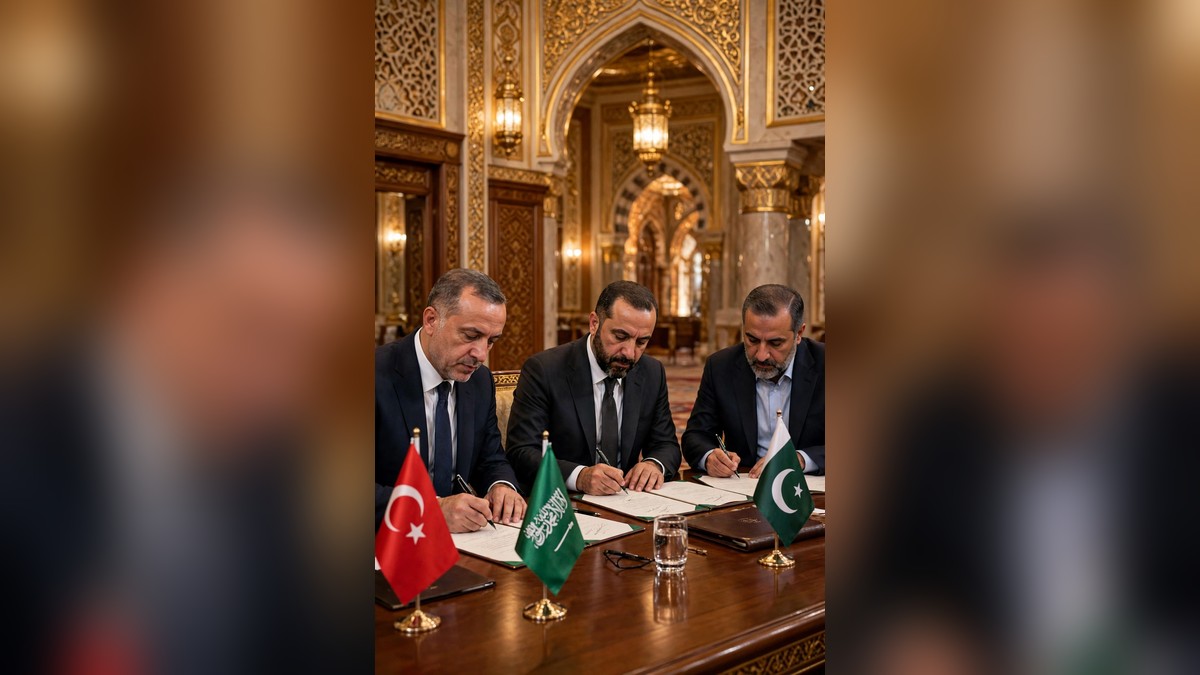
Law No. 7597 appeared in Turkiye’s Official Gazette on 14 November, and it takes effect on publication. With that step, Ankara has finished its own legislative process for the Mecca Joint Defense Agreement — a deal signed in the Saudi holy city on 7 August by Turkish President Recep Tayyip Erdogan, Saudi Crown Prince Mohammed bin Salman and Pakistani Prime Minister Shehbaz Sharif.
The timing matters. It is the second regional defence pact to move forward in two days. On Friday, Turkiye signed a separate mutual defence agreement with Qatar in Istanbul, pledging a unified stance against any outside armed attack. Together, the two deals redraw the security map of a region still living through the war on Iran.
Key Points
- Turkiye published the law ratifying the Mecca defence pact on Saturday, 14 November; it takes effect on publication.
- The 16-article pact treats an external armed attack on any one of Turkiye, Saudi Arabia and Pakistan as an attack on all three.
- Turkiye’s parliament approved the deal 279-119 on 5 November; Saudi Arabia and Pakistan had already finished their own approvals.
- The pact fully enters into force only once the last ratification paper is deposited with its secretariat in Saudi Arabia.
- Ankara has ruled out deploying troops against the Houthis under the pact.
What happened
Turkiye’s parliament voted on the deal on 5 November, approving it by 279 votes to 119, with 398 of the assembly’s 592 members taking part. President Erdogan signed the ratification law on 13 November, and the Gazette carried it the next morning as issue 33430.
The agreement itself runs to 16 articles. Its core clause, Article 2, says an armed attack from outside on any one of the three countries counts as an attack on all of them — a formula modelled on NATO’s Article 5. Members pledge immediate help to a country facing an armed attack or military aggression, with the scope and nature of that help decided after an assessment of needs and available means.
But the pact does not switch itself on automatically. The help each country gives has to be agreed through consultation, and each government acts under its own constitution, national law and the decisions of its own authorities. During the parliamentary debate, defence committee chair Hulusi Akar said the deal complemented Turkiye’s NATO membership, and that sending Turkish troops abroad would still need parliament’s permission.
The deal also reaches well beyond the battlefield promise. It covers joint production of defence equipment, sharing of technology and research, exchanges of personnel, joint training and exercises, closer counterterrorism work including at the operational level, and the exchange of intelligence through agreed secure channels. Logistical help — weapons, ammunition, fuel and spare parts — can be given in peacetime, war or emergencies, depending on availability and compatibility.
A Strategic Political and Defense Committee will steer the work, bringing together the three countries’ foreign ministers, defence ministers and military chiefs. It is due to meet twice a year, with hosting duties rotating among the members, and the three leaders may meet once a year when needed. A secretariat based in Saudi Arabia will run the day-to-day work, headed by a secretary-general serving a three-year term that rotates among the founding members; the first is to be a Pakistani national. New members can only join if all three founding members agree.
The pact has no expiry date. A member may leave only once ten years have passed after it enters into force, and must give the other parties at least three months’ written notice through diplomatic channels.
Why it matters
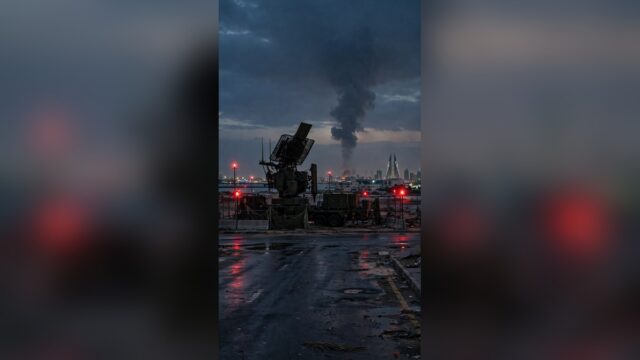
The deal lands while Saudi Arabia is under intensifying attack from Yemen’s Houthis. In recent weeks the group has struck airports and disrupted air travel in the kingdom, forcing the cancellation or postponement of major international conferences, diplomatic summits and sporting events, and has also claimed attacks on Saudi energy and military targets. On Friday, the Houthis claimed fresh drone and missile attacks on Saudi Arabia, including a drone at Riyadh’s King Khalid International Airport.
That pressure is exactly what the pact was written for — but Ankara has already drawn a line. Defence Minister Yasar Guler has confirmed Turkiye will not deploy troops to fight the Houthis under the Mecca pact. The promise, in other words, is collective defence against an outside attack on a member state, not a blank cheque for every fight in the region.
The pact is one of several defence agreements reached in the region since the war on Iran broke out in late February. Friday’s Qatar deal shows the same pattern: Turkiye and Qatar agreed to consult on threats to their security, expand joint military exercises and personnel training, deepen defence industry cooperation, and work together on energy. Erdogan said the two countries “would continue working together to prevent the resurgence of war in the Gulf region and establish a basis for dialogue and achieve peace.”
The wider picture is also moving. Donald Trump is due to discuss the Iran war with Vladimir Putin and Xi Jinping when the three leaders meet in Shenzhen on 19 November, and on Friday the US secretary of state, Marco Rubio, said Washington saw no need for further military action against Iran because the economic pressure on Tehran was so great. The blockade of Iranian ports stays in place, and no date has been set for talks.
What happens next
One legal step remains before the Mecca pact fully enters into force: the deposit of the last ratification instrument with the secretariat. Saudi Arabia and Pakistan have already completed their domestic approval procedures and formally notified the other parties, so Turkiye’s deposit is the step still to come.
After that, the test will be practical rather than legal. The defence committee’s first meetings, the opening of the secretariat in Saudi Arabia, and the first joint exercises will show whether the pact becomes a working alliance or stays a signed promise. For now, the region has a second collective defence deal in two days — and a clear signal that Gulf states are building their own security nets while the war on Iran grinds on.
Sources: The National; Hurriyet Daily News; Khaama; ANews; Yeni Safak; Thursday Times; Truth Global | 14 November 2026