Iran said its forces destroyed a US radar in Bahrain on Friday and reported tankers hitting mines in the Strait of Hormuz. Washington denied the radar claim and said it shot down two Iranian drones.
The two accounts cannot both be true. Neither has been confirmed by any outside source. It is the first time since September that Iran has said it struck American military assets in a Gulf state, and it came as mines kept exploding under tankers in the narrow waterway through which about a fifth of the world’s oil moves by sea.
Key Points
- Iran said its forces destroyed a US early-warning radar installation in Bahrain on Friday, in retaliation for an alleged attack on a telecom tower in southern Iran.
- The US military said it shot down two Iranian one-way attack drones headed for Bahrain and reported no injuries or damage.
- Iran said tankers kept hitting naval mines in the Strait of Hormuz, with a fourth vessel reported struck within 24 hours by Saturday.
- The UN maritime agency counted 25 seafarers killed in about 134 incidents in the region’s waters as of 11 November.
- Turkey and Qatar signed a mutual defence deal on Friday as Gulf states moved to stop the war resuming.
What happened
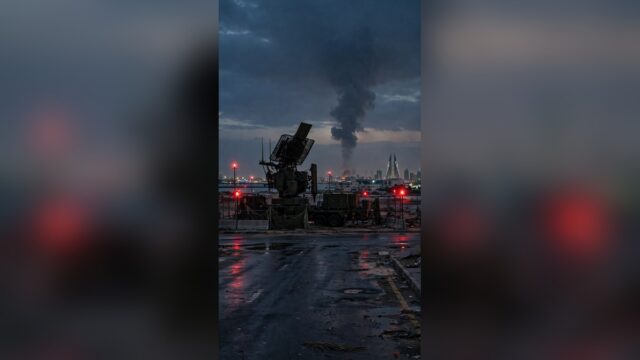
Iran’s Islamic Revolutionary Guard Corps said its Aerospace Force targeted and destroyed the American radar in Bahrain. The statement, carried by the semi-official Tasnim news agency, said the strike answered a US attack on a telecommunications tower in Sirik, a port town in Hormozgan province on the shores of the strait, the night before.
Iran’s state news agency IRNA had reported “enemy fire” in Sirik on Thursday. The Guard called the radar strike a “serious warning” to Washington to stop what it called a series of aerial provocations and oil smuggling in the strait. “Should these violations and acts of aggression recur, the IRGC Aerospace Force stands in full readiness to engage without limits,” the statement said.
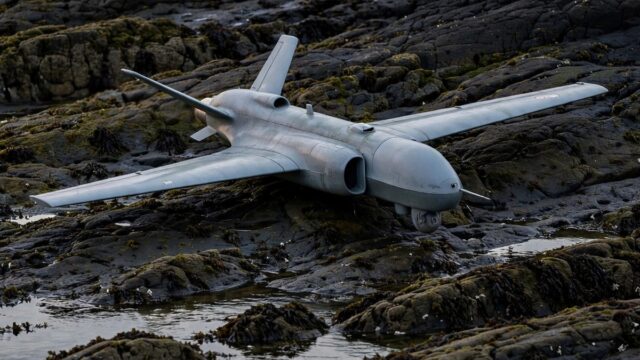
Hours later, US Central Command rejected the claim. It said Iran had launched two one-way attack drones toward Bahrain and US forces shot both down, with no injuries or damage. The command did not address Iran’s claim about the attack in Sirik. Bahrain’s information ministry did not immediately respond to requests for comment.
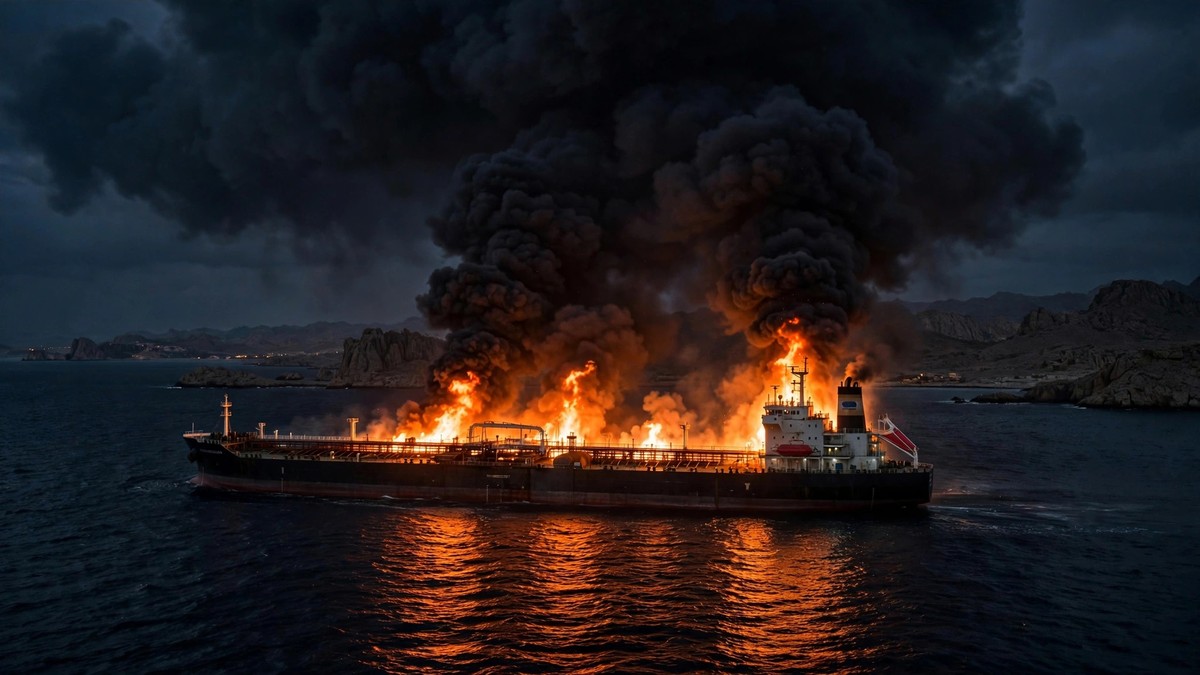
The same day, the Revolutionary Guard said a liquefied gas carrier struck a naval mine and exploded in the strait after sailing an unauthorised route with its tracking systems switched off. Iranian state media later reported a second tanker hit a mine on Friday. By Saturday, Iran’s navy said a fourth vessel had struck a mine within 24 hours and warned tankers to stay out of a restricted zone east of the strait. The navy said the vessels had ignored repeated warnings.
Iran’s navy also said it shot down a US MQ-1 Predator drone over the strait, according to Iranian media reports. Washington has not commented on that claim.
Why it matters
The strait is the choke point for Gulf oil, and shipping there has grown steadily more dangerous. The United Nations said October had the highest number of incidents against commercial ships in the contested waters since February, when the war began. Its International Maritime Organization counted 25 seafarers killed and many more injured or missing in about 134 incidents in the strait and the wider Middle East maritime area as of 11 November.
The radar claim also shows how far the fighting has spread beyond Iran’s borders. Tankers burned in the strait earlier this week, Houthi missiles aimed at Saudi Arabia were intercepted, and the Houthis claimed drone strikes on Riyadh airport. A Pentagon inspector general’s report released in September found Iranian attacks had damaged or destroyed hundreds of buildings at US installations in eight countries, including Bahrain, in the first four months of the war. Analysts say several of those bases are now almost unusable.
Both sides are talking about what comes next in the open. US President Donald Trump has said he is prepared to return to war if the diplomatic track offered by Qatar fails to deliver a deal. US Secretary of State Marco Rubio said on Friday that further military action is unnecessary because the economic pressure on Iran is working. Trump said earlier in the week that the war “militarily is effectively over.”
Israel’s security cabinet has ordered the military to step up preparations for a possible attack on Iran, according to Israeli media. Iran’s security chief Mohsen Rezaei has warned that if the US launches another war, every military base involved, anywhere from West Asia to Europe, would be a legitimate target. Iran’s parliament speaker Mohammad Bagher Ghalibaf said this week the strait would never go back to how it was before the war, and that “the ball is now in the American court.”
Turkey and Qatar signed a mutual defence agreement in Istanbul on Friday. Turkish President Recep Tayyip Erdogan and Qatari Emir Sheikh Tamim bin Hamad al-Thani said the two countries would work together to prevent the war resuming in the Gulf and to encourage diplomacy.
At the United Nations, Iran’s deputy ambassador Gholamhossein Darzi told the Security Council on Friday that any renewed fighting would draw a response “directed against the source of aggression, wherever it may be.” He accused Bahrain and other Gulf states of facilitating US military operations. Bahrain rejected the accusations and called for full implementation of a Security Council resolution condemning Iranian attacks on Gulf countries and Jordan.
What happens next
The first test is evidence. Satellite images, a statement from Manama, or further detail from Washington would settle whether the radar was hit at all. Until then, the two versions stand against each other, and the shipping data will show whether tankers keep sailing the strait or start avoiding it.
The second test is repetition. The Guard has said it will act “without limits” if the attacks it alleges continue, and Rezaei has widened the warning to US bases far beyond the Gulf. If Iran strikes again, or if Israel acts on its preparations, the de-escalation both sides have described in recent weeks could end fast.
The third is diplomacy. The Qatar track is the only live channel, and Trump has tied a return to war to its failure. For now, US forces are still enforcing the naval blockade on Iranian ports, and the mines in the strait are still going off.
Sources: Al Jazeera, Associated Press, Dawn, Economic Times of India, Gulf News. Published 14 November 2026, 18:42 +08.