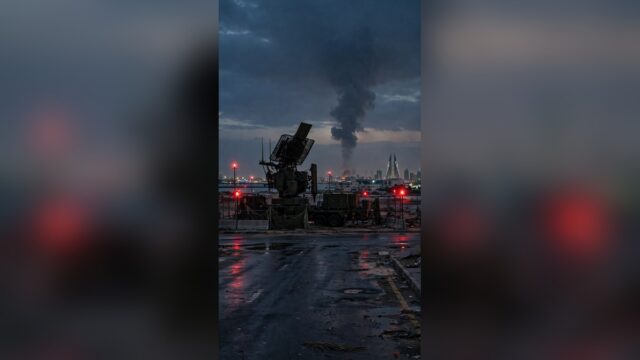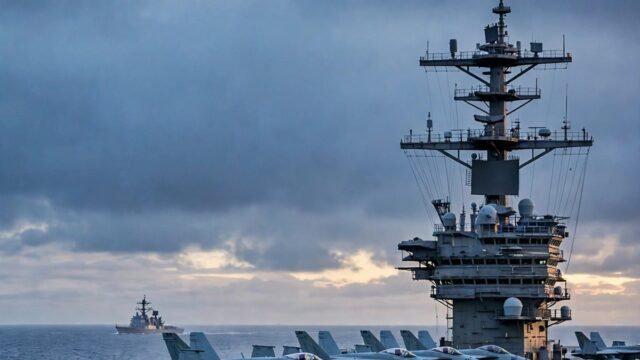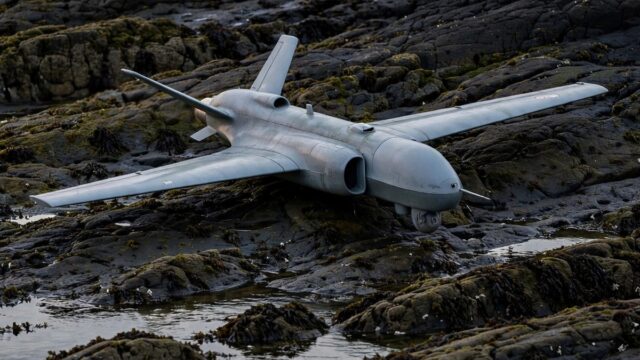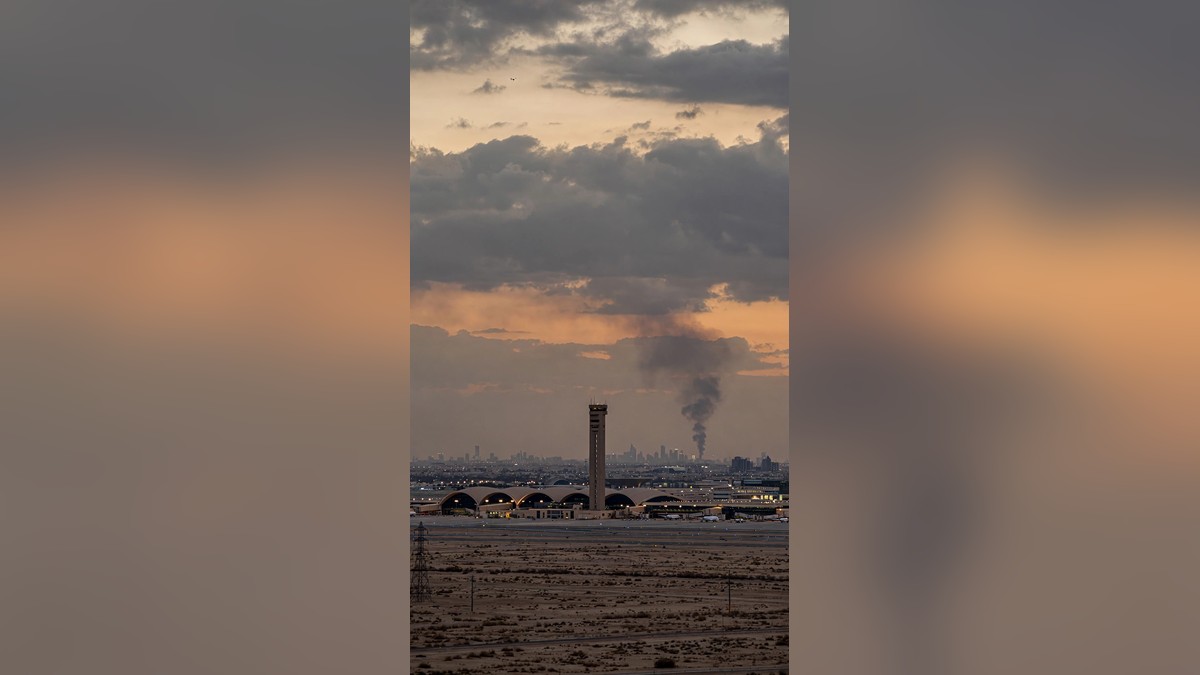
Houthi forces claim they struck Riyadh’s main airport and a key oil pipeline pumping station with drones on Friday, in the group’s widest attack on Saudi Arabia since the Iran war began.
Key Points
- Yemen’s Houthis say they hit King Khalid International Airport in Riyadh with a drone on Friday, and struck Pumping Station No. 3 on the East-West oil pipeline with two more.
- The group’s spokesman, Yahya Saree, said both operations achieved their objectives, and said the Houthis also fired two ballistic missiles at Saudi forces in Jazan province.
- Saudi authorities have not confirmed any of the claims, and no damage has been confirmed by any outside source. No photos or other evidence of damage were published with the claims.
- The East-West pipeline is Saudi Arabia’s main bypass around the Strait of Hormuz, where shipping is still about 65 per cent below pre-war levels.
- The claims came on the same day Iran said it had hit a US radar in Bahrain and shot down an American drone, and the UN told the Security Council 25 seafarers have been killed in shipping attacks.
What happened
The claims were announced on Friday by Yahya Saree, the military spokesman for Yemen’s Houthis, in statements carried by the group’s al-Masirah television channel and in a post on X.
Saree said one drone had targeted King Khalid International Airport in the Saudi capital, Riyadh. Two more drones, he said, had struck Pumping Station No. 3 on the East-West oil pipeline, east of the city. He claimed both operations had achieved their objectives, without giving details of any damage.
In a separate statement, Saree said the group had fired two ballistic missiles at what he described as gatherings of Saudi forces in Al-Tuwal, in the south-western province of Jazan, near the border with Yemen. He also claimed dozens of Saudi personnel were killed or wounded in that strike, including Sudanese nationals serving with Saudi forces. That casualty claim has not been confirmed by any outside source.
The missile claim came hours after Saudi civil defence issued an all-clear for Jazan province, and it was not immediately clear whether the two were connected. Jazan is home to a Saudi Aramco refinery that processes about 400,000 barrels of crude oil a day, and the province has come under repeated Houthi attack during the war.
Saudi authorities had not commented on any of the claims when the reports were published on Saturday. No flight disruption was reported at Riyadh airport, and Saudi Aramco, which runs the pipeline, had issued no statement on the pumping station. No photos or other evidence of damage to the airport or the pipeline were published with the claims.
In a separate development earlier on Friday, the Saudi-led coalition said its air defences had intercepted and destroyed drones in the Riyadh area and the Eastern Province. The coalition did not say which claimed attacks those interceptions related to.
Why the Riyadh claims matter
The targets the Houthis named are among the most sensitive in Saudi Arabia. King Khalid International Airport serves the capital, and the East-West pipeline is the kingdom’s main route for moving oil to the Red Sea without passing through the Strait of Hormuz. The 1,200-kilometre line has become more important as shipping through the strait has fallen, with traffic still about 65 per cent below pre-war levels according to the latest weekly report from United Kingdom Maritime Trade Operations.
The claims also widen a war that has already spread well beyond Iran’s borders. Friday was one of the sharpest single days of escalation in months: Iran’s Revolutionary Guard said it had destroyed an American early-warning radar in Bahrain, a claim the US military rejected, saying it had shot down two Iranian drones instead; Iran’s navy said it had shot down an American MQ-1 drone off the coast of Sirik; and the United Nations told the Security Council that 25 seafarers have been killed in 134 confirmed attacks on commercial shipping since the war began.
Fighting inside Yemen has also intensified. The UN’s migration agency says 340,000 people have been forced from their homes as fighting rages across the country, and the spokesman for Yemen’s internationally recognised government said its forces had carried out 18 strikes in the past few hours. The UN Security Council renewed its sanctions on the Houthis this week.
The claims landed on the same day Turkiye and Qatar signed a mutual defence pact in Istanbul, the second such agreement between Gulf states in three months, as countries across the region hedge against a war that shows no sign of ending. The United States, meanwhile, says it has no need for new major strikes on Iran because its sanctions and naval blockade are working — a position Tehran has answered with warnings of a decisive response to any renewed attack.
What happens next
The first test of the Houthis’ claims will be what Saudi Arabia says — and what can be seen. Flight data from Riyadh airport and any statement from Aramco about the pipeline would be the clearest signs of whether anything was hit. So far, neither has appeared.
The second test is whether the Houthis produce evidence. Past claims in this war have often been followed by photos or video; this time, none has been published with the claims, and the group has not said what weapons were used in the airport and pipeline attacks.
If the claims are confirmed, they would mark a sharp widening of the Houthis’ campaign against Saudi Arabia, and put new pressure on the kingdom’s oil infrastructure at a moment when the Hormuz route is already running at a third of its normal volume. If they are not, they still show a group willing to claim strikes on the Saudi capital — and a region bracing for the war to spread further.
Sources: Reuters, Al Jazeera, Iran International, Press TV, Gulf News. Published 14 November 2026, 15:30 +08.