Key Points
- Three tankers were hit in the Strait of Hormuz on Sunday, Iran’s Revolutionary Guard said, and another was struck on Tuesday, according to the United Kingdom’s maritime trade agency.
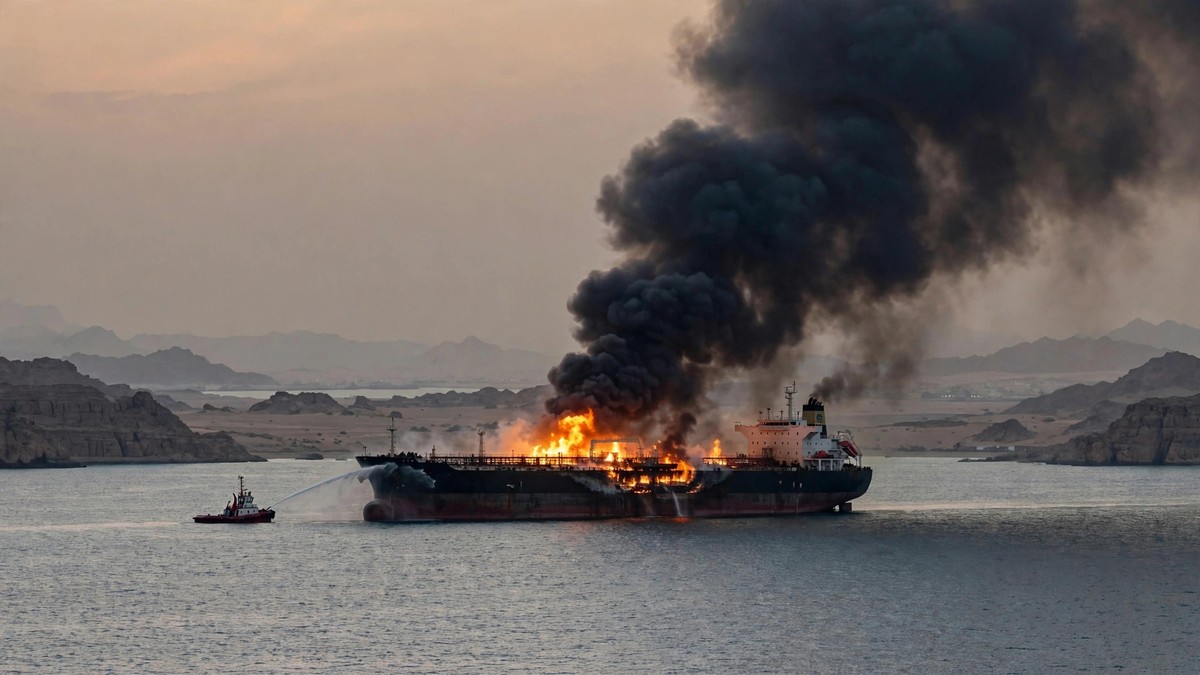
- Video verified by Reuters showed the Singapore-flagged tanker Navig8 Messi on fire off the coast of Oman, with satellite images showing a large cloud of black smoke.
- The attacks came a day after Donald Trump said the Iran war was “effectively over” and further US strikes were not necessary for now.
- Oil prices fell to two-month lows, with Brent crude dropping below $90 a barrel for the first time since August.
- At least 25 seafarers have been killed and 130 incidents recorded since the conflict began in late February, the International Maritime Organization said.
- Washington and Tehran still disagree over whether naval mines remain in the shipping lanes, and the IMO says it cannot confirm the waterway is safe.
Tankers were still burning in the Strait of Hormuz on Tuesday, hours after Donald Trump declared the Iran war over, as fresh attacks exposed the gap between Washington’s message and the waterway’s reality.
What happened in the Strait of Hormuz
The weekend brought the heaviest bout of attacks on shipping in days. Two tankers were hit within an hour of each other on Saturday evening, according to incident reports from the United Kingdom Maritime Trade Operations agency, known as UKMTO. The first, about eight nautical miles north-west of Khasab in Oman, caught fire and its crew was evacuated. An hour later, a second outbound tanker was struck by an unidentified projectile while crossing the strait. Its crew was reported safe.
On Sunday, Iran’s Revolutionary Guard Corps Navy said three tankers had been hit for using what it called unauthorised routes through the waterway. Video posted on social media on Sunday and verified by Reuters showed the Navig8 Messi, a Singapore-flagged refined products tanker, on fire near the coast of Oman. A satellite image taken the same day by the European Union’s Copernicus Sentinel-2 satellite showed a large cloud of black smoke at the same spot. The vessel is managed by Navig8, which is majority owned by ADNOC Logistics and Services. Neither company replied to emailed requests for comment from Reuters. The same ship was hit by Iranian drones in August, repaired and returned to the same route, according to maritime trade reports.
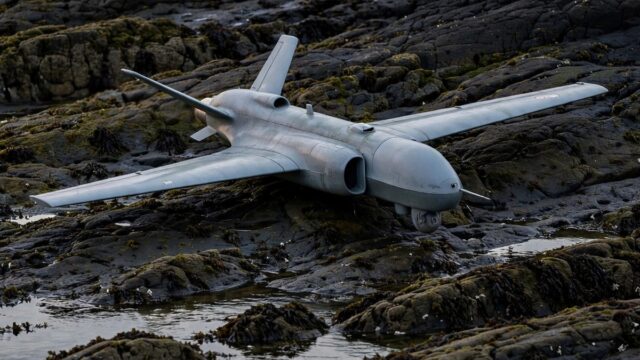
The Guard said two of the tankers caught fire after striking naval mines on the unauthorised route. The semi-official Fars news agency reported a third tanker had suffered an explosion and caught fire. None of those claims has been confirmed by any outside source, and it remains unclear whether the explosions were caused by mines, missiles or drones.
The attacks did not stop there. On Friday, another tanker suffered an explosion at its port-side waterline about 16 nautical miles east of Khasab. Its crew escaped injury and the vessel continued under its own power. On Tuesday, UKMTO said a further tanker had been struck north-east of Lima in Oman. It did not say who was responsible. On Sunday, the UAE National Guard took 22 Arab seafarers off a cargo vessel burning in the Gulf of Oman, and all were reported stable. The authorities have not publicly identified the ship or established whether the incident was connected to the conflict.
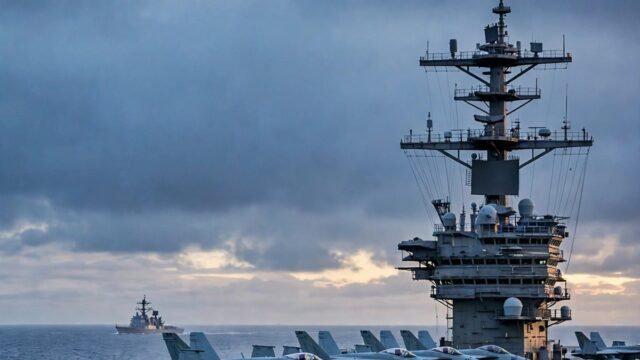
American forces were also active at sea. On Saturday, a US military aircraft fired precision-guided munitions at the stern of the Huda, a St Kitts and Nevis-flagged bulk carrier, in the Gulf of Oman. US Central Command said the vessel had repeatedly ignored warnings while trying to leave regional waters after visiting an Iranian port, in breach of Washington’s naval blockade, and that the strike disabled it. Maritime intelligence provider Pole Star Global links the bulker to Turkey-based Embrace Shipping Management.
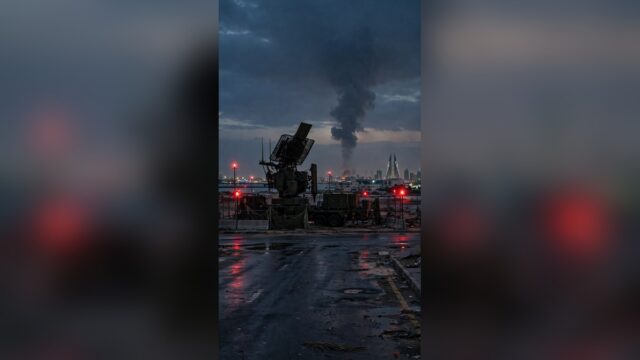
Explosions were also reported on Saturday around Qeshm Island, Bandar Abbas, Sirik and Jask on Iran’s southern coast. Iranian state media later suggested some of the blasts may have been connected to Iranian military operations rather than American strikes. Trump confirmed on Friday that American forces had carried out limited strikes against Iranian air defences, describing the action as minor. The weekend’s attacks followed an earlier strike on a tanker near the strait reported days before.
Why it matters
The timing is what makes the attacks striking. Trump told reporters on Monday, after meeting Qatar’s prime minister, whose country has mediated between Washington and Tehran, that the war was over in military terms: “Iran militarily is effectively over.” “We’re just keeping it the status quo,” he added. He said further strikes did not seem necessary for now, while insisting American forces remained “locked and loaded, ready to go for any reason that changes”. He also said the naval blockade would stay in place, and told CNN on Sunday that a “strong agreement” would make a return to bombing “highly unlikely”.
Markets took him at his word. Crude prices fell to two-month lows on Tuesday, and Brent dropped below $90 a barrel for the first time since August, as traders priced in an end to the fighting. Yet the attacks in the strait continued through the same hours, and the gap between the market’s reading and the waterway’s reality is now the story.
Attacks on shipping have reached a scale not seen since the war began. Thirty-seven ships were attacked in October, the highest monthly total since the war began, according to data from the Washington Institute for Near East Policy. The International Maritime Organization has confirmed 130 incidents, most of them attacks, in the region since the conflict began in late February, with at least 25 seafarers killed. An explosion aboard the Marshall Islands-flagged tanker Velos Sapphire north of Qatar killed one crew member, Al Jazeera reported. The violence has also spread beyond the strait: video verified by Reuters showed damage to an Aramco office building in Riyadh after Houthi missiles aimed at Riyadh were intercepted on November 8. Saudi Arabia’s Energy Ministry said debris caused limited damage to the building, with no injuries or deaths.
The dispute over mines shows how little is settled. The head of US Central Command, Admiral Brad Cooper, said in late October that the main internationally recognised transit routes had been cleared of Iranian sea mines and that commercial vessels were sailing freely. Iran’s Revolutionary Guard dismissed the claim and demanded proof. The IMO’s secretary-general, Arsenio Dominguez, said on November 3 that he had received no confirmation that the mines had been cleared. “There’s no confirmation that there are no mines in the region. So I cannot guarantee that it’s safe,” he said. The organisation’s designated traffic separation scheme is not in operation, and its advice against transiting the strait stands.
The disruption is also reshaping how oil moves. According to shipbroker BRS, 141 tankers are now dedicated to shuttling crude and products from Gulf terminals through Hormuz to the Gulf of Oman or India’s west coast, where cargoes are transferred onto other vessels. Very large crude carriers make up 72 percent of those shuttlers, and crude loaded inside the Gulf has traded at discounts of up to $45 a barrel against Gulf of Oman delivery. The fleet effectively available for mainstream business has shrunk to 639 very large crude carriers, or 68 percent of active tonnage. A Saudi pipeline near Medina was also hit in the wider campaign against energy infrastructure.
What happens next
The blockade will stay in place, Trump said, and Washington is widening its economic pressure. US Central Command announced over the weekend that it had set up Task Force Iron Gate to disrupt Iranian weapons supplies and sanctioned trade through land borders and the Caspian Sea. American estimates cited by AP say Iran has already been stopped from exporting more than $25 billion worth of crude. Trump said the US had identified infrastructure targets, including 38 bridges, that it would strike if military action resumed.
The environmental damage is also mounting. Oil has leaked from damaged tankers, and video verified by Reuters on Monday showed oil reaching the shores of Oman, while satellite imagery showed spills off the coasts of Oman and the United Arab Emirates. The Omani government did not respond to a request for comment from Reuters on Tuesday.
For now, the two sides’ accounts of the waterway do not agree, and neither account has been confirmed by any outside source. The Guard says vessels that use its unauthorised routes will “meet the same fate”, while the US insists the recognised lanes are clear. Until one side’s version is confirmed, shipping through the world’s most important oil chokepoint will remain a gamble — and the next tanker through it will be the test.
Sources: Reuters, Splash247, Al Jazeera, Al Arabiya, Press TV, Business Standard, The Economic Times. 11 November 2026.