President Donald Trump said on Monday the Iran war is militarily ‘effectively over’, signalling no new strikes for now after talks with Qatar’s prime minister at the White House.
Key Points
- President Donald Trump said on Monday 9 November that the Iran war is militarily “effectively over” and a resumption of strikes is “quite unlikely” for now.
- He spoke in a surprise appearance in the White House briefing room after closed-door talks with Qatar’s prime minister, Sheikh Mohammed bin Abdulrahman Al Thani.
- The US naval blockade of Iran stays in place, and Trump said American forces remain “locked and loaded” if circumstances change.
- Qatar presented a two-day Iranian proposal to end the war; Trump has not said whether he accepted it.
- Oil prices fell after his remarks, with Brent crude down 0.23% to $92.33 a barrel in early Tuesday trading.
What happened
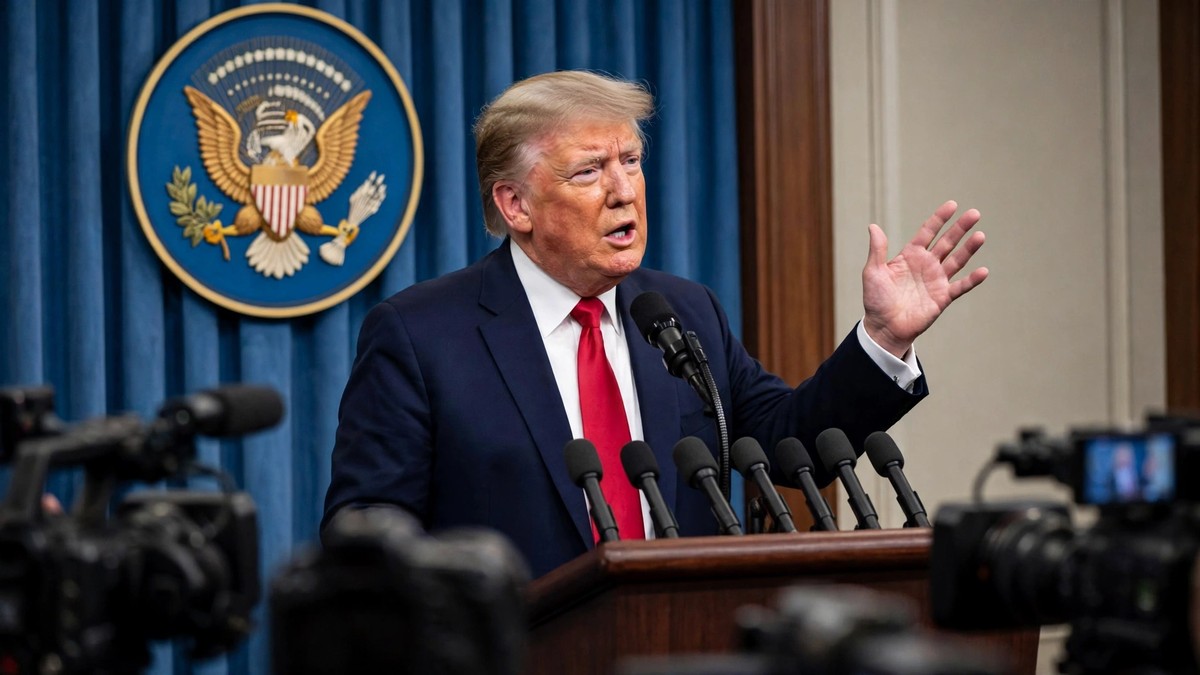
Trump walked into the James Brady Press Briefing Room on Monday with about five minutes’ notice, shortly after meeting the Qatari prime minister. Vice President JD Vance had also sat in on the talks. It was the president’s clearest move yet away from his threat to resume heavy strikes on Iran once the US midterm elections had passed.
“Iran militarily is effectively over,” Trump told reporters. “We’re just keeping it the status quo.”
He said Iran had been “decapitated” but that Washington still wanted a long-term arrangement to make sure Tehran’s nuclear programme was dismantled. He described the negotiations as showing “positive momentum” and said there was a “good chance” the war “could get ended”. “They’re talking to us, and they’re talking very politely, and we’ll see what happens,” he said.
In a post on Truth Social shortly before facing reporters, Trump wrote that Qatar, Saudi Arabia, the United Arab Emirates, Bahrain, Kuwait and others “would prefer the status quo”. He told Reuters separately that Qatar and Saudi Arabia wanted a peaceful solution, adding: “We’re ready to go anytime we want” with strikes if needed.
“The military action doesn’t seem to be a very necessary thing, but we’re locked and loaded, ready to go for any reason that changes,” Trump said in the briefing room.
Why the Iran war declaration matters
The remarks mark a sharp change of tone from the weeks before the midterms, when Trump warned of a large post-election attack on Iranian infrastructure and nuclear sites. His party then lost control of both chambers of Congress, and both Trump and Vance have said the war and rising fuel prices played a part in the defeat.
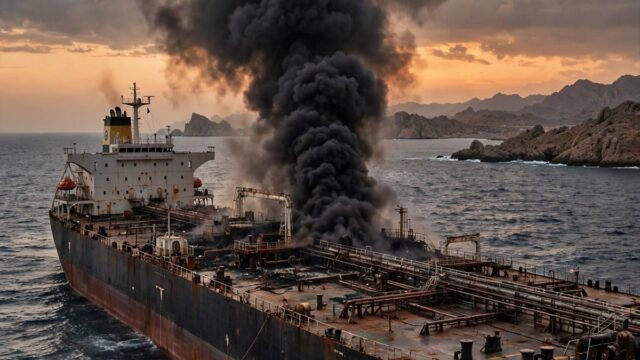
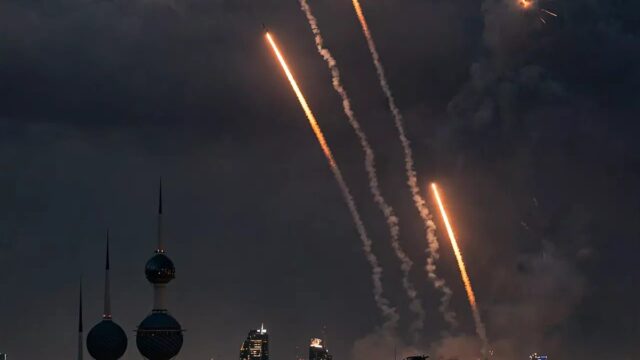
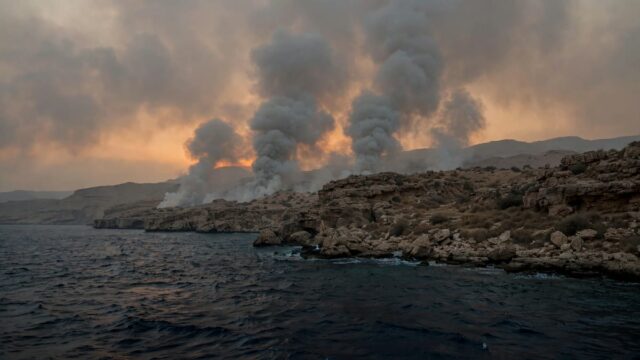
The war began on 28 February, when the United States and Israel launched their campaign against Iran. More than eight months on, there is still no peace deal, and fighting has continued in smaller bursts — US forces struck Iranian air defences on Qeshm Island last week, and on Saturday they fired on and disabled a commercial ship the US said was trying to breach the blockade. US strikes on Iran’s Qeshm Island
Nothing in Trump’s announcement points to a drawdown. He gave no hint of pulling back the thousands of troops deployed to the waters off Iran, and he said the blockade would continue. “We’re keeping it going. We have the greatest military blockade ever,” he said. Al Jazeera reported that the “status quo” also covers a newly announced Task Force Iron Gate, aimed at cutting off trade by land and through the Caspian Sea. Trump said another aircraft carrier was sailing in, bringing the American total in the region to three.
He also said the US had identified infrastructure targets, including 38 bridges, that it would strike if military action resumed. Days earlier, Iran lifted its self-imposed 2,000km limit on the range of its ballistic missiles. Iran lifts missile range limit
The markets reacted at once. Brent crude fell 24 cents to $92.33 a barrel in early Tuesday trading, while US crude fell 35 cents to $86.50. Brent had already settled down 5.85% in the previous session, its lowest since 31 August, as traders priced in a lower risk of a wider war.
What Tehran says
Iran’s leaders pushed back within hours. Mohsen Rezaei, the head of Iran’s security council, said the US should “stop manufacturing fake news about imaginary talks” and that it was “time to surrender to the seven conditions Iran has repeatedly set out”. Iranian officials dismissed Trump’s remarks as a distraction.
Tehran’s conditions, as set out in recent days, include an end to the US blockade of its ports, the lifting of sanctions, the unfreezing of its assets, compensation for war damage, and an end to hostilities across the region, including Israeli operations in Lebanon. In return, Iran has offered to stop its own blockade of the Strait of Hormuz and to hold talks on its nuclear programme and further sanctions.
Qatari officials presented that proposal to Trump last week, according to two Middle East government officials familiar with the matter. The White House declined to comment on it, and Trump has not said whether he accepted the two-day framework the Qataris brought to Washington.
Secretary of State Marco Rubio sounded a more cautious note on Sunday, saying negotiations with Iran had made “little progress” and that he saw no imminent breakthrough. Israeli Prime Minister Benjamin Netanyahu, meanwhile, has been calling Trump every day urging him to launch a renewed offensive, according to the Times of Israel.
What happens next
The two-day proposal remains undecided, and talks continue through Qatar, which has acted as the main go-between since early in the war. Trump told CNN in a phone interview on Sunday that renewed strikes were “highly unlikely” as long as negotiations made progress and Tehran signed a “strong agreement” — but he offered no guarantee, and said the war would end “fairly soon” only if the talks held.
At home, the same day brought a second front for the White House: Rep. Thomas Massie moved to force a House vote on impeaching Defence Secretary Pete Hegseth, largely over his handling of the war. Trump stood by Hegseth, and the vote is expected as early as Wednesday. Massie forces Hegseth impeachment vote
For now, the guns are quieter than they have been in weeks — but the blockade, the carriers and the target lists are all still in place.
Sources: AP, Reuters, Al Jazeera, The Times of Israel. Published 10 November 2026.