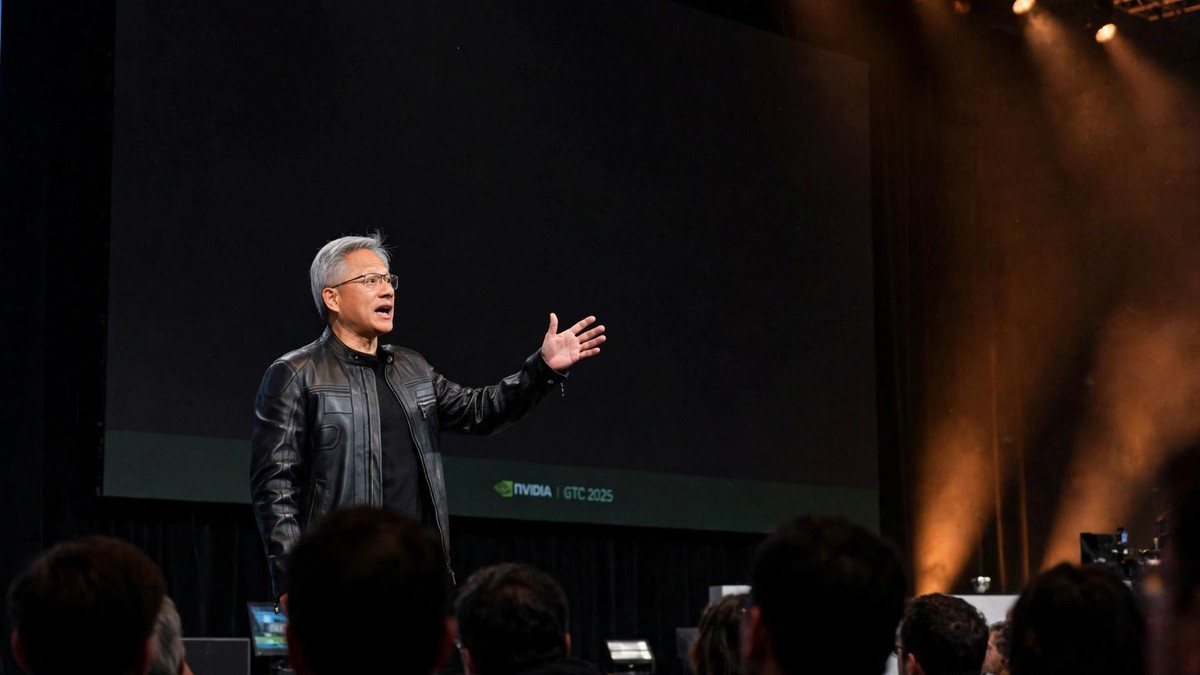
Nvidia has launched an independent investigation into chief executive Jensen Huang after reports that he was the target of a Chinese intelligence effort, the chipmaker said on Sunday.
Key Points
- Nvidia’s board opened an independent investigation on Sunday into reports that founder and chief executive Jensen Huang was targeted by a foreign intelligence effort.
- Huang admitted in a message to staff that he had been unfaithful to his wife and apologised to his family and employees.
- US intelligence concluded that Alice Huang, a Chinese businesswoman at Singapore data-centre firm Megaspeed, was gathering information for Beijing, the New York Times reported.
- The board said it had no reason to believe national security or Nvidia secrets were compromised, and Huang stays on as chief executive while the inquiry runs.
- Three House Republican committee leaders have asked Huang to brief Congress later this month.
Nvidia has launched an independent investigation into chief executive Jensen Huang after reports that he was the target of a Chinese intelligence effort, the chipmaker said on Sunday.
What happened to Nvidia’s chief executive
Nvidia’s board said on Sunday that it was starting an independent investigation “in light of recent reporting that founder and CEO Jensen Huang has been the target of a foreign intelligence effort.” A committee of independent directors, helped by outside independent counsel, will run the inquiry. The board said it put US national and economic security first, and that it had “no reason to believe that either national security or NVIDIA secrets were compromised,” adding that the inquiry would examine all available information.
On the same day, Huang sent a message to Nvidia’s staff admitting the affair. “I was unfaithful to my wife. My actions hurt her and our children. There is no excuse for what I did. I am deeply sorry,” he wrote. The note did not name the woman. The Financial Times reported that the relationship was with Alice Huang, a Chinese businesswoman also known as Huang Le. The two are not related.
The reports at the centre of the case began on 29 October, when the New York Times said US intelligence agencies had found that Huang had developed a close relationship with a Chinese citizen and chip buyer whom officials concluded was gathering intelligence for Beijing. On 6 November, the Times reported that a memo circulated last spring among senior officials in the Trump administration identified Alice Huang as having been recruited by China’s Ministry of State Security.
Alice Huang is a Chinese citizen and a senior executive at Megaspeed, a data-centre company based in Singapore that was spun off from a Chinese gaming company in 2023. Megaspeed is a major buyer of Nvidia’s AI chips. According to the New York Times, US intelligence concluded she had been recruited to gather information about Jensen Huang and to press him to lobby Washington for looser limits on AI chip sales to China.
The relationship came to light during an investigation into Megaspeed’s chip distribution. In late 2024, a Commerce Department official visiting a Megaspeed data centre in Malaysia found Nvidia chips sitting unopened in their boxes, raising suspicions that advanced chips barred from shipment to China were being diverted there. As officials watched Alice Huang, they learned of her close relationship with Jensen Huang. The Wall Street Journal reported that she disappeared into China for a period in late 2024 as surveillance began.
Singapore’s Ministry of Home Affairs has said no such investigations were conducted into Alice Huang. China’s foreign ministry has called the claims “groundless speculation”. Nvidia has said its own review did not substantiate the smuggling claims and that concerns about illegal chip diversion were “debunked last year”. The New York Times also reported that Secretary of State Marco Rubio drafted a memo warning senior Trump administration officials about the relationship.
Why the Nvidia investigation matters
Nvidia is the company at the heart of the artificial intelligence boom, worth nearly $4.5 trillion and the world’s second-largest publicly traded company as of Friday. Its chips power the data centres behind the most advanced AI systems, and Washington has spent years tightening the rules on which chips can be sold to China. Huang, 63, has been one of the loudest voices in Washington arguing that those limits should be eased.
That is what makes the reports so serious. A romantic relationship does not by itself show that Huang knowingly helped a foreign intelligence operation or passed on sensitive information, and the board has stressed that it has seen no sign that secrets were compromised. But the BBC noted that it remains unclear what information Alice Huang is alleged to have passed to Beijing, how valuable it was, or when she is believed to have begun gathering it — and those are the questions the board’s inquiry must now answer.
The timing adds to the pressure. Chip stocks fell sharply last week, with Nvidia down 9.3% in a single day as the Nasdaq dropped 5.52%, and investors will get their first chance to react to the investigation when US markets open on Monday. The affair has also put a spotlight on the wider AI industry, where valuations have climbed so fast that even leading companies now face hard questions about what they are worth.
What happens next
Three House Republican committee leaders have asked Huang to brief Congress later this month about the reports. Senator Chris Coons, a Democrat, has also pledged to investigate the matter. The board has given no timeline for its inquiry and said only that it would provide further updates “as appropriate”.
Huang stays on as chief executive while the review runs, and the board has repeated its confidence in him and his leadership team. He has committed to cooperating with the investigation. For now, the central question — whether anything of value actually reached Beijing — remains unanswered, and the answer will decide whether this stays a personal scandal or becomes a national security case.
Sources: BBC, Reuters, The New York Times, Financial Times, The Wall Street Journal, CNN, Bloomberg — 9 November 2026. The claim that Alice Huang worked for Chinese intelligence comes from US intelligence assessments reported by the New York Times and others, and has not been confirmed by any outside source.