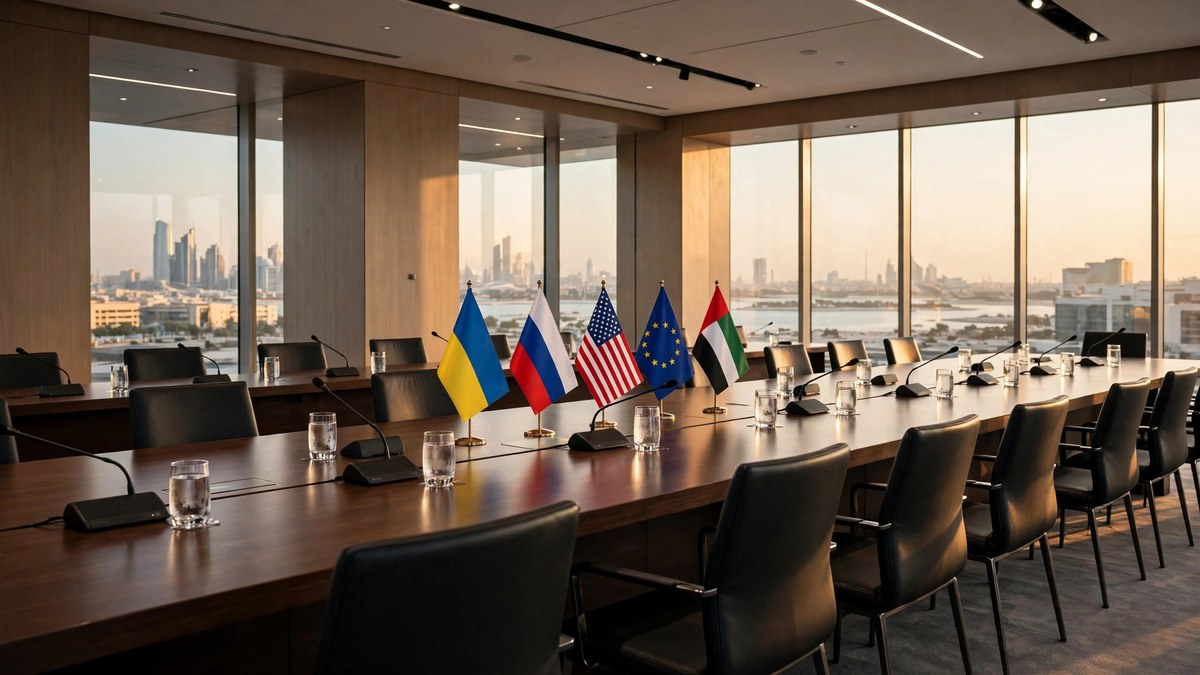
European envoys will join American-led peace talks between Ukraine and Russia in Abu Dhabi on 10 and 11 November, France confirmed on Sunday, widening a negotiation Washington hopes can end the war.
Key Points
- Europe will take part in the Abu Dhabi talks on 10 and 11 November, French Foreign Minister Jean-Noël Barrot said on Sunday.
- The American-brokered meeting brings Ukrainian and Russian delegations together, with security guarantees, de-escalation and humanitarian issues on the agenda.
- It is the first three-way meeting of its kind since February.
- Ukraine’s team includes Kyrylo Budanov, head of the Presidential Office; Russia’s is led by presidential aide Vladimir Medinsky.
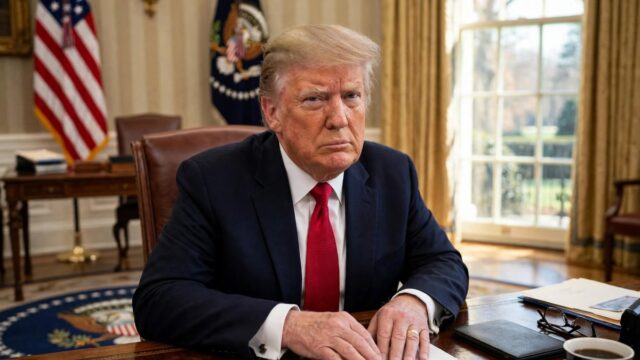
- President Donald Trump said a wider agreement “involving more than Ukraine” was being developed after meeting a Russian envoy.
- A 500-missile Patriot deal for Ukraine cleared American approval on 30 October, with European allies footing the bill.
European envoys will join American-led peace talks between Ukraine and Russia in Abu Dhabi on 10 and 11 November, France confirmed on Sunday, widening a negotiation Washington hopes can end the war.
What happened
French Foreign Minister Jean-Noël Barrot told RTL radio on Sunday that Europeans would take part in the talks. “The Europeans will be well represented; France will be in Abu Dhabi to take part in these discussions,” he said. He added that he could not yet say who would represent France, and that he would not attend himself.
American envoy Steve Witkoff said Washington would bring Ukrainian and Russian delegations together in Abu Dhabi to discuss ending the war, post-war security agreements and de-escalation. The agenda also covers humanitarian issues and further steps toward a peaceful settlement.
The meeting will be the first three-way discussion of its kind between Russia, Ukraine and the United States since February. Ukraine’s negotiating team includes Kyrylo Budanov, head of the Presidential Office. Russia’s delegation will again be led by presidential aide Vladimir Medinsky, joined this time by Deputy Foreign Minister Sergei Ryabkov, senior General Staff representative Yuri Zhigarlovsky, Deputy Foreign Minister Mikhail Galuzin and military intelligence chief Igor Kostyukov.
Analysts at the Institute for the Study of War noted that some members of the Russian delegation had previously pushed Kremlin demands or slowed negotiations, and read their inclusion as a sign that Moscow may not be seeking constructive dialogue.
Ukrainian President Volodymyr Zelensky said he had held a detailed conversation lasting an hour and a half with Witkoff and Jared Kushner, President Trump’s son-in-law and one of the American negotiators, ahead of the talks. American officials also held separate meetings with Ukrainian and European representatives at NATO headquarters in Brussels. Kushner described those discussions as “productive and substantive”, saying they covered security guarantees for Ukraine and a broader security framework for Europe.
Why it matters
Europe’s place at the table fills a gap in the process. Earlier rounds of the American-led effort were largely a three-way affair, and European governments have argued that no settlement touching their own security should be reached without them. Their presence also matters because Europe is paying for much of the military support: on 30 October Washington cleared a 500-missile Patriot sale for Kyiv, with European allies paying for the purchase.
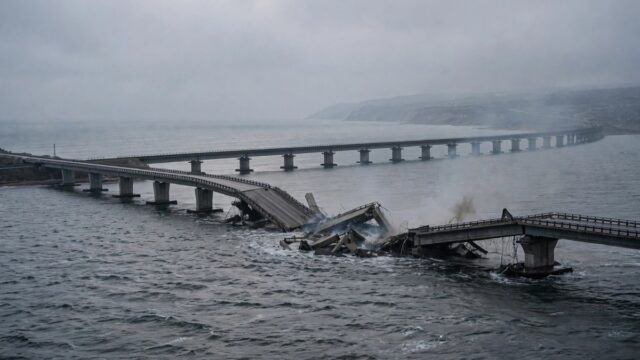
The talks open while the fighting continues. Russia fired 36 ballistic missiles at Kyiv in a barrage reported on Saturday, a reminder that diplomacy and bombardment are running side by side. The Kyiv barrage underlined how far apart the two sides remain on the battlefield even as their negotiators prepare to meet.
Trump has repeatedly pledged to end the war quickly, while recently criticising Zelensky for refusing to make concessions. His administration has also moved toward closer engagement with Moscow, including a deal with President Vladimir Putin to lift sanctions on Russian diesel exports during the final weeks of the American midterm election campaign. The Kremlin has said it hopes Trump will keep pursuing efforts to resolve the war despite his party’s election defeat.
That mix of pressure and engagement is the backdrop to Abu Dhabi. Washington is pressing Kyiv to compromise while keeping channels to Moscow open, and Europe’s arrival at the table adds a fourth voice that has its own red lines on territory and security. The United States is fighting a parallel war with Iran, which limits how much attention and leverage Washington can bring to any single negotiation.
What happens next
The delegations gather in Abu Dhabi on Tuesday for two days of talks. Trump said on Thursday that a major agreement extending beyond Ukraine, and potentially involving all of Europe, was being developed after his meeting with Putin’s envoy Kirill Dmitriev at the White House. “It’s going to be a big agreement, and it’s going to involve more than Ukraine,” he told reporters, without giving details.
Dmitriev, who heads the Russian Direct Investment Fund, was in Washington to attend an event hosted by First Lady Melania Trump marking a six-day ceasefire between Russian and Ukrainian forces in Oleshky, in the Kherson region. The truce, which ran from 27 October to 1 November, was described as the most significant local halt in fighting since the war began. Melania Trump said she hoped the temporary truce could become permanent and extend to other areas, adding: “Let Oleshky be the modest spark that grows into a lasting flame of peace.”
Expectations for Abu Dhabi are guarded. The agenda is broad, the delegations are senior, and Europe’s presence gives the talks a weight earlier rounds lacked, but the Russian team’s make-up has already raised doubts about Moscow’s intent, and neither side has signalled any readiness to give ground on the core questions of territory and security. If the two days produce a framework, the hard bargaining would still lie ahead; if they stall, the war grinds on.
Sources: Reuters, Al Mayadeen, RBC-Ukraine. Published: 9 November 2026, Kuala Lumpur time.