The votes are counted, the winner is not. New Zealand now waits three weeks to learn who governs it.
Key Points
- New Zealand’s election on Saturday 7 November ended without a clear winner, with the full preliminary count finished on Sunday.
- Prime Minister Christopher Luxon’s National Party won the most seats, 42, but its three-party bloc holds only 67 of 131 seats — a majority of one.
- Luxon says his coalition has a mandate to govern; Labour leader Chris Hipkins has not conceded and says his side still has a narrow path.
- The centrist newcomer Opportunity Party won seven seats and could decide who forms the next government.
- Final results are due on 27 November, after nearly 400,000 special votes are counted.
New Zealand’s general election ended in deadlock on Sunday, with no party able to claim victory after the full preliminary count gave the governing right a majority of a single seat.
What happened
Voters went to the polls on Saturday, and by Sunday the Electoral Commission had finished its preliminary count of 2.8 million ballots. The result was the tightest in years. National, led by Prime Minister Christopher Luxon, took 42 seats — the most of any party — but only 29.21% of the party vote, a sharp fall from its last result. It won all 42 of its seats by taking local constituency races.
Labour, led by Chris Hipkins, won 36 seats on 29.36% of the party vote — a fraction more of the vote than National, but six fewer seats, because it won fewer local races. The Greens took 16 seats, the libertarian ACT party 13, the populist New Zealand First 12, and Te Pāti Māori, which represents Indigenous interests, five.
The surprise of the night was the Opportunity Party. Led by 38-year-old business consultant and political newcomer Qiulae Wong, it won seven seats on its first entry to Parliament, after three failed attempts before Wong took over less than a year ago. Wong has said she could work with either side to form a government, and with the two blocs separated by so little, her seven seats could decide who governs.
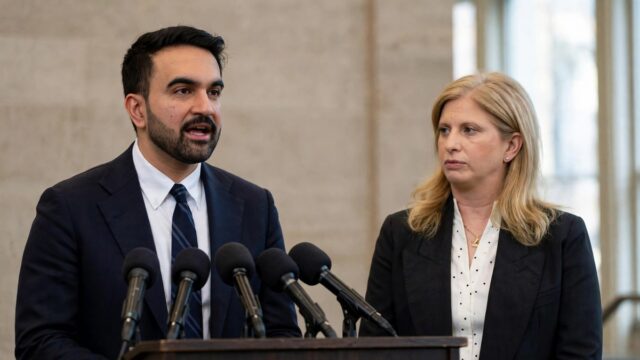
Luxon spoke to reporters on Sunday and claimed the result as a mandate. “New Zealanders have given us the biggest seats in parliament, 42 seats as it stands today, and a pathway to form a government,” he said. “We’ve got a mandate.” He added that his party had done well given the war in the Middle East and the global fuel shock that he blamed for New Zealand’s economic troubles.
Hipkins struck a different note, joking that while the country had spoken, “it may take us a little bit longer to figure out exactly what it is that you’ve said”. His left bloc — Labour, the Greens and Te Pāti Māori — holds 57 seats, ten short of a majority, and would need Opportunity’s support to govern. AP reports that parties will not begin negotiations until the final tallies are released.
The result was also a bleak night for National’s senior ranks. Several of its most senior lawmakers are set to leave politics on the results so far, including the finance minister, the defence minister, the speaker of parliament and the attorney general. With its traditional partners winning more support, Luxon faces tougher demands to secure their backing.
Why it matters
The deadlock is, above all, a rebuke to both big parties. Between them, National and Labour took only about 60% of the party vote, their lowest combined share in years, as voters turned to smaller parties on both flanks. The two leaders entered the campaign unpopular — Luxon had faced two confidence votes among his own lawmakers this year — and neither managed to turn that around.
That leaves the next government hostage to arithmetic. Luxon’s bloc of National, ACT and New Zealand First holds 67 seats against 66 needed for a majority. One seat changing hands in the final count would undo it. And the final count is the part that favours the left: nearly 400,000 special votes, including about 100,000 cast overseas, are still to be counted, a process that takes about three weeks. Those votes have historically added a seat or two to left-wing parties — enough, just possibly, to snatch the right’s slim lead, though probably not enough to hand the left a majority of its own.
Opportunity’s rise is the other story of the night. A party built on evidence-based centrism and a promise to end partisan bickering went from nowhere to kingmaker in under a year. Luxon had repeatedly ruled out negotiating with Wong before the election; on Sunday he sidestepped the question of whether his vanishing lead had changed his mind, saying only that it was “unlikely” he would need her party, while adding that he was willing to work with Wong on issues where they agree.
The confusion is visible in what New Zealanders are searching for. On Sunday, “who won the election 2026” was the top trending Google search in the country. Nobody — not the prime minister, not the opposition leader, not the voters — yet knows the answer.
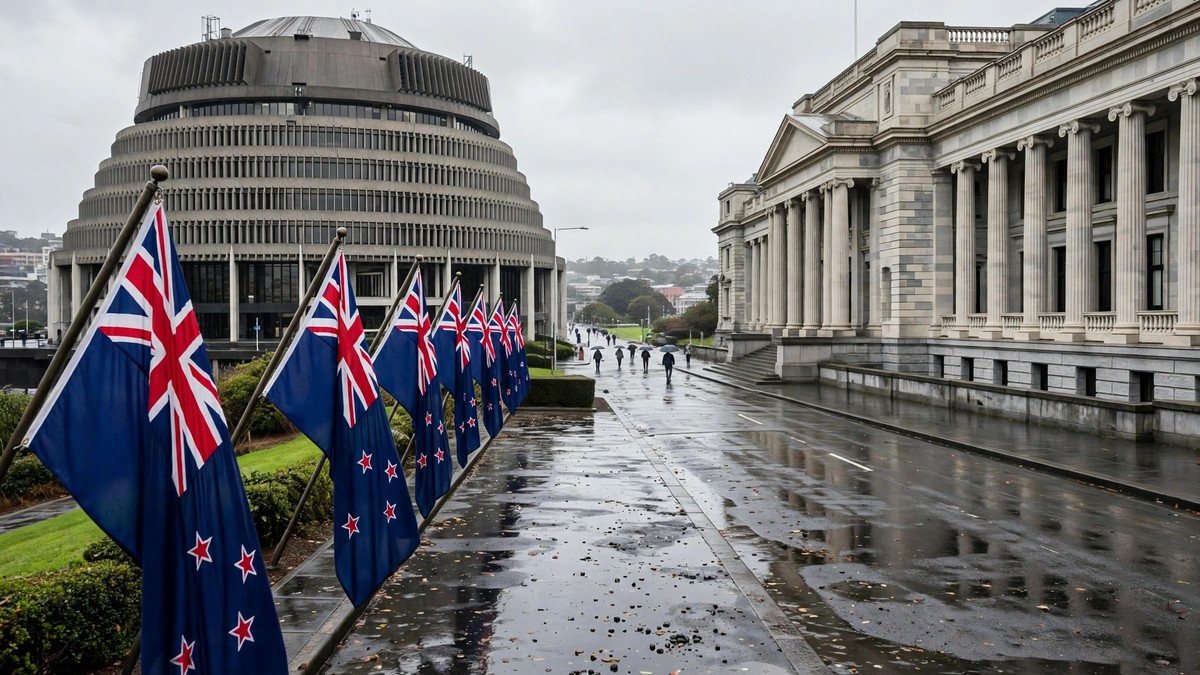
Underneath the numbers sits the issue that decided the most votes: the cost of living. Prices for basic goods remain stubbornly high and unemployment is at its highest in more than a decade. Voters interviewed in Wellington on Sunday said rising costs had been at the front of their minds — the same frustration that has punished incumbent governments in election after election around the world this year, including the Democratic wins in the US midterms.
What happens next
Three things to watch. First, the special votes. Counting began on Sunday and runs for about three weeks; the official result is due on 27 November, and until then Luxon leads a caretaker government. Second, the negotiations. Neither bloc can govern without help, and the real bargaining only starts once the final seat numbers are known — with ACT and New Zealand First already emboldened, and Opportunity holding the balance. Third, the fallback nobody wants to discuss: if no government can be formed, New Zealand could face a fresh vote. Luxon, for his part, urged the country to take a break. “I think everyone’s over politics so let’s all have a bit of a break for the next three weeks,” he said on Sunday.
Sources: Associated Press, “New Zealanders won’t know for weeks who won the election”, 8 November 2026; AFP, “Who will govern New Zealand? Tight election result opens door to dealmaking”, 8 November 2026; The Guardian, “New Zealand election ends deadlocked, government talks ahead”, 8 November 2026; seat counts and party-vote percentages from the New Zealand Electoral Commission as reported by AP and AFP. Where AP and AFP (36 seats) and The Guardian’s summary (35) differ on Labour’s seat total, this article follows the Electoral Commission figures reported by AP and AFP. Published: 8 November 2026, Kuala Lumpur time.