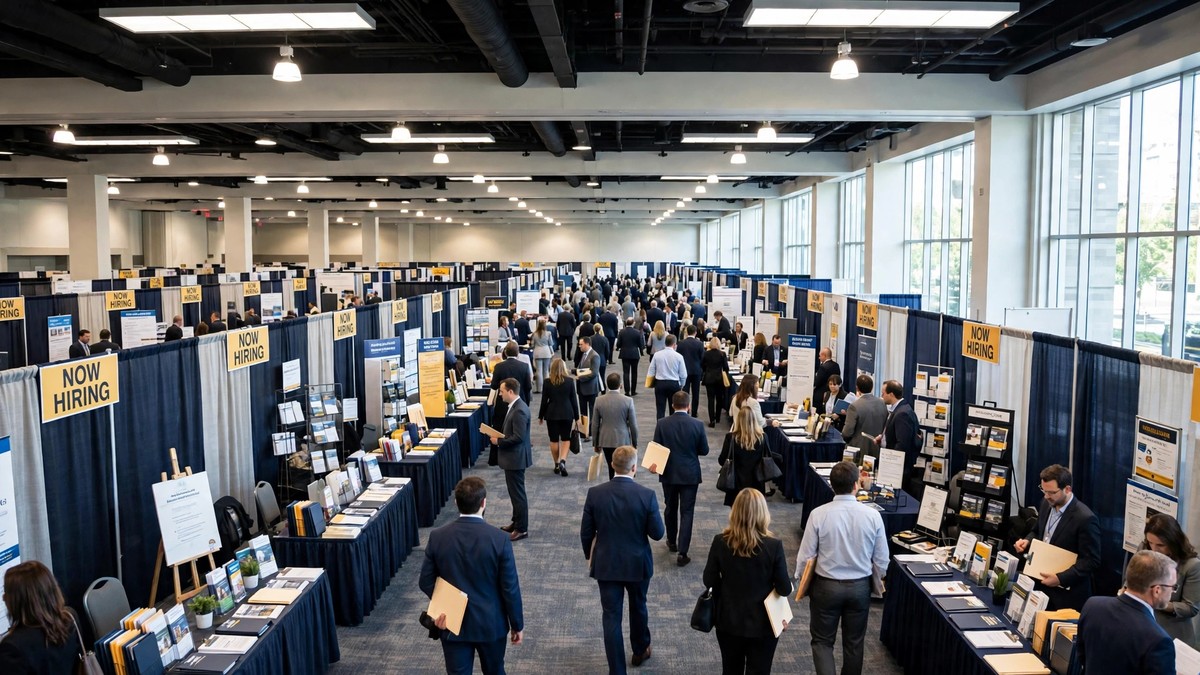
Hiring came in far stronger than anyone expected in October, handing the Federal Reserve a fresh reason to raise interest rates in December.
Key Points
- US employers added 165,000 jobs in October, the Bureau of Labor Statistics said on Friday, 6 November.
- The figure beat the 65,000 gain economists polled by Reuters had forecast, and topped every forecast in a Bloomberg survey.
- Unemployment eased to 4.1%, from 4.2% in September, while 421,000 people joined the labour force.
- August and September gains were revised up by a combined 84,000 jobs.
- Average hourly pay rose 0.4% in the month, the largest monthly rise since January, to $38.00.
- Traders now put the chance of a December rate rise at about 77%, up roughly 10 points from the day before, according to CME FedWatch.
US employers added 165,000 jobs in October, far more than forecast, and unemployment dipped to 4.1%, the Labor Department said on Friday, in a report that strengthens the case for a December interest-rate rise.
What happened
The Bureau of Labor Statistics published its October employment report on Friday morning, and almost every number in it surprised on the strong side. Nonfarm payrolls — the count of jobs on employer books outside farming — rose by 165,000 during the month. Economists polled by Reuters had expected a gain of 65,000. Dow Jones had put the figure lower still, at 59,000. Not one forecaster in Bloomberg’s survey had pencilled in a number as high as the one that arrived.
The unemployment rate, which comes from a separate survey of households, ticked down a tenth of a point to 4.1%. It has now stayed below 5% for 62 months in a row. The number of people out of work stood at 7.1 million, little changed from September, even though 421,000 people joined the labour force during the month. The share of the population either working or looking for work edged up to 61.9%.
The past was stronger than first thought, too. September’s gain was revised up from 29,000 to 60,000, and August’s from 133,000 to 186,000. Together, the revisions added 84,000 jobs to the two earlier months. October’s gain was more than three times the average monthly increase of 48,000 recorded over the previous year.
Hiring was broad. Professional and business services led the way with 70,000 new jobs. Health care and social assistance added about 55,000, its best month in half a year. Transport and warehousing took on roughly 25,000 more workers. Pay rose as well: average hourly earnings climbed 14 cents to $38.00, a 0.4% rise in the month — the biggest monthly gain since January — and 3.1% higher than a year earlier.
Why the US jobs report matters
The report landed three days after voters handed President Donald Trump and the Republicans a heavy defeat in the midterm elections, and it changes the argument about where the economy is heading. A labour market this firm gives the Federal Reserve room to keep its attention on inflation, which is still running above its 2% target, rather than on protecting jobs.
The figures arrived after markets have had a turbulent week, and technology shares wobbled as the Nasdaq plunged earlier in the week. Treasury yields rose after the release, and traders lifted the odds of a quarter-point rate rise at the Fed’s December meeting to about 77%, up roughly 10 points from the day before, according to CME’s FedWatch tool. The central bank held its benchmark rate steady in October, in a range of 3.75% to 4%, after raising it in September. Its next meeting is on 8–9 December.
“The October jobs report beat expectations by a massive margin: adding 165,000 jobs, about 100,000 above the consensus forecast,” said Andrew Flowers, chief economist at Appcast, a hiring-data firm. He added that while the jobless rate fell, people out of work are finding it harder to land a job.
The softer side of the report backs him up. The broader measure of unemployment, which counts people working part-time because they cannot find full-time work and those who have given up looking, rose to 7.9% from 7.6%. The number of people working part-time for economic reasons jumped by 339,000 to 4.8 million. And the average time spent out of work stretched to 27 weeks, the longest since the end of 2021.
What happens next
The next test comes on Tuesday, 10 November, when the Labor Department releases October’s consumer inflation figures. Together with the jobs data, that report will shape the Fed’s final decision of the year. The next employment report, covering November, is due on 4 December, days before the Fed meets.
One caution runs through all of it: October’s figures are preliminary and will be revised, as September’s and August’s were. A private hiring report from ADP, published on 4 November, had pointed in the opposite direction, a reminder that no single month settles the argument. But for now, the official picture is a labour market that is hiring faster than almost anyone expected — and a central bank with one less reason to hold back.
Sources: Bureau of Labor Statistics, Employment Situation, October 2026, released 6 November 2026; Reuters, 6 November 2026; Associated Press, 6 November 2026; Bloomberg, via The Edge Singapore, 6 November 2026; USA Today, 6 November 2026; Barron’s, 6 November 2026; IndustryWeek, 6 November 2026. The Andrew Flowers quote is from IndustryWeek. Market odds are CME FedWatch figures as reported by AP and Reuters. Published: 7 November 2026, Kuala Lumpur time.