
COP31 collapsed in Antalya on Sunday after nearly 200 countries failed to agree on a final climate deal, rejecting a draft that made no mention of the fossil fuels driving global warming.
The summit was due to close on Friday. It ran more than 44 hours into overtime, becoming the longest climate conference on record, and ended as the first to break down without an agreement since Copenhagen in 2009.
Key Points
- COP31 in Antalya ended on Sunday with no overarching deal, the first climate summit to collapse without an agreement since Copenhagen in 2009.
- The European Union, Panama, the Marshall Islands and Norway rejected the final draft, known as the Antalya Pact, because it made no mention of fossil fuels.
- Talks ran more than 44 hours past their Friday deadline, making it the longest COP on record.
- The draft had dropped every reference to fossil fuels after objections from Saudi Arabia and other oil producers, and left climate finance targets vague.
- Past agreements still stand, but governments now go home with no new joint plan on emissions or finance.
What happened at COP31
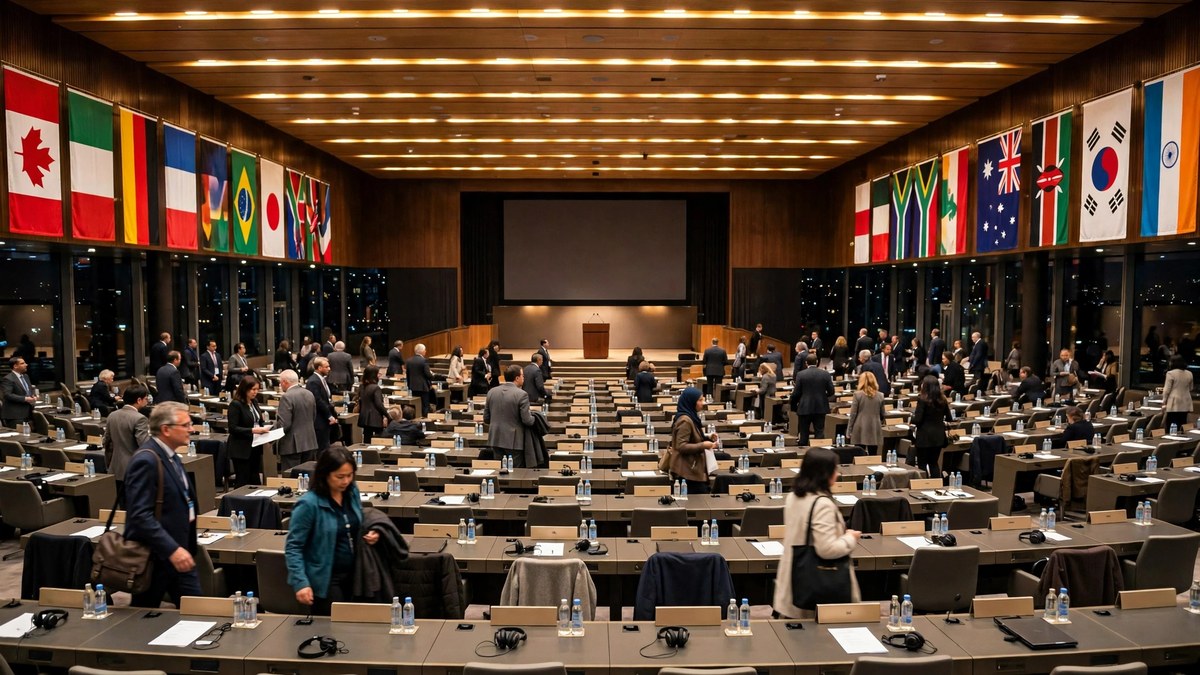
The summit opened in Antalya on 9 November, with delegations from nearly 200 countries gathering for two weeks of talks. The end came at a closing plenary meant to approve the deal. Murat Kurum, the COP31 president and Türkiye’s environment minister, told delegates he would put forward no new text. “We have done our utmost,” he said, “but it is clear that there are parties in this hall who oppose this text. We recognize that there is no consensus on this document.”
European Union negotiators had already walked out of the room. They said they could not accept a final agreement without any mention of moving away from fossil fuels, the main driver of climate change. Panama and island states such as the Marshall Islands joined the objection, and Norway also refused to back the text.
The row had built all week. Australia, which co-hosted the summit, tabled a first draft on Monday that called for a faster move away from fossil fuels in energy systems. By Thursday, a slimmer version had cut every reference to them, after Saudi Arabia and other big oil and gas producers objected. More than 100 countries had pushed to keep the references in.
The same draft dropped a $120 billion target for money to help poorer countries adapt to climate change. It kept a goal of tripling adaptation finance by 2035, but said nothing about the starting point for that increase. Developing countries said the offer fell far short of what they need.
The draft also acknowledged that the world is set to pass the 1.5-degree warming limit agreed in Paris, and called for faster development of technology that pulls carbon from the air and stores it underground. Critics said that language could be used as a licence to keep pumping oil. A separate goal, put forward by Türkiye, would raise electricity’s share of total world energy use to 35 percent by 2035, from around 23 percent now.
Why it matters
Fossil fuels are the main driver of climate change. The AP news agency reports that burning oil, gas and coal makes up roughly 73 percent of global emissions, yet the final text named none of them. Darragh O’Brien, Ireland’s climate minister, who spoke for the EU, called that gap unacceptable. “It is unconscionable that we would have a climate act that makes no reference to fossil fuel, no reference to transitioning away from fossil fuels,” he said. “We will not accept negotiating backwards in time. And we will not accept a COP that greenwashes fossil fuel.”
The fight matters because the words were agreed before. At COP28 in Dubai in 2023, countries made an unprecedented call to move away from fossil fuels. Three years on, no summit has restated that call, as oil-producing nations resist any reference to the cause of the crisis. “You cannot solve a fossil fuel crisis by pretending we don’t need to phase out fossil fuels,” said Harjeet Singh, a veteran climate negotiator.
This was also the first climate summit held with a scientific consensus that the world will pass the 1.5-degree limit. The United Nations has found that even a best case of 1.7 or 1.8 degrees would need emissions cut by 45 percent by 2035, which scientists say means a steep fall in fossil fuel use.
The wider setting worked against a deal. The United States, the largest historical emitter, stayed away for a second year after President Donald Trump ended climate cooperation. An energy shock from the war in Iran left much of the world facing higher prices, which made developing countries more reluctant to back a deal that would limit investment in new oil, gas and coal supplies.
The mood in the hall was bleak. UN Secretary-General Antonio Guterres said he shared “the very profound frustration of all those who expected governments to rise to the moment the climate crisis demands”. Chris Bowen, Australia’s climate minister and lead negotiator, called the outcome “very disappointing”. Mohamed Adow, director of the think tank Power Shift Africa, went further: “This has been the worst ever COP and its collapse needs to be a wake up call for the world.”
What happens next
There is no new text to take forward. Kurum left the stage while country representatives were still speaking, and the meeting closed without a deal. The obligations agreed at earlier conferences still stand, and Belgium’s climate minister, Jean-Luc Crucke, said the failure was difficult but “not the end of multilateralism”. “There has to be courage to say no,” he said.
Governments now return home with the same arguments unresolved: whether any future deal can name fossil fuels at all, how much rich nations will pay to help poorer ones adapt, and how fast the world moves from fuel-powered cars, furnaces and factories to electricity. David Waskow of the World Resources Institute said the summit showed the strain of that shift. “We’re in the midst of a major transition in the global energy landscape,” he said, “and the dynamic at COP31 reflected the tensions over that transition.”
The test now falls on the next round of talks. If the words on fossil fuels stay out again, the collapse in Antalya will look less like a one-off failure and more like the point where the world’s climate process stopped being able to agree on its central fact.
Sources: Reuters, CNN, Al Jazeera, AP, The Wall Street Journal. Published 23 November 2026.