
COP31 ended in Antalya on Sunday with no deal at all, after the European Union and Panama refused to back a final draft that never named fossil fuels — the first climate summit to collapse this way since Copenhagen in 2009.
Key Points
- COP31 President Murat Kurum told the closing plenary there was no consensus, so the decisions “have not been adopted”.
- The European Union, speaking through Ireland’s environment minister Darragh O’Brien, said it could not endorse a climate text with no mention of fossil fuels. Panama also formally objected.
- The 10-page final draft, tabled at about 3am on Sunday, never used the words fossil, oil, coal or phase out, and dropped the $120 billion adaptation finance target developing countries had sought.
- The draft did admit that warming will pass 1.5°C — something no COP outcome had said before — and pushed electrification and carbon removal instead.
- Technical decisions on carbon markets under Article 6 of the Paris Agreement were adopted on Friday night, so not everything from Antalya was lost.
- The next summit is due in Addis Ababa, Ethiopia, in November 2027.
What happened
COP31 opened in Antalya on 9 November, co-hosted by Türkiye and Australia, with delegations from nearly 200 countries. It was scheduled to close on Friday 20 November. It did not.
Australia opened the week with a draft that asked countries to move faster away from fossil fuels. By Thursday that language was gone from a shorter replacement text, after Saudi Arabia and other big oil and gas producers pushed back. The replacement also left out the proposed $120 billion a year in adaptation finance for poorer countries.
Friday’s late session signed off on the technical items, carbon markets among them, while the political deal itself remained unsettled. “We are close to the finish line, but we are not there yet,” COP31 President Murat Kurum, Türkiye’s environment minister, told delegates.
On Saturday, Turkey and Australia brought the two most divided sides — the European Union and Saudi Arabia — into the same room to look for wording both could live with. About 130 countries wanted the phase-out language restored. Panama vowed to formally object to any final deal that ignored it, and 100 civil society groups warned the hosts were “on course to preside over one of the most disappointing COPs” ever held.
The third draft arrived at about 3am on Sunday: 94 paragraphs across 10 pages. The summit had already run into overtime over fossil fuels before the final draft arrived. Kurum told a late-night plenary: “We believe that we have put forward a text which all the parties can agree upon.” Delegates were given a few hours to raise objections. The closing session was first set for 9am, then pushed back three times — to 10am, 11am and finally 11.30am.
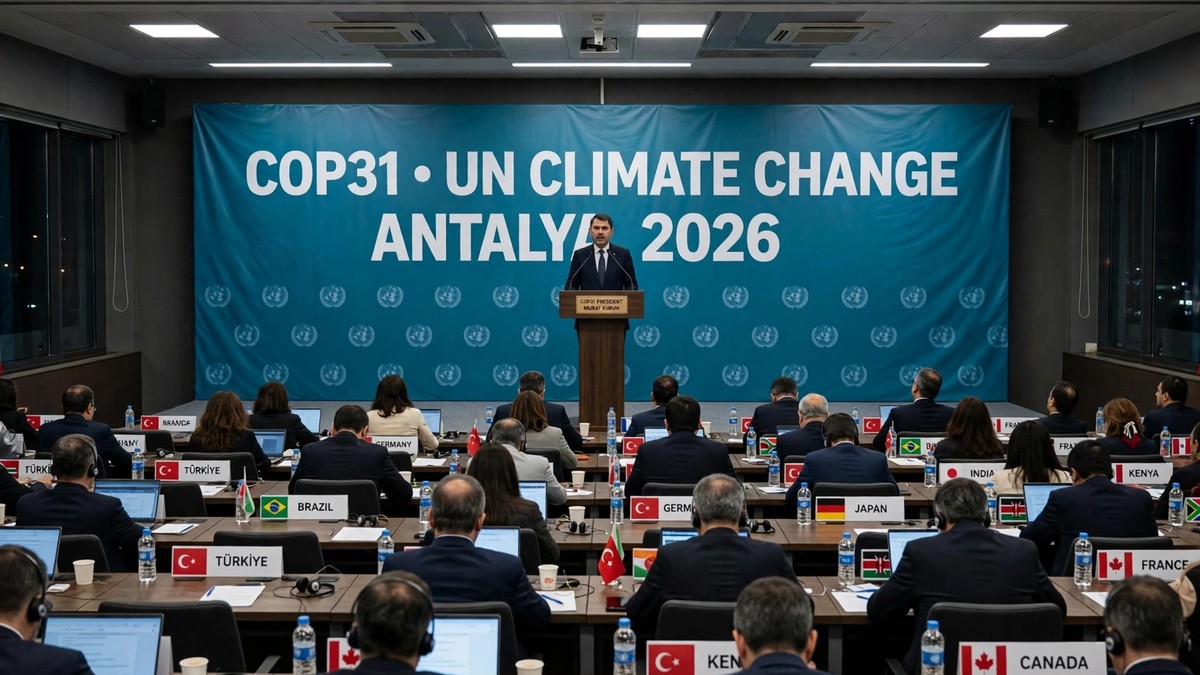
When the hall finally met, the objections came out in the open. O’Brien told delegates the EU would not endorse a cover decision, or an Antalya Pact, “that does not even mention fossil fuels, which is the key driver of climate change”. Panama said it could not support a text that failed to meet the scale of the crisis. Kurum then gaveled the summit to its end without a deal: “It is clear that there are parties in this hall who oppose this text. We recognise that there is no consensus on this document. Therefore, these decisions have not been adopted.”
Why it matters
Fossil fuels drive most of the warming, and for many governments a climate deal that never names them is no deal at all. O’Brien put it bluntly in the hall: “It is unconscionable that we would have a climate act that makes no reference to fossil fuel, no reference to transitioning away from fossil fuels.”
The draft did not hide the scale of the concession. It records “deep concern” that peak warming will pass 1.5°C above pre-industrial levels “in the next few years”. No earlier COP outcome has conceded that the Paris goal will be missed. The UN’s environmental body confirmed in October that the rise in global temperature is set to exceed 1.5°C. October 2026 was the warmest October on record, at 1.8°C above the 1850-1900 average, according to Berkeley Earth.
On money, the draft repeats the pledge to triple adaptation finance by 2035, yet says nothing about what the tripling is measured against or how it would be counted. The $120 billion figure developing countries asked for is nowhere in the text. A UN review published during the talks found adaptation finance fell from $81.5 billion in 2022 to $64.1 billion in 2024. Harjeet Singh of the Fill the Fund campaign said parties had only agreed to “discuss” a tripling pathway in 2027: “Floods and heatwaves won’t wait for 2027.”
The draft also leans heavily on carbon capture and storage, aiming for gigatonne scale by 2035. Opponents say the technology costs too much, has delivered little so far, and could keep fossil fuels in use for longer. “No deal is better than a deal with the fossil fuel industry,” said Jasper Inventor of Greenpeace. Andreas Sieber of 350.org called the draft “an indefensible failure of leadership”.
The split ran through the whole summit. Observers in Antalya said Saudi Arabia and other big oil producers had pushed hard to keep any explicit mention of fossil fuels out of the text, and carbon removal language in. A Saudi delegate told the hall he was surprised at the resistance to technology: “If indeed the climate challenge, as some have mentioned today, is so important, it makes no sense that solutions, concrete solutions… will be taken off the table.”
The failure does not wipe out what earlier summits agreed. The obligations set by previous COPs, and the technical and legal frameworks around them, still stand. What Antalya lost was the political declaration — the signal that nearly 200 countries could still agree on where the fight against warming goes next.
What happens next
There is no COP31 deal to carry forward, and no new political declaration from Antalya. The next summit, COP32, is due in Addis Ababa, Ethiopia, in November 2027, and the question of fossil fuels — named or not — will be waiting for it.
The collapse leaves the process itself under scrutiny. The last time a UN climate summit failed to end with a deal adopted by all was Copenhagen in 2009. Delegations left Antalya with the carbon-market decisions from Friday night, and little else agreed at the political level.
For the countries most exposed to rising seas and extreme heat, the wait is now a year long. The draft’s own admission — that warming will pass 1.5°C — stands as the summit’s clearest statement, even as the deal built around it fell apart.
Sources: Reuters, AFP, AP, Al Jazeera, The Guardian, BBC | 22 Nov 2026