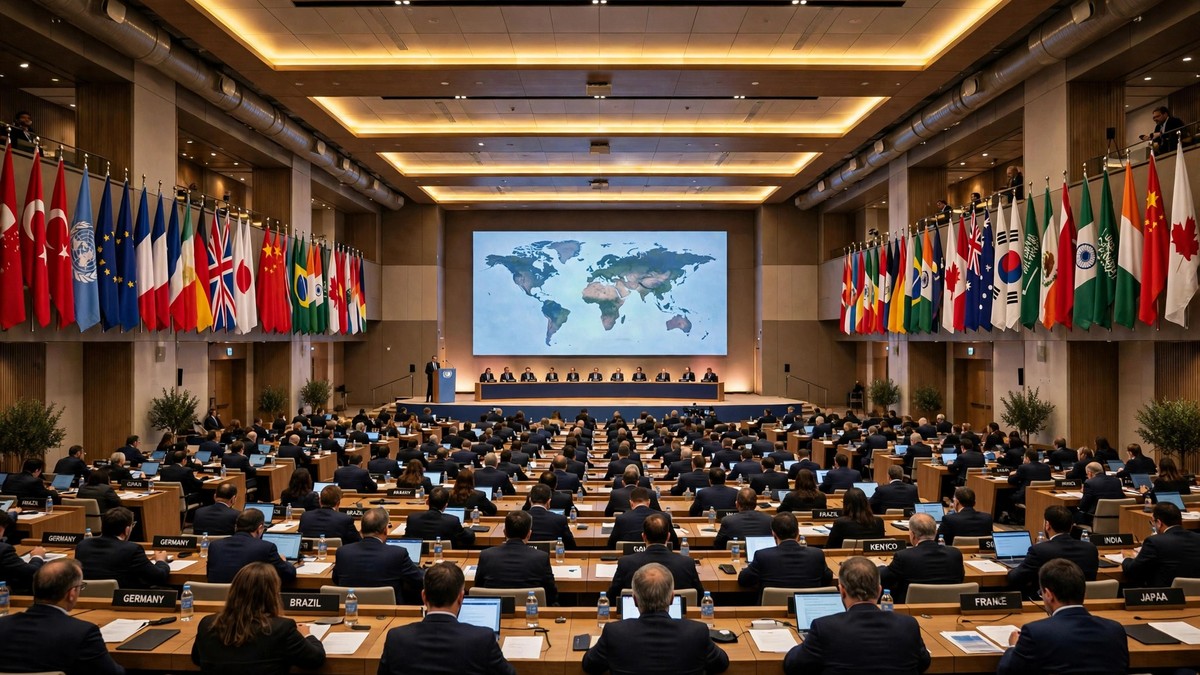
COP31 climate talks in Antalya ran past their Friday deadline after nearly 200 countries failed to agree on a final deal, deadlocked over a draft that drops all mention of fossil fuels.
The summit was due to close on Friday, 20 November, after two weeks of talks in the Turkish Mediterranean city. Instead, negotiators worked into the night, and a third draft of the deal is expected on Saturday, the AFP news agency reported. The argument at the centre of it is simple: whether the final text names the fuels that drive global warming at all.
Key Points
- COP31 in Antalya ran past its Friday deadline, with nearly 200 countries deadlocked on a final deal.
- A slimmed-down draft published on Thursday drops every mention of fossil fuels after objections from Saudi Arabia and other oil and gas producers.
- The same draft drops a $120 billion target for money to help poorer countries adapt to climate change.
- The European Union warned the text “risks turning this climate COP into a fossil summit”. Panama and a dozen other countries demanded a clear transition away from fossil fuels.
- A third draft is expected on Saturday, with talks set to run into the weekend.
What happened
COP31 opened in Antalya on 9 November, with governments, businesses and campaigners gathering for two weeks of talks on cutting emissions and paying for the damage already done.
An opening draft put forward by co-host Australia on Monday called for a faster phase-out of fossil fuels. Three days later, a slimmer version removed every mention of them. The change followed objections from Saudi Arabia and other major oil and gas producers, and it set the tone for the rest of the week.
The same draft dropped a $120 billion target for money to help poorer countries adapt to climate change. It kept a goal of tripling adaptation finance by 2035, but left open how that increase would be counted.
By Friday, the summit’s scheduled closing day, the wider political deal was still out of reach. A late closing session approved some technical matters, but not the deal itself. “We are close to the finish line, but we are not there yet,” COP31 President Murat Kurum, who is Türkiye’s environment minister, told delegates.
Chris Bowen, Australia’s climate minister and the lead negotiator, said he was still hopeful of a deal everyone could get behind. “Things worth doing, in my experience, don’t come easy,” he told reporters. “We won’t be leaving the rooms of Antalya until we have that consensus.”
The draft turns instead to electrification. It proposes raising the share of the world’s final energy use that comes from electricity to 35 percent by 2035, a target put forward by host country Türkiye. It does not say that power must come from renewable sources, and some countries want the word “clean” added.
Why it matters
Fossil fuels are the main driver of climate change, and for many governments a climate deal that does not name them is not a deal at all. “It is not acceptable to have a COP or a cover document that does not even mention fossil fuels, and we simply will not put up with it,” Panama’s environment minister, Juan Carlos Navarro, told a news conference. Panama joined a dozen other countries, from France to the Solomon Islands, in a letter demanding “a clear transition away from fossil fuels”, and threatened to walk away from the talks.
The European Union said the draft “risks turning this climate COP into a fossil summit”. An EU official, speaking on condition of anonymity, told AFP the text was “not acceptable and not ambitious enough”.
The argument over money runs just as deep. Developing countries say rich nations are falling short on climate finance. “We didn’t come here to beg,” Ghana’s environment minister, Zanetor Agyeman-Rawlings, said. A UN review published during the talks found adaptation finance fell from $81.5 billion in 2022 to $64.1 billion in 2024. The same review found 44 of 96 global climate indicators moving in the right direction, with renewable energy capacity up 17 percent between 2024 and 2025.
A third fight is over carbon capture. The draft encourages faster use of technologies that trap emissions from power plants and factories and store them underground, and it acknowledges that the world is set to pass the 1.5-degree warming limit set in the Paris Agreement. Several delegations say the technology is expensive and unproven at scale, and that writing it into the deal lets oil and gas producers keep drilling. “We want to see the references to false solutions removed,” said Ralph Regenvanu, climate minister of Vanuatu, a Pacific island nation threatened by rising seas. Bob Natifu, Uganda’s commissioner for climate change, said the draft “allows developed countries to continue producing oil and gas with a claim that CCUS will fix it, while we will have a bigger role to triple renewables, which is not balanced at all”.
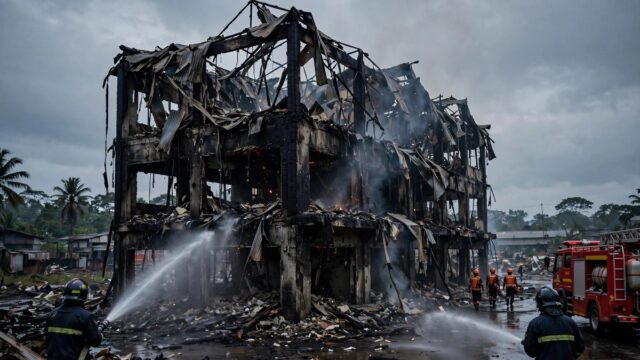
The backdrop has not helped. A UN report last month found the world is set to pass 1.5 degrees Celsius of warming above pre-industrial levels, the limit governments agreed to pursue under the 2015 Paris Agreement. The United States, the largest historical emitter, is absent from the talks for a second year after President Donald Trump ended climate cooperation. The war in Iran and rising living costs have also drawn attention away from the summit. The talks follow a year of climate-linked disasters, from heatwaves in Europe to floods in Nepal, and Cyclone Akvan, which struck India’s east coast this week.
Environmental groups tracking the talks say the summit lacks ambition. Mohamed Adow, director of the think tank Power Shift Africa, called it “the worst COP ever”. Brazil’s national secretary for climate change, Aloisio Lopes Pereira de Melo, put it more plainly: “At this point, no one is happy.”
What happens next
Negotiators are expected to work through the weekend. A third draft is expected on Saturday, and in recent years climate summits have regularly run more than 24 hours past their deadline. The test for that draft is whether the words on fossil fuels come back, whether the $120 billion finance target returns, and whether the electrification goal says the power must be clean.
Bowen has promised to keep the talks going until there is a consensus. If the third draft still leaves fossil fuels out, Panama’s threat to walk away will be the first test of whether the summit can hold together at all.
Sources: Reuters, Al Jazeera, UN News, AFP. Published 21 November 2026.