The International Court of Justice ruled on Thursday that Myanmar committed genocide against the Rohingya, the first time the court has held a state responsible for the crime.
The verdict, delivered in The Hague after a case that ran for seven years, found that Myanmar’s security forces acted with the intent to destroy a substantial part of the Rohingya group during the 2017 crackdown in northern Rakhine State. The court ordered Myanmar to let the refugees return home safely, pay reparations and punish those responsible.
Key Points
- The court ruled 9-6 that Myanmar committed genocide against the Rohingya in northern Rakhine State during its 2017 crackdown, breaching the Genocide Convention.
- Judges found evidence that about 10,000 Rohingya were killed and more than 730,000 were driven across the border into Bangladesh.
- Myanmar was ordered to allow a safe, voluntary return for the refugees, pay reparations and punish those responsible.
- The ruling is final and binding, but the court has no way to enforce it beyond reporting Myanmar to the UN Security Council.
- It is the first time a state has been found guilty of genocide by the ICJ, and only the fourth such ruling by any international court since the Holocaust.
What happened
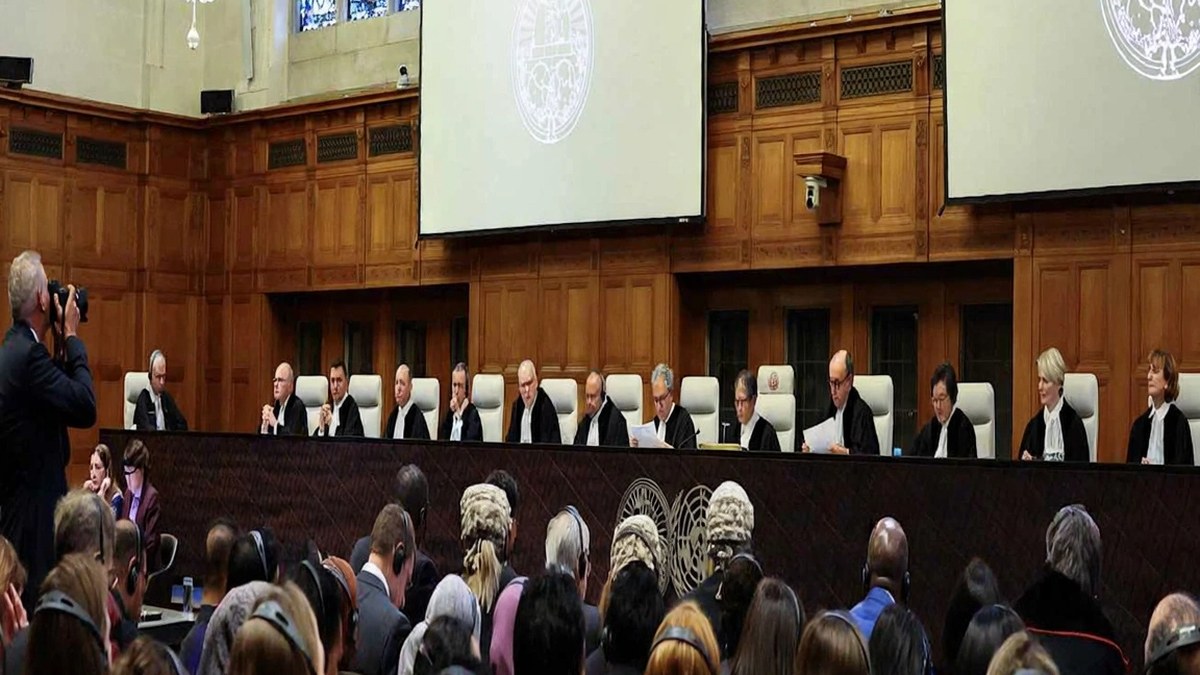
The verdict was read out over three hours in the Great Hall of Justice at the Peace Palace in The Hague. Court President Yuji Iwasawa delivered the judgment, finding that the “only reasonable inference” from the evidence was that Myanmar’s security forces acted with the intent to destroy a substantial part of the Rohingya group.
The court said the forces killed thousands of civilians, carried out widespread sexual violence and extreme violence against children, and attacked Rohingya as they fled in large numbers to Bangladesh. It found four genocidal acts proven: the mass killing of civilians, the forced displacement of hundreds of thousands of people, serious harm inflicted on the group, and the prevention of births.
The judges voted 9-6 that Myanmar committed genocide, and by the same margin that it failed to prevent it. By 11 votes to four, they found Myanmar had failed to punish genocide. By 14 votes to one, they found it had not publicly incited genocide.
The case was brought by The Gambia in November 2019 under the 1948 Genocide Convention, which lets any state accuse another of breaching the treaty drawn up after the Second World War. The 15-judge panel included Navi Pillay, the jurist who won the Nobel Peace Prize last month.
Myanmar had argued that the 2017 operation was a legitimate response to attacks by fighters from the Arakan Rohingya Salvation Army on police posts. The court rejected that defence. It also noted that the Rohingya had long been treated as second-class citizens, well before 2017, and had been forced into a birth-control programme.
Alongside the verdict, the court ordered Myanmar to allow the safe, voluntary and dignified return of those who fled, to return or replace damaged collective property, to help find the disappeared and ensure proper burials, to provide physical and psychological rehabilitation, and to protect the population from further persecution. It must also investigate suspected perpetrators and prosecute them where warranted, and pay compensation in an amount the court will set later.
Why it matters
Genocide is the hardest crime to prove in international law, because a court must find a specific intent to destroy a group in whole or in part. The ICJ had never before ruled that a state held that intent. Human rights lawyer Toby Cadman called the decision a landmark for that reason, and said the threshold the court applied was extremely high.
The ruling also sets a marker for the court’s other genocide cases. It is hearing South Africa’s case accusing Israel of genocide in Gaza, and a case linked to the war in Ukraine. What the judges accepted as proof of intent here — and what they did not — will be studied closely in both.
Amnesty International welcomed the ruling and said it hoped the decision marks the start of a long-overdue process of accountability, with all crimes under international law effectively investigated and those suspected of responsibility brought to justice.
For the Rohingya themselves, the verdict lands after almost a decade of waiting. More than 1.3 million remain displaced across South and Southeast Asia, including about 1.2 million in the sprawling camps at Cox’s Bazar in Bangladesh, where many watched the ruling on screens. Aid is shrinking, sea crossings are dangerous, and the community remains displaced and vulnerable.
What happens next
The judgment cannot be appealed, and it is legally binding. But the court has no police or army of its own. If Myanmar does not comply, the only formal step is reporting the failure to the UN Security Council, where action can be blocked by a veto. Whether Myanmar’s military rulers follow the orders is an open question.
The court will set the compensation figure at a later stage, and the reparations process will follow. Attention now turns to the Security Council, to whether states impose sanctions or other pressure, and to what the ruling signals for the Gaza and Ukraine cases still before the court. The same day, the world’s three most powerful leaders signed a joint declaration in Shenzhen that also promised reform of the United Nations, the body whose council would have to act.
In Cox’s Bazar, refugees have said for years that they want to go home. The court’s order gives them a legal right to a safe return. Whether that return ever happens will depend on Myanmar — and on whether the world enforces a verdict it cannot enforce itself. The court’s Gaza case, meanwhile, continues against the backdrop of the war in Gaza, where the same questions of intent and accountability are still being argued.
Sources: Al Jazeera, Reuters, AP, BBC | 19 November 2026, 8:50 p.m. +08 (12:50 p.m. UTC)