For months, Washington told Kyiv that joining NATO was not on the table. Now, according to Ukraine’s president, the Americans have put the alliance back on the table — and attached a price to it.
Volodymyr Zelenskyy said on Saturday that US negotiators asked him a question nobody in Washington had asked before: if Ukraine were admitted to NATO, would it pull its troops out of the Donbas, the eastern region it still partly holds? He described the moment in remarks to reporters on Friday that were held back until Saturday, after two days of US-brokered talks in Abu Dhabi and a round of shuttle diplomacy that took the American envoys from Moscow to Dublin.
The idea links the two things Kyiv wants most and fears most. NATO membership has been Ukraine’s top demand in any peace deal, the guarantee it believes would stop Russia coming back. Giving up the Donbas has been the line it has refused to cross, even as Moscow has made it a condition of any settlement. Putting the two together changes the shape of the negotiation — and Zelenskyy was careful to say that nothing has been agreed, nothing has been written down, and he alone will not decide it.
Key Points
- US negotiators asked Ukraine for the first time whether it would withdraw from the Donbas in exchange for joining NATO, Zelenskyy said on Saturday.
- The question was raised during this week’s US-brokered talks in Abu Dhabi, which ended on Wednesday without a breakthrough on a ceasefire or territory.
- Zelenskyy said he would only put such a trade to a national referendum if Kyiv first received firm security guarantees, a strong and well-funded army, and money to rebuild.
- He said Ukraine would not recognise any occupied land as Russian and that no written proposal exists yet: “We need specifics, and we don’t have them yet.”
- Russia has long called Ukrainian NATO membership a red line, and the Kremlin has also demanded a Ukrainian withdrawal from the parts of the Donbas Kyiv still controls.
- The two sides did agree in Abu Dhabi to a prisoner exchange involving more than 1,000 people, with the final numbers still being settled.
What happened in the Donbas-NATO proposal
Zelenskyy put the American question in his own words. “The Americans raised a question: ‘What if Ukraine joins NATO? Would Ukraine withdraw from Donbas?'” he told reporters. “This was the first time this had been raised.”
He added that the question made him believe NATO was “back on the agenda” — a sharp turn from the position US officials had taken until now, which was that membership was off the table. He was just as quick to add a warning: “But you have also heard Putin’s signals, and this is an extremely difficult conversation.”
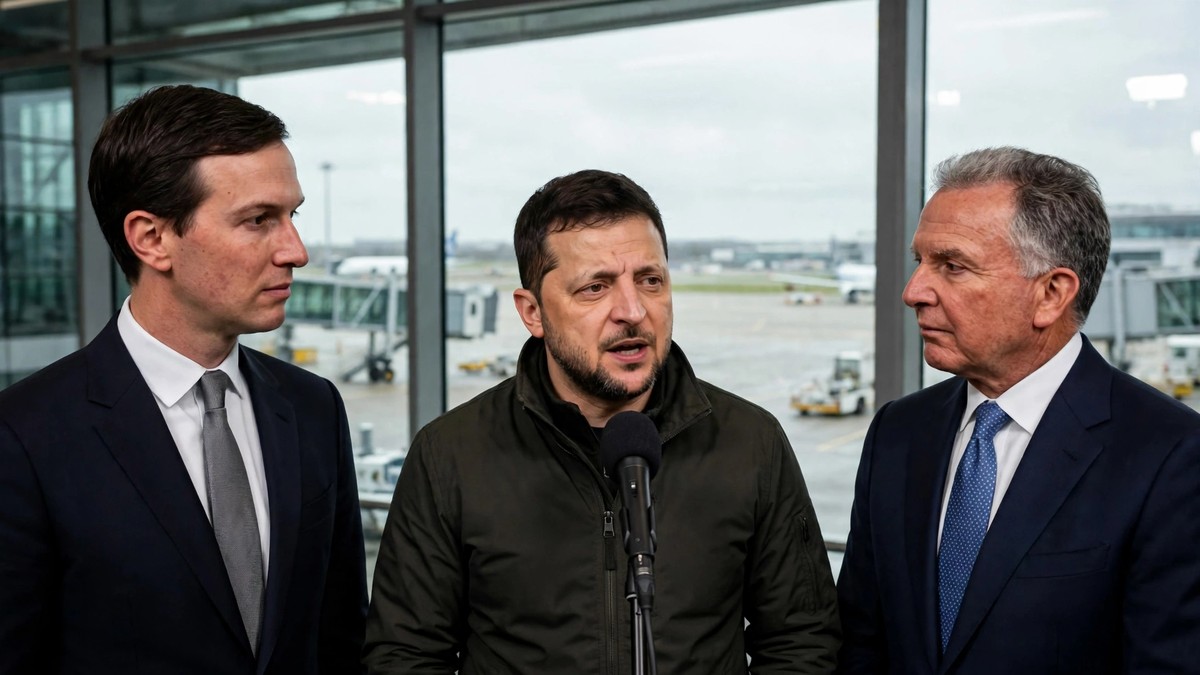
The talks that produced the question ran on Tuesday and Wednesday in Abu Dhabi, the first direct US-mediated round between Russian and Ukrainian delegations in months. US envoys Jared Kushner and Steve Witkoff were in the room, and after the talks ended they flew to Moscow to meet President Vladimir Putin on Wednesday, then on to Dublin on Thursday to brief Zelenskyy on the sidelines of a European Union summit. It was in Dublin, at the airport, that the three men spoke to reporters together.
Zelenskyy repeated that Kyiv is not ready to give up territory. What he offered instead was a process: if Ukraine received a full package — security guarantees from NATO and the European Union, no limits on the size and funding of its armed forces, and money to rebuild — he would take the question to the Ukrainian people. “I have no right to make that decision on my own,” he said. Any deal, he added, would come “without any recognition of the occupied territories as Russian.”
He also ruled out one concession Moscow has pressed for: changing Ukraine’s constitution to make the country neutral. That would not guarantee lasting security, he said. And he dismissed Putin’s suggestion of a local humanitarian ceasefire in Kostiantynivka, a heavily fought-over city in the Donetsk region, saying it reflected Moscow’s inability to take the city by force. Ukraine has given the other side a list of seven or eight other frontline settlements where civilians, including children, are trapped, and proposed a humanitarian truce there instead. Moscow denies deliberately targeting civilians.
Why the Donbas proposal matters
The Donbas is the Donets basin, the two eastern regions of Donetsk and Luhansk. Russia already controls most of both, along with roughly a fifth of Ukraine’s territory, and has demanded the rest. The slice Kyiv still holds is small in practical terms — a few towns and the defensive lines around them — but giving it up would mean accepting, in effect, that the whole region is Russian. That is why Zelenskyy has treated it as a matter for the whole country, not for one president.
The NATO half of the trade is just as hard. Membership is not Washington’s to give. It needs the agreement of all 32 allies, and several European governments have been wary of admitting a country at war. Zelenskyy himself pointed to the gap between the idea and any real offer: the guarantees he would need have not been spelled out, and neither has the timing. “We need specifics, and we don’t have them yet,” he said.
Moscow’s answer, so far, has been no on every front that matters to Kyiv. Zelenskyy said Russia rejected an energy-target ceasefire at the talks this week, and that Putin “personally does not support a ceasefire.” He said Russia was “betting everything” on its winter campaign. That sets up a negotiation in which one side is being asked to trade land for a membership card that does not yet exist, while the other side is still fighting for the land in question.
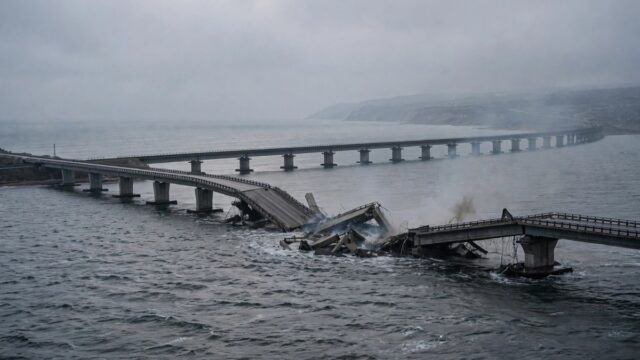
The war, meanwhile, has not paused for the diplomacy. On Saturday, a Ukrainian drone attack killed a mother, a father and their 24-month-old daughter at their home in Proletarsky, in Russia’s Belgorod region, according to Russian authorities. Russia’s defence ministry said it intercepted 29 Ukrainian drones overnight. Ukraine’s air force said Russia launched 96 drones from Friday evening, of which 81 were shot down or electronically suppressed, with hits at eight locations.
What happens next
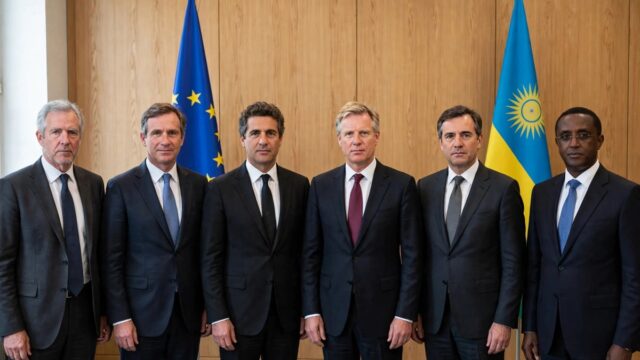
There is no written American proposal, no date for a referendum and no timetable for the next round of talks. What is settled is that Europe will have a seat at the table next time. The envoys told Zelenskyy that all sides had agreed to that, and EU leaders in Dublin settled on a team of five big military powers — Britain, France, Germany, Italy and Poland — plus EU officials. For the full story on Europe joining the talks
The prisoner exchange agreed in Abu Dhabi is the one concrete result so far. It will involve more than 1,000 people, Zelenskyy said, with the final numbers still under discussion. For the full story on the Abu Dhabi round
The wider diplomacy continues in parallel. Trump, Putin and Xi are due to hold their first-ever three-way meeting in Shenzhen on Thursday, on the sidelines of APEC, with nuclear arms cuts on the agenda. For the full story
For now, the Donbas-for-NATO idea exists only as a question asked in a negotiation room. Whether it becomes a proposal depends on Washington putting specifics on paper, on Europe agreeing to a membership path, and on Moscow accepting a deal it has so far called a red line. Until then, Zelenskyy’s referendum promise is a door left open, not a deal made.
Sources: Reuters (via Northland News Radio), BBC, Al Jazeera, AFP (via The Hindu), Firstpost, The Jerusalem Post. Time: Saturday 14 November 2026, checked 22:55 +08 (14:55 UTC).