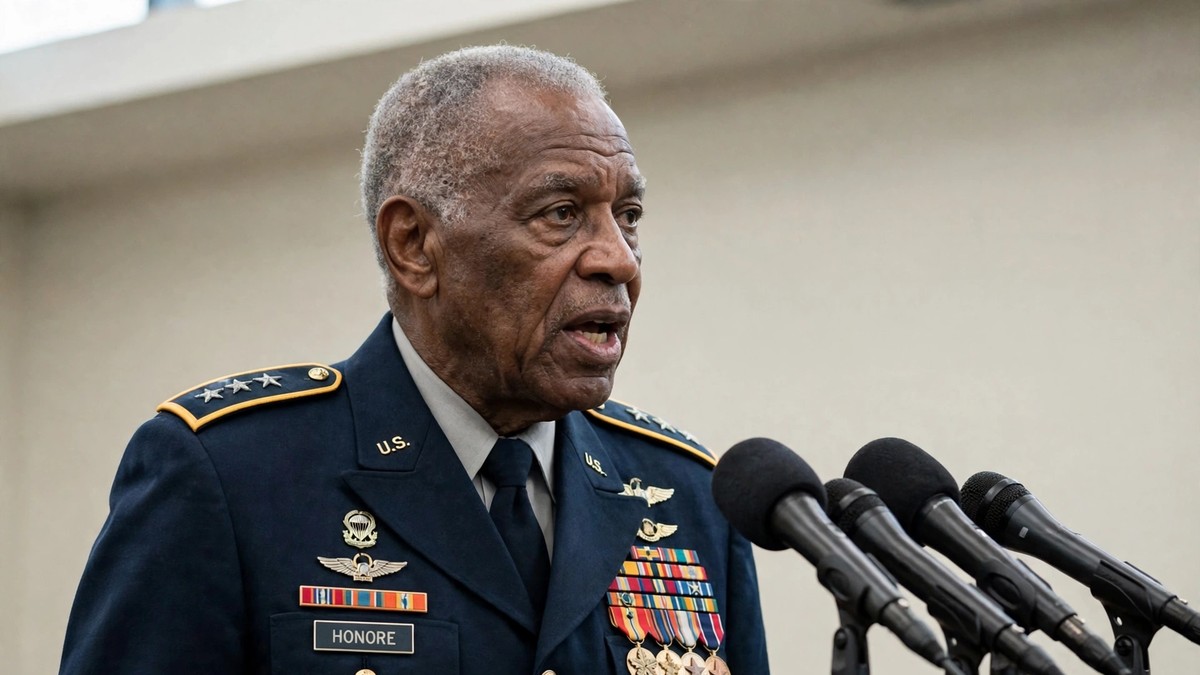
The Pentagon wants its biggest bases to keep running for 90 days without outside power or water, and a retired general who led the Katrina recovery says civilians were left out of the plan.
The plan is real. The warning for homes is not. That gap is why a retired three-star general’s warning, published on Friday, set off a new round of searches and a fresh wave of false claims about a 90-day blackout.
Key Points
- The Pentagon’s FORTRESS plan aims to let major US bases run on their own for at least 90 days, according to documents reviewed by Fox News Digital.
- Retired Lt. Gen. Russel Honoré wrote in The Hill on Friday that civilian leaders were never briefed on the planning.
- Honoré said governors and mayors must be told what the Pentagon is preparing for: “If American civilians are at risk, they have a right to know.”
- No agency has warned Americans of a 90-day blackout, and no date for one exists. Videos of President Trump announcing one are AI fakes.
- The Pentagon has not confirmed the 90-day figure as a final requirement. Its own article puts the period at 30 days.
- Federal advice for households has not changed: supplies for several days, and two weeks of water if possible.
What happened in the Pentagon’s 90-day plan
The plan is called FORTRESS, short for Federal Operations for Resilience, Troop Resources, Energy, Supply and Survivability. Defence Secretary Pete Hegseth announced it on 30 September in a “State of the Force” address at Marine Corps Base Quantico, calling it “a national insurance policy for the American homeland.” His headline promise was power: “Every major military installation in America is going to generate its own power, independent of the civilian grid.” A memo signed the same day ordered a FORTRESS America programme office to be set up within 30 days.
The 90-day figure came later. Fox News Digital reported on 25 October, from planning documents it reviewed, that every major installation in the continental United States would be expected to keep essential operations going on its own for at least 90 days: its own electricity, water, fuel and communications. The measures under discussion include portable nuclear reactors, large battery systems and microgrids that can cut a base off from the civilian network.
Pentagon chief spokesperson Sean Parnell, who helped shape the plan, put the logic bluntly to Fox News: “Power is combat now.” He added: “We don’t want to rely on standard civilian municipal infrastructure to run our national defense. We just simply can’t. It’s an intolerable risk.”
Then came the warning that revived the story. Retired Lt. Gen. Russel L. Honoré, the former commander of the US First Army who led the federal recovery after Hurricane Katrina, wrote in The Hill on Friday that the Pentagon had told bases to plan for 90 days off the grid while leaving America’s civilian leaders out of the loop.
Why the 90-day plan matters
Honoré’s point is about who gets to prepare. A base that can run for three months has generators, fuel stores, water and its own communications. A town next to it does not. “If American civilians are at risk, they have a right to know,” he wrote. “Just as important for managing the threat, America’s governors and mayors must be read in to the situation to begin planning for the worst.”
He described what three months without power would look like away from a base: “Ninety days without an electrical grid would mean no heating and refrigeration, disruptions to food, water and fuel supplies and more. People, whether sick in the hospital or completely healthy, would die otherwise completely preventable deaths.”
He also gave the reason he thinks the Pentagon is planning this way. “It is no secret that we are in a war with Iran,” he wrote, adding that Iran “does have the technical abilities and know-how to launch a cyberattack.” He was careful about what he did not know: “Whether there is a specific threat that has raised concerns within the Department of Defense, or Secretary Pete Hegseth has just learned of his adversaries’ capabilities, we don’t know.”
For the full story on the war with Iran.
What is not true about the blackout claims
The searches that followed the op-ed turned the plan into something it is not. No federal agency has warned Americans of a 90-day blackout, and no date for one has been announced. Videos that appear to show President Trump announcing a 90-day blackout are AI fakes. Snopes rated them fake on 10 November.
Even the 90-day figure itself is not settled. The Pentagon has not publicly confirmed it as a final requirement. The department’s own article on the plan, published on 29 October, puts the self-reliance period at 30 days. A senior defence official said on 20 October that the department was still assessing roughly 500 installations in the continental United States, with no overall cost estimate and no completion date. Full implementation could take decades, according to Fortune.
Honoré wrote as other systems were failing in plain sight. On Friday the FAA grounded every departing flight in the United States after a communications failure hit air traffic control. For the full story. He noted that a cyberattack had not been established as the reason for the failures.
What happens next
Honoré’s advice for households is far smaller than 90 days, and it has not changed. Keep several days of nonperishable food, he wrote, several gallons of water for each family member for every day of disruption, batteries, filled prescriptions and a battery-operated or hand-cranked radio in case phones cannot be recharged. Federal guidance says the same: supplies for several days, and two weeks of water if you can manage it.
What to watch now is whether the Pentagon confirms the 90-day figure, and whether governors and mayors get the briefing Honoré is asking for. The FORTRESS programme office has to turn a planning standard into engineering requirements for hundreds of bases, and until it does, the 90-day number rests on Fox News Digital’s reporting on documents it reviewed, which the Pentagon has not published. Hegseth, who announced the plan, has faced his own fight in Congress in recent days. For the full story.
Sources: The Hill (Honoré op-ed, 13 Nov), Fox News Digital (25 Oct), Snopes (26 Oct; 10 Nov), Fortune, Times of India (14 Nov), Nacionale (13 Nov). Time: Sunday 15 November 2026, checked 00:58 +08 (16:58 UTC 14 Nov).