Key Points
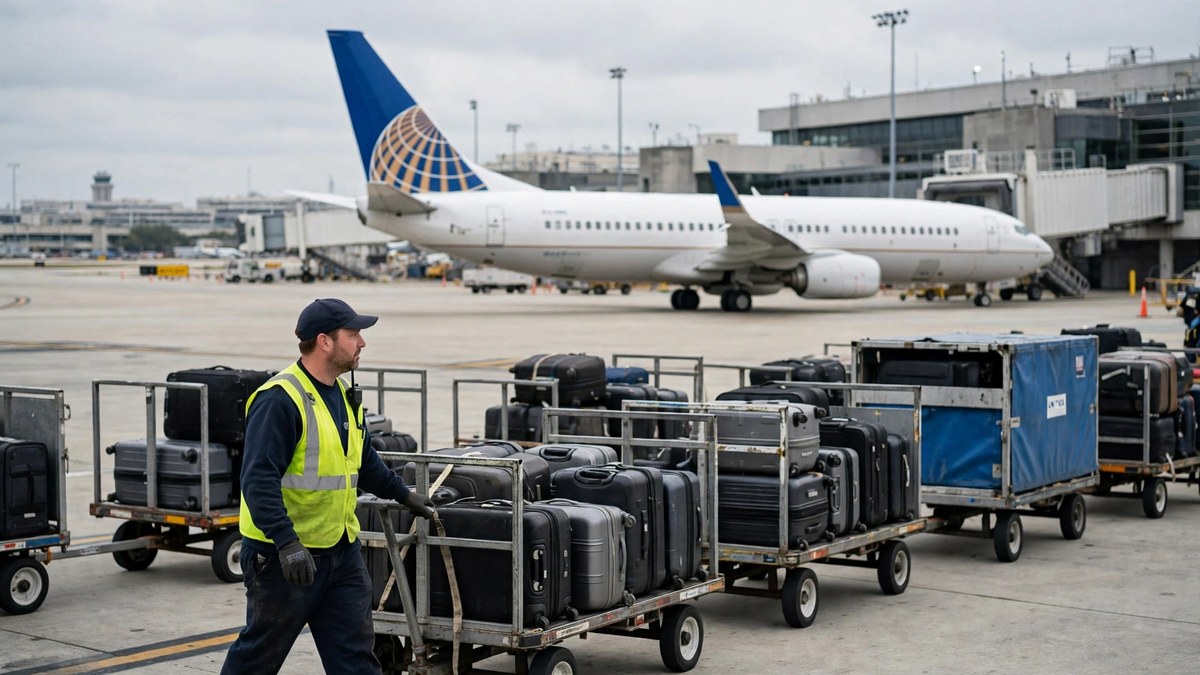
- United Airlines confirmed a “widespread system outage” on Monday afternoon, 16 November.
- The problem affects departing flights. Flights already in the air and United Express flights are not affected.
- Crews cannot get the takeoff data their planes need to leave the gate.
- United later said on Monday evening that it had resolved the technology issue. The cause is still not known, and the airline says there is no sign of a cyberattack.
- FlightAware showed 460 United flights delayed and 21 cancelled on Monday.
- It comes three days after the FAA’s nationwide ground stop, which cancelled more than 18,000 flights over the weekend.
What happened
United Airlines confirmed on Monday afternoon that it was dealing with a system outage across its network, three days after a failure in the air traffic control system halted every flight in the country. The Chicago-based airline said it was working to fix the problem, but gave no time for when flights would move again.
“We are troubleshooting a technology issue affecting departing flights. There is no impact on flights in progress, or on United Express flights,” United said in a statement. The airline also apologised to passengers on X, writing: “We’re aware of the widespread system outage, and our teams are working hard to get things back up and running as soon as possible.”
The clearest sign of the trouble came over air traffic control radio. A United pilot in Houston asked the tower for permission to stay at the gate until the system came back. In other recordings, crews reported that they could not get their “takeoff numbers” from dispatch, the weight and balance figures and performance data a plane needs before it can safely leave. “We are having an outage where nothing is transmitting at this moment,” one voice said. “It’s a systemwide issue. We don’t have an estimated time to where anything is going to be restored.”
Unlike the FAA’s nationwide ground stop on Friday, this was United’s problem alone. The agency’s status page showed no nationwide stop on Monday evening. The only ground stops listed were at San Francisco, for low cloud, and Austin, for runway work. Other airlines did not appear to be affected. NBC News reported that the fault did not appear to be connected to the technical failure behind Friday’s ground stop.
United later said on Monday evening that the problem was over. “We have resolved a technology issue that delayed flight departures. While some flights were delayed, there was no impact on flights in progress, or on United Express flights,” the airline said. It added: “There is no indication that this was a cybersecurity-related issue.” More than 1,200 users had reported problems to Downdetector after 5 p.m. ET, many saying they could not log into United’s website or app. The union representing United’s pilots said the outage had hit several pilot-facing applications, including crew communications and messaging systems, and the airline’s ability to give final aircraft weight figures for departing flights. The union said it was working with management to understand the scope of the disruption. United has not said which of its systems failed or what set the failure off.
Why the outage matters
The United failure is the third large technology breakdown in four days. On Friday, Microsoft’s Outlook email service went down around the world, and the FAA ordered a nationwide ground stop after a new router flooded its ageing communications network. On Monday, thousands of people found they could not reach their online accounts at several big United States banks after JPMorgan Chase hit a technical problem. United’s outage landed in the middle of that run.
It also hit an airline that had only just steadied itself. The weekend’s chaos cancelled more than 18,500 flights flying within, into or out of the United States, according to calculations based on FlightAware data, and delayed more than 27,000. Brokerage Bernstein put the earnings hit to the four largest United States airlines at about $345 million. By Monday, United had cancelled fewer than two dozen flights, under 1 percent of its mainline schedule, and air travel was largely back to normal. Then its own systems failed.
The timing is awkward. The Thanksgiving rush, one of the busiest travel weeks of the year, starts next week. Transport Secretary Sean Duffy had said on Sunday that operations would probably be “fully normal” by Monday. United’s own travel waiver, issued for the weekend disruption, still waives change fees and fare differences for passengers rebooking on United flights through 20 November, in the same cabin and between the same cities.
The cause of Friday’s ground stop is still being examined. Federal officials have traced it to a router at an FAA radio site in El Dorado, Arkansas, installed by contractor L3Harris during work to switch ageing telecom lines from copper to fibre, and a second router at a radar site in Amarillo, Texas. Both are being examined at an L3Harris laboratory in Florida, with the FAA and the FBI present.
What happens next
The system is back, but residual delays were expected as United worked to restore normal operations. Passengers with flights on Monday evening were told to keep checking their flight status through the United app or the airline’s website.
Three things are still to come. The first is the final count of delayed and cancelled flights for Monday, which will show how much of the night’s schedule was lost. The second is what United says caused the failure, and whether it was a fault in its own dispatch systems rather than anything wider. The third is what the pilots’ union learns about how far the failure reached inside the airline’s systems.
Sources: AP, USA Today, NBC News, CBS News, Barron’s, The Travel, The Points Guy, Reuters | Published 17 November 2026