Donald Trump has said Ukraine will finish the war with a “little bit different shape”, suggesting Kyiv may have to give up land in a peace deal, days before talks open in Abu Dhabi.
Key Points
- Donald Trump told CBS 60 Minutes that Ukraine will end up with a “little bit different shape” after the war, without saying which territory would change hands.
- He said a deal is close, blamed the “hatred between Zelenskyy and Putin” for the delay, and refused to say which leader he trusts more.
- Ukraine’s President Volodymyr Zelensky has said Kyiv will not give up the Donbas or recognise occupied land as Russian.
- The Kremlin welcomed the remark on Monday, saying Ukraine is “already a different country” geographically.
- US, Ukrainian and Russian delegations meet in Abu Dhabi on 10 and 11 November, with European envoys also taking part.
What happened in the Trump Ukraine ‘different shape’ interview
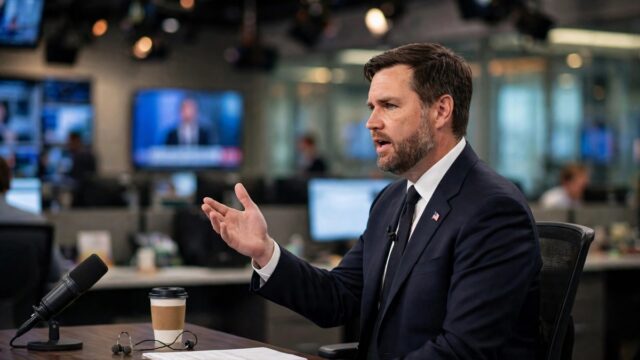
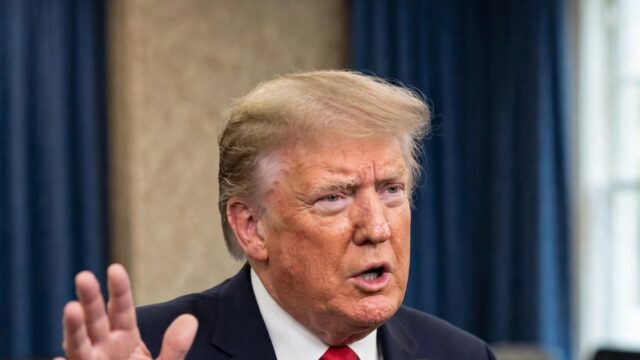
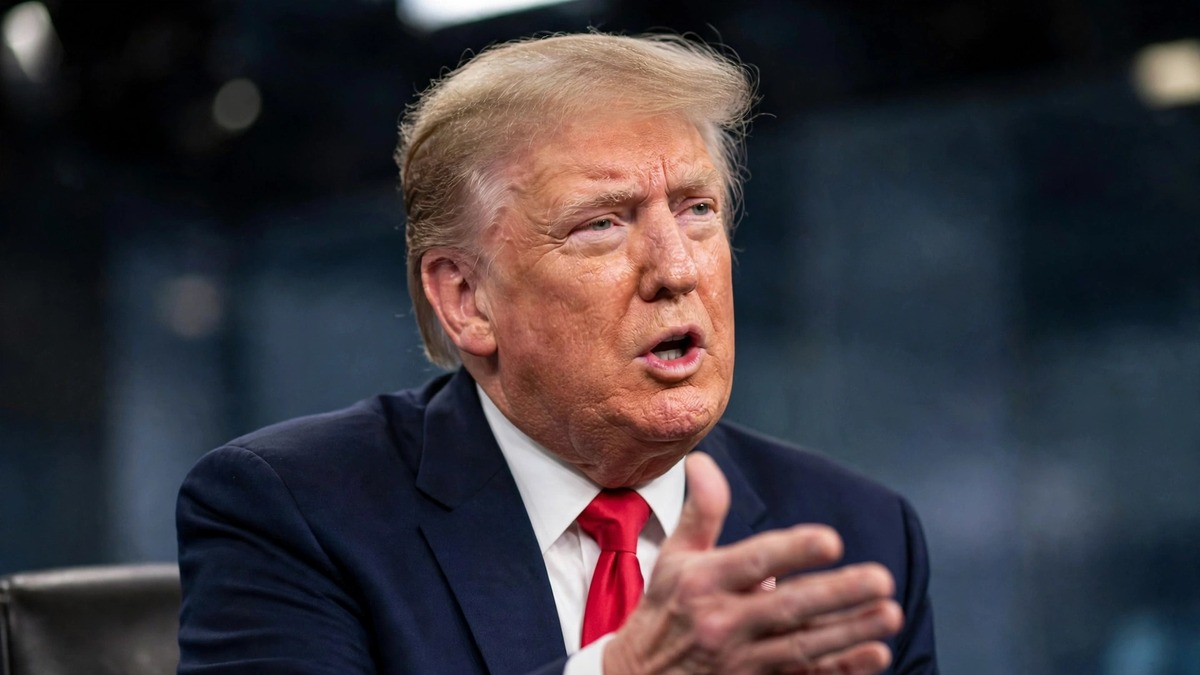
The US president made the remark in his first long interview since his party lost the midterm elections, recorded at the White House on Friday and broadcast by CBS 60 Minutes on Sunday. Asked by interviewer Ross Douthat whether he expected the war to end with a free and independent Ukraine, Trump did not answer directly. Instead he predicted the country would come out of the war changed.
“I think we’re gonna have it done, and I think it’s gonna happen and they’re gonna end up with a little bit different shape Ukraine,” he said.
Trump said he believed a settlement was near. “I believe we’re very close to making a deal,” he told Douthat, adding that the war would end soon “and the only reason it’s going to end is because of me.”
Douthat pressed Trump on what stood in the way of peace. Trump pointed to the personal rift between the two presidents at the centre of the war.
“It was the hatred between Zelenskyy and Putin,” he said. “If I had been president that war would’ve never started. Zero chance. But it did start. So I inherited that war.”
Asked whether Russian President Vladimir Putin was stringing him along, Trump replied: “Oh, I don’t think so.” Asked which of the two leaders he trusted more, he declined to choose. “I’d rather not say, but I get along with both,” he said.
Douthat also challenged Trump over his recent decision to ease diesel-related restrictions on Russia, arguing that Washington had taken steps to relieve pressure on Moscow. Trump rejected that reading of the move.
“I didn’t lift diesel sanctions. I made it possible for Russia to give not us, but to the world — thousands and thousands of barrels of oil, of diesel, which it needed. Didn’t — do any big favor,” he said.
Trump also repeated his longstanding claim that the previous administration sent $350 billion to Ukraine, a figure that has been widely questioned, and said he himself had given Kyiv nothing, instead selling weapons to Europe at full price. Douthat pointed out that the Americans had gained Ukrainian independence in return. Trump disagreed. “You haven’t gotten anything yet. Let’s see how it all works out,” he said.
Why Trump’s ‘different shape’ remark matters
The remark landed one day before American-brokered talks resume. US envoy Steve Witkoff said on Monday that Washington would bring Ukrainian and Russian delegations together in Abu Dhabi on 10 and 11 November to discuss ending the war, post-war security agreements and de-escalation. It is the first three-way meeting of its kind since February. European envoys will also take part, France confirmed on Sunday, after the Kremlin had earlier said the talks would follow a three-way format without them.
Kyiv has drawn a firm line on territory. Zelensky rejects Putin’s demands to voluntarily cede ground Russia has not been able to take on the battlefield, and Ukraine’s constitution protects the country’s territorial integrity, making a formal handover of land illegal. Zelensky has said Russia controls about 19.3 percent of Ukrainian territory, and warned last month that talk of 25 percent would mean surrendering the whole Donbas.
“We are not ready to leave Donbas, to give our territory,” Zelensky told CNN on Friday. “Even the territory which is temporarily occupied, it’s temporarily occupied. It’s not Russian territory. Nobody will recognize it.”
He also warned against negotiating a wider European security deal with Russia before the war itself is settled. “We don’t want to have Yalta 2.0,” he said, referring to the 1945 conference at which Allied leaders discussed Europe’s post-war order. His aide Serhiy Leshchenko said last week that Ukraine’s delegation would insist on “halting the fighting where it’s currently taking place, without giving up any Ukrainian territory.”
Moscow, by contrast, welcomed Trump’s words. Kremlin spokesman Dmitry Peskov said on Monday that Ukraine was “already a different country” geographically. “The realities on the ground are obvious, and hardly anyone can deny them,” he said. Putin has repeatedly demanded that Ukraine withdraw from four regions Moscow claimed to annex in 2022, despite never fully controlling them.
Secretary of State Marco Rubio moved on Sunday to soften the president’s remark, saying Trump was probably referring to progress on security guarantees for Ukraine and Europe. “Nothing’s been finalized yet,” Rubio said, adding that progress might be made in Abu Dhabi, where Kushner and Witkoff will be present.
Trump’s son-in-law and envoy Jared Kushner said US officials held “productive and substantive discussions” with Ukraine, NATO and European partners in Brussels on Thursday about security guarantees for Kyiv and a broader European security framework. He has since outlined a five-point framework for European security ahead of the talks.
Russia’s delegation in Abu Dhabi will again be led by presidential aide Vladimir Medinsky, who has previously demanded that Ukraine accept Moscow’s terms. Ukraine’s team will be led by Rustem Umerov, head of the Foreign Intelligence Service, and includes Presidential Office head Kyrylo Budanov.
The talks open while the fighting continues. Russia attacked the power grid in the Dnipropetrovsk region overnight into Sunday, leaving more than 600,000 people without electricity, according to Zelensky. Kyiv has called for an immediate ceasefire as a first step, and says territorial questions could ultimately be settled only in direct talks between Zelensky and Putin.
What happens next
The delegations gather in Abu Dhabi on Tuesday for two days of talks, with security guarantees, de-escalation and humanitarian issues on the agenda. If they produce a framework, the hard bargaining over territory would still lie ahead. If they stall, the war grinds on — and Trump’s prediction of a reshaped Ukraine will be tested against Kyiv’s refusal to surrender land and Moscow’s demand for more of it.
Sources: CBS News 60 Minutes (original interview transcript), Reuters, Associated Press, CNN, Kyiv Post, Kyiv Independent, Euronews, Ukrainska Pravda. Published: 9 November 2026, Kuala Lumpur time. Note: Trump’s $350 billion figure is his own claim and has been widely questioned; it is not presented here as fact. (Trump’s deportation drive was “too tough”, he admitted in the same interview)