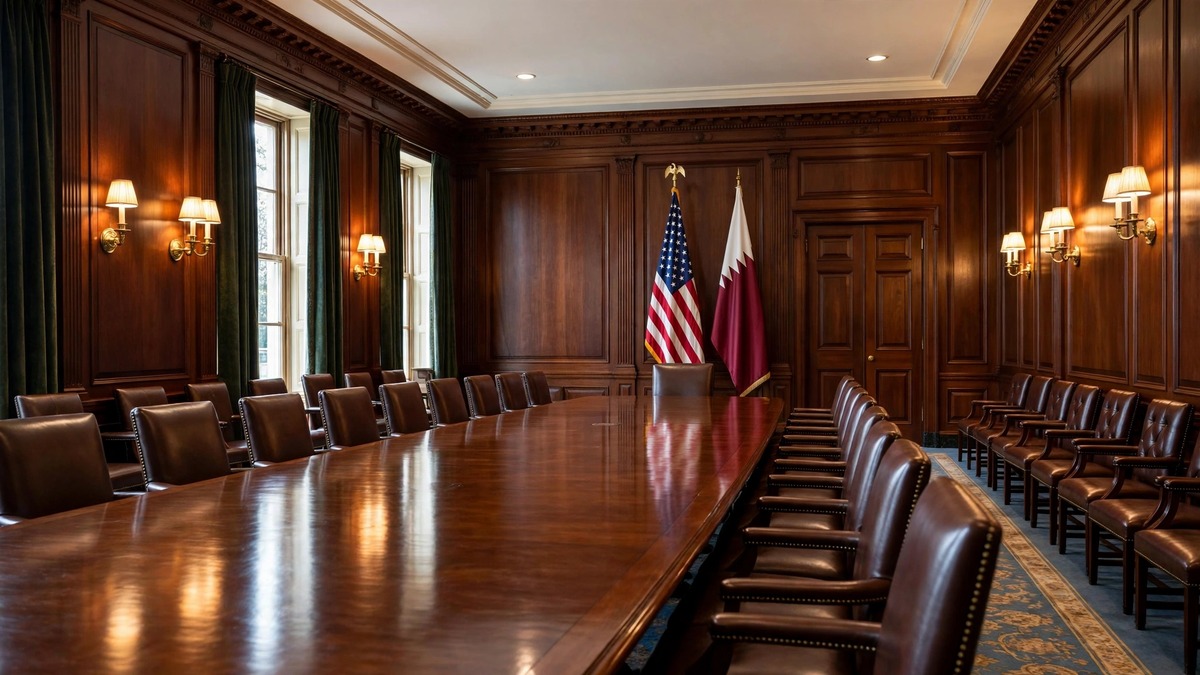
President Donald Trump is due to meet Qatar’s prime minister, Sheikh Mohammed bin Abdulrahman Al Thani, behind closed doors in the Oval Office on Monday, according to the White House schedule. The session is set for around noon local time in Washington, and Vice President JD Vance is also scheduled to hold separate talks with the Qatari leader, a United States official told the Reuters news agency.
Sheikh Mohammed, who also serves as Qatar’s foreign minister, has been the main channel between Washington and Tehran for weeks. The meeting comes after he spoke by telephone with Trump on Friday about efforts to ease tensions in the region.
The visit lands at a delicate moment. The war between the United States, Israel and Iran is now in its ninth month, and the diplomacy meant to end it is struggling. Secretary of State Marco Rubio said on Sunday that negotiations had made no progress, describing Iran’s demands as unacceptable and, in some cases, outrageous. Hours later, the United Arab Emirates’ diplomatic adviser warned that a full settlement “appears difficult” and the region should prepare for a long stretch of uncertainty.
Key Points
- Trump meets Qatar PM Sheikh Mohammed at the White House on Monday in a closed-door Oval Office session; JD Vance will also meet him.
- A senior Qatari official called media reports claiming to reveal the deal’s terms “categorically false” and said both sides are still talking to mediators.
- Iran says its two-day proposal to reopen the Strait of Hormuz remains on the table, with progress depending on Washington’s political will.
- Trump says new strikes are “highly unlikely” if talks produce a strong agreement; Rubio says no breakthrough is close.
- Iran’s foreign minister warns Tehran will “rain down hell” if the United States resumes attacks.
What happened: Qatar PM meets Trump at the White House
Hours before the meeting, a senior Qatari official pushed back hard against reports circulating online that claimed to spell out the terms of a possible deal. The official told Al Jazeera that reports detailing Iran’s uranium enrichment, the release of frozen assets, mediation in Yemen and other issues were “categorically false”. The same official confirmed that both sides are still speaking to mediators about the main details of an agreement to end the eight-month war, and denied Israeli media reports that outlined specific terms of the talks.
The denial matters because the leaked details have been driving much of the public debate in recent days. Qatar has insisted throughout that it is a neutral facilitator, and Doha has repeatedly accused unnamed parties of trying to sabotage the mediation with false claims.
Iran, for its part, used a Monday news conference in Tehran to restate its position. Foreign Ministry spokesman Esmaeil Baghaei said Tehran’s two-day proposal to the United States remains the most practical framework for restoring security in the Strait of Hormuz, and that progress depends on Washington’s political will. He said Iran had not submitted a new proposal and that the existing plan was still on the table.
The proposal, developed with Qatari mediators and based on a seven-day plan Iran announced at the United Nations General Assembly in September, works on a tight clock. On day one, the United States would carry out a set of measures. On day two, the Strait of Hormuz would reopen and navigation would return to normal, allowing negotiations on a final agreement, including on Iran’s nuclear programme, to begin.
Tehran’s conditions are unchanged. Iran wants the United States to lift its naval blockade of Iranian ports, end the war, release frozen Iranian funds and remove recently imposed sanctions. It also wants sanctions imposed after the collapse of a June memorandum of understanding signed in Islamabad to be lifted, the American military presence in the region to be reduced, oil waivers granted in June to be reinstated, and a shipping route in the strait worked out by Iran and Oman to be formally recognised, with all other routes closed. Finally, it demands an end to the war on all fronts, including Israel’s attacks on Lebanon.
Baghaei claimed Washington had already accepted these points as part of the 14-point Islamabad understanding, but later went back on its commitments. He said Iran would sign and carry out only an agreement that fully protected its national interests and legal rights, and thanked Pakistan and Qatar for their mediation, saying Tehran remained in regular contact with both.
Why it matters
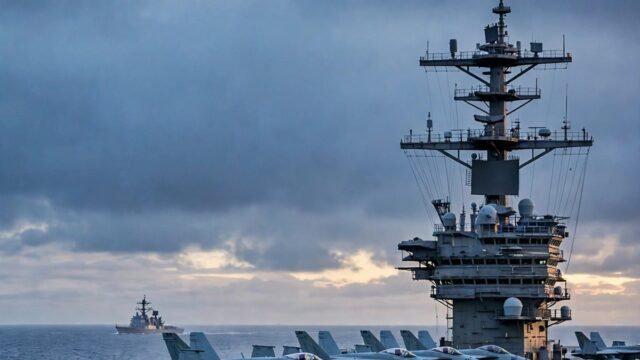
The meeting is the clearest test yet of whether diplomacy can hold. Trump has sent mixed signals for days. In a telephone interview with CNN on Sunday, he said fresh strikes on Iran were “highly unlikely” if Tehran signed “a very strong agreement”. But he also said American forces had three aircraft carriers in the region, “fully locked and loaded”, and had identified 38 bridges and other infrastructure it could hit. On Thursday, he told reporters the United States might have to “destroy” what remains of Iran, adding that people would “know soon enough” if he acted.
Behind the scenes, the pressure to return to fighting is real. American media have reported that Defence Secretary Pete Hegseth and the commander of US Central Command, Admiral Brad Cooper, have been pressing Trump to resume attacks. Axios quoted a US official as saying Central Command was preparing for a resumption of major military operations and was waiting for orders from Washington.
Iran has answered with warnings of its own. Foreign Minister Abbas Araghchi said on Sunday that Tehran’s two-day proposal stands and that American voters are “sick and tired of Israel bamboozling US administrations into forever wars”. He warned that if the United States resumes attacks, Iran’s “alert and battle-hardened warriors” would “rain down hell”. Iran’s security chief, Mohsen Rezaei, warned Trump on Saturday against renewed attacks, saying: “Start war and you will face a devastating response.” The Aerospace Force of the Islamic Revolutionary Guard Corps said on Sunday that its weapons had been “secured for years to come”.
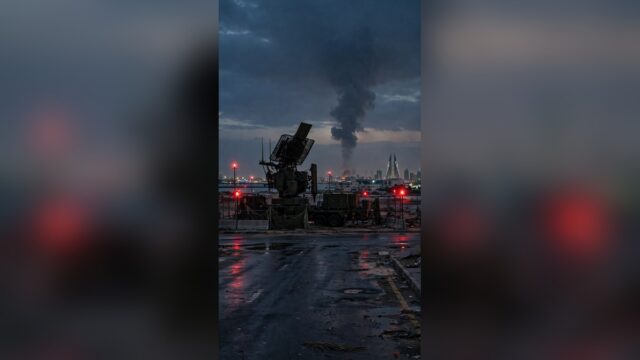
The military picture remains tense. The United States has carried out limited strikes on Iran at least twice in the past week, including against its air defences, and on Saturday it fired on a commercial ship and disabled it, saying the vessel was trying to breach its naval blockade of Iranian ports. Iran, meanwhile, continues to control the Strait of Hormuz, the waterway that carried about one-fifth of the world’s oil before the conflict. The International Atomic Energy Agency says Iran holds 440.9kg of uranium enriched to 60 percent purity, a short technical step from the 90 percent level needed for weapons. Iran has long maintained its nuclear programme is peaceful.
The human cost is also mounting. Iran’s Food and Drug Administration said on Monday that recent American strikes had damaged 15 drug-manufacturing companies and eight distribution firms, and that the country was having difficulty providing 37 out of some 700 types of essential medicine. The UAE’s warning that a full settlement “appears difficult” underlines how far apart the two sides remain, and the United States has answered Iran’s control of the strait with a new land task force to choke off weapons and sanctioned material.
What happens next
All eyes are now on what comes out of the White House meeting. No public readout is expected from the closed session, and neither side has announced a date for a next round of talks. What is clear is that the two sides remain far apart: Washington insists there can be no agreement unless Iran’s nuclear programme is addressed, while Tehran refuses to negotiate over its atomic activities until its core conditions are met.
If the Qatar channel produces movement, the two-day Hormuz plan offers a fast route to a pause: measures on day one, the strait reopened on day two. If it fails, the warnings from both capitals point the other way. Rubio has said Washington would take “defensive” action if there were a clear threat to shipping or American forces, and Iran’s military says it will attack any foreign armed force that tries to enter the strait.
For now, the mediation continues. Qatar says both sides are still talking. Whether Monday’s meeting turns that talking into a deal is the question the region is waiting on.
Sources: Reuters; Al Jazeera; Associated Press; TRT World / Anadolu Agency; Dawn. Published 9 Nov 2026, 18:30 +08 (10:30 UTC). All facts verified against the original source plus at least one independent source; unconfirmed claims are labelled as reported or claimed.