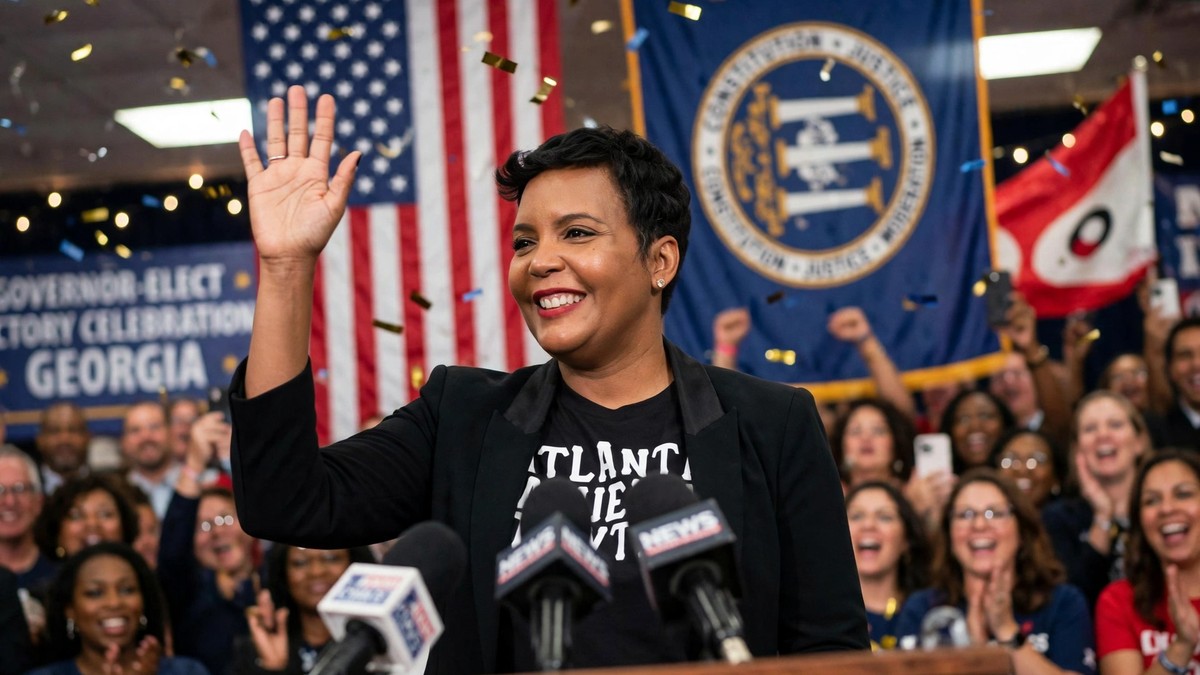
Keisha Lance Bottoms has won Georgia’s governor race, defeating Republican Rick Jackson and making history as the first Black woman elected governor of a US state.
Key Points
- The Associated Press projected Bottoms as the winner at about 9:24 p.m. Eastern Time on 3 November 2026; NBC News and Decision Desk HQ made the same projection.
- Bottoms is Georgia’s first woman governor and its first Black governor, ending 24 years of Republican control of the state’s governor’s office.
- Unofficial results at 9:17 p.m. Eastern Time gave Bottoms 55.5% of the vote against Jackson’s 44.5%; the result is not yet certified.
- Georgia must certify the result by 20 November 2026, and Bottoms will succeed term-limited Republican Governor Brian Kemp.
What happened
Democrat Keisha Lance Bottoms won Georgia’s governor race on Tuesday, 3 November, beating Republican businessman and health care executive Rick Jackson. The Associated Press called the race for Bottoms at about 9:24 p.m. Eastern Time, with NBC News and Decision Desk HQ reaching the same conclusion on election night.
Bottoms, 56, served as mayor of Atlanta from 2018 to 2022 and later worked as a senior adviser to former President Joe Biden. She had run twice before for statewide office in a different form: she was among the women considered as a running mate in 2020, and she built her Georgia campaign around her record running the state’s largest city.
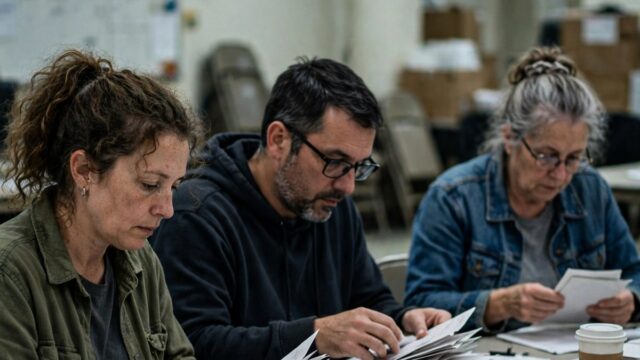
The unofficial count from the Georgia Secretary of State at 9:17 p.m. Eastern Time put Bottoms on 1,825,866 votes, or 55.5%, against 1,463,071 votes, or 44.5%, for Jackson, out of 3,288,937 votes counted at that point. Those figures were unofficial and continued to change as counties finished counting. The formal result will only be final when Georgia certifies it, by 20 November 2026.
Jackson, who put a large amount of his own money into the campaign, had made a late push for the Republican nomination and then for the governor’s office itself. His defeat means Republicans lose an office they have held continuously since Roy Barnes, the last Democratic governor, left office in 2003.
Why it matters
The result is historic on several levels at once. Before this election, only three Black people had ever been elected governor of a US state, and all three were men. No Black woman had ever been elected governor of any state. Bottoms changes that, and she does it in Georgia, a state where every governor since 1776 had been a white man, according to reporting before the election.
It also matters because Georgia is one of the most closely divided battleground states in the country. Bottoms’ win came on the same night that Democrat Jon Ossoff was projected to hold his Georgia Senate seat, giving Democrats a strong night at the top of the Georgia ballot. Read more about that Senate result here.
For Democrats nationally, Georgia’s governor race was a test of whether the party could turn a state it has contested fiercely in recent presidential elections into a state it can win at governor level too. For Republicans, losing the governor’s mansion after more than two decades raises questions about the party’s direction in a changing state.
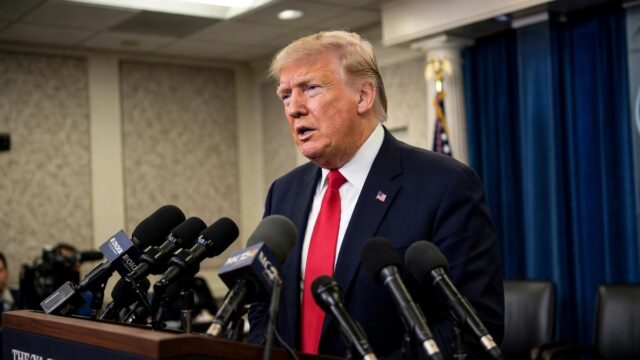
The result also sits inside a wider midterm story. Voters across the United States were choosing all 435 House seats, 35 Senate seats and governors in 36 states, with control of Congress at stake. Early exit polls suggested many voters were dissatisfied with the country’s direction and focused on economic concerns. A related election-night development was President Donald Trump’s claim about future funding for Israel, covered here.
What happens next
Georgia’s counties will finish counting, and the state must certify the result by 20 November 2026. Once certified, Bottoms will prepare to take office in January, succeeding Brian Kemp, who could not seek a third consecutive term.
Her first tasks will be building an administration, setting out her priorities for the state, and working with a legislature where Republicans still hold influence. Supporters will watch for her first appointments and her first policy announcements, while opponents will test how far her mandate extends beyond the governor’s office itself.
The result will also shape the next phase of Georgia politics. Democrats will try to build on a governor’s win and a Senate hold, while Republicans will regroup and decide how to contest the state in the next cycle. For now, though, the headline is the history: a former Atlanta mayor has won the state’s highest office, and done so in a way no Black woman has done before in the United States.
What she promised voters
Bottoms ran chiefly on living costs and public services. Her pledges included fully expanding Medicaid to cover hundreds of thousands more Georgians, raising the state minimum wage to $15 an hour, and lifting pay for teachers, firefighters, police officers and other public employees. She also promised to pause new data-centre developments, stop the installation of additional automated Flock cameras used by law enforcement, and repeal Georgia’s ban on abortion after the sixth week of pregnancy.
The spending gap she overcame
Bottoms won despite a wide spending disadvantage. Her Republican rival, businessman Rick Jackson, put more than $200 million of his own fortune into his campaign, according to multiple reports of the race. Bottoms accused Jackson of trying to ‘buy this election’ with money earned from taxpayers, through his company’s government contracts.
Source: Associated Press (via SourceLine) and USA Today live election coverage, 3 November 2026; Straits Times, 4 November 2026. Vote figures are unofficial Georgia Secretary of State results as of 9:17 p.m. Eastern Time, 3 November 2026, and are subject to certification by 20 November 2026. Verified by 2 sources.