Key Points
- Decision Desk HQ projects Democrat Jon Ossoff has won re-election to the US Senate in Georgia, defeating Republican Mike Collins.
- The Associated Press called Virginia for Democrat Mark Warner, its first Senate call of the night, for a fourth term.
- Ossoff, 39, was the only Democratic senator seeking re-election in a state Donald Trump won in 2024.
- Democrats need a net gain of four Senate seats to take control; Senate control is still undecided.
Decision Desk HQ projected on election night, Tuesday 3 November 2026, that Jon Ossoff will keep his Georgia Senate seat, turning back a challenge from Republican Representative Mike Collins, the candidate backed by President Donald Trump. NBC News also projected an Ossoff win.
The Associated Press had not yet called the Georgia race in its early snapshot, when only a small share of precincts had reported, so the Georgia result stands as a projection, not a final certified count.
Separately, the Associated Press called Virginia for Democratic Senator Mark Warner over Republican Bert Mizusawa, the first Senate race called on election night, giving Warner a fourth term.
The two early Democratic holds matter because Democrats must gain four seats net to win the Senate, where Republicans began the night with a 53-47 majority. Holding Georgia — a state Trump carried in 2024 and a top Republican target — keeps the Democrats’ path to a majority alive, but it does not settle control of the chamber.
All 435 House seats and 35 of the 100 Senate seats were contested in the 2026 midterms, and further Senate and House races will be called through the night and in the days ahead as counting continues. Official certified results will follow from state election officials.
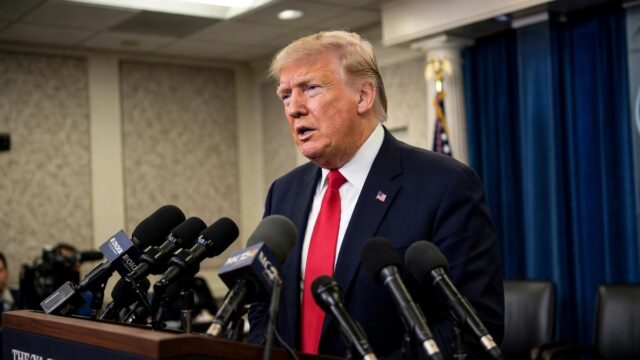
Caption: AI-recreated image of Jon Ossoff at an election-night podium. This is an AI-generated recreation, not the original news photo.
The margin
Decision Desk HQ projected Ossoff the winner on election night, when early returns showed him far ahead with only a small share of precincts reporting. The Associated Press later called the race with Ossoff on 62.2% of the vote and 38% of ballots counted, according to reports of the AP call. That early share is not the final margin: early returns can skew depending on which counties report first, and the final margin is settled only when counting is complete.
Who Mike Collins is
Collins, a four-term congressman from Georgia’s 1st District, carried President Donald Trump’s endorsement. He reached the general election after a three-way Republican primary and a runoff, in which Trump backed him over former college football coach Derek Dooley, who had the support of Governor Brian Kemp. Collins campaigned on the president’s agenda, including immigration enforcement and smaller government, while Ossoff campaigned on affordability, health care and accountability.
The fundraising gap
Ossoff raised about $126 million more than Collins, according to Reuters’ reporting of the race, while Collins was backed by about $18 million in outside spending. Federal Election Commission figures cited by Decision Desk HQ put Ossoff’s fundraising through mid-October at roughly $136.6 million, against about $12.9 million for Collins.
Why 2028 is already mentioned
Ossoff is widely seen as a potential 2028 presidential candidate, Reuters reported — one reason a Senate win in a state Trump carried in 2024 by 2 percentage points drew national attention. Democrats entered election night needing a net gain of four seats to take Senate control from a 53-47 Republican majority, so holding Georgia mattered beyond the state itself.
Sources: Decision Desk HQ / Bloomberg Law, NBC News, Associated Press, Nikkei Asia | 4 November 2026.