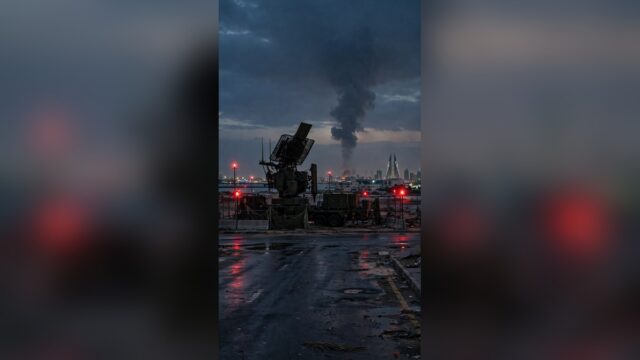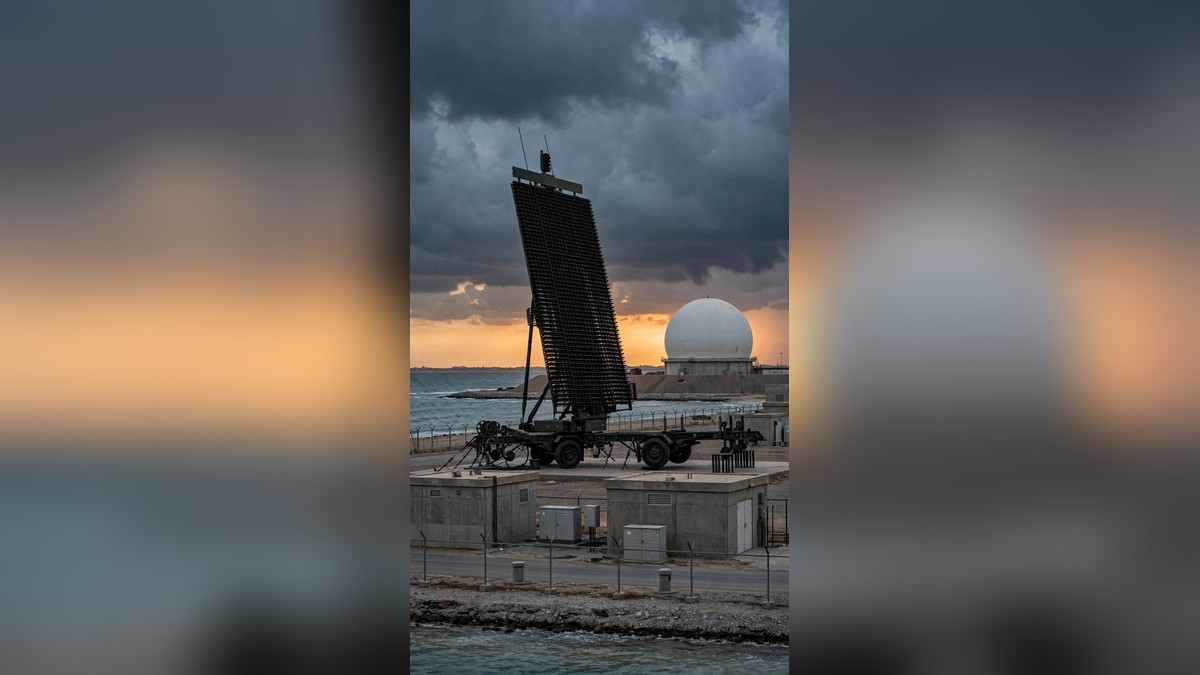
Iran’s Revolutionary Guard said on Friday it struck a US early-warning radar in Bahrain, the first such claim against American military assets in a Gulf state since early September.
Key Points
- Iran’s Revolutionary Guard says its Aerospace Force hit a US early-warning radar in Bahrain early on Friday.
- The Guard says the strike answered an “enemy” air attack on a telecom tower in the southern Iranian port city of Sirik on Thursday.
- It is the first such claim against US military assets in a Gulf country since early September, according to Reuters.
- Neither Washington nor Bahrain has commented, and the claim has not been independently verified.
- Hours earlier, Trump said Gulf allies had asked him to hold off on further large-scale strikes on Iran.
What happened
The claim arrived in the early hours of Friday in a statement from the Islamic Revolutionary Guard Corps, carried by the semi-official Tasnim news agency and the Guard-affiliated Fars agency. In its wording, the Guard’s Aerospace Force had “targeted and destroyed” an American early-warning radar on the island of Bahrain a few hours earlier. Mehr News Agency, which published the statement as the Guard’s statement No. 22, put the same point in its own headline: the radar was destroyed in retaliation for an air attack on a telecommunications tower in Sirik.
The Guard presented the strike as a direct answer to what happened the day before on Iran’s southern coast. Iran’s state news agency IRNA reported on Thursday, citing official sources, that the port city of Sirik in Hormozgan province had been hit by “enemy fire”. Tasnim had first reported a series of explosions in the area, saying at the time that their cause was not clear. Neither report named the attacker, and neither gave details of what was hit, how much damage was done, or whether anyone was hurt. Sirik sits on Iran’s southern shoreline, east of the Strait of Hormuz, and is home to a Revolutionary Guard navy base.
The Guard’s statement carried a warning with it. Quoted by Tasnim, it said: “This serves as a serious warning to the aggressor enemy to cease its aerial provocations and oil smuggling in the Strait of Hormuz. Should these violations and acts of aggression recur, the IRGC Aerospace Force stands in full readiness to engage without limits.” The statement also described the operation as a response to “aerial aggression” against the Sirik tower, and Press TV, reporting the same statement, said the radar belonged to the “terrorist US military” and the “aggressor American forces”.
Three things about the claim need to be kept separate from the claim itself. First, no evidence of the strike or of any damage has been published, and the Guard gave no details of the weapon used. Second, neither the United States nor Bahrain had commented by the time the claim was reported. Third, the description of the radar as “destroyed” comes from the Guard’s own agencies; Reuters, which carried the story as a claim, said only that the Guard said it had “targeted” the radar. Bahrain is home to the headquarters of the US Navy’s Fifth Fleet, which makes any strike there a different kind of event from an attack on shipping at sea.
Why the Bahrain radar claim matters
The timing is what makes this claim land harder than the usual exchange of threats. It comes at the end of a week in which both sides have been raising the stakes in words while the fighting has stayed limited. Only a day earlier, President Donald Trump said he would not hesitate to launch new military strikes against Iran, and that action could come immediately if needed. Hours before that, he had said the United States no longer needed a deal with Iran at all, and he had pulled Vice President JD Vance off the negotiations, telling him to turn his attention to domestic issues instead. The two moves together left the diplomacy track with no visible driver.
Washington’s own message is split. Secretary of State Marco Rubio said after G7 talks in Paris that there was no need for major new combat operations, because the sanctions and the naval blockade were inflicting extraordinary economic pain on Tehran. Trump, in an interview at the White House with Stephen A Smith, gave a different account of why the strikes had paused: Saudi Arabia, Qatar, Kuwait, the United Arab Emirates and Bahrain had all asked him to hold off on further large-scale attacks. “Saudi Arabia has asked me to please just let it be the way it is now for a while,” he said, adding that he was not sure he agreed with them. Asked whether he would have launched further attacks without those requests, he answered: “Yes, I would.” He also claimed he could destroy Iran’s energy infrastructure, its bridges and its manufacturing capacity within three days, and that he had so far largely spared them.
Tehran, for its part, has been answering threat with threat all week. On Wednesday, President Masoud Pezeshkian accused the United States of conducting “diplomacy through threats” while invoking the “mother of all bombs”, and the country’s military chief warned of “far more deadly blows” if Iran were attacked again. The Guard’s missile programme chief said the same week that the country’s missile development would continue despite threats and sanctions. And on Thursday, the Guard’s navy said two supertankers had been disabled by explosions in the Strait of Hormuz, the latest in a run of tanker incidents in the Strait of Hormuz this week, in which vessels have been hit by suspected mines and unidentified projectiles.
The radar claim fits that pattern, but it goes one step further. Hitting shipping in the Strait is something Iran has done repeatedly since the war began on February 28. Claiming to have hit an American military installation on the soil of a Gulf ally is not. If the claim is true, it means Tehran is willing to take the fight directly to US assets ashore in the Gulf, and to do so in retaliation for a strike on its own territory. If it is not true, or if the damage is far less than claimed, it still serves as a public warning that the Guard is watching the skies over its coast and is prepared to answer. Either way, it puts Bahrain, which hosts the Fifth Fleet and sits minutes by air from Iran’s southern coast, at the centre of the next decision.
Oil markets were already moving on the wider tension. Brent crude held near $96 a barrel on Friday after rising more than 3 percent the day before, as traders weighed Trump’s remarks against the run of attacks on vessels in the Strait. The waterway carries about a fifth of the world’s oil and gas, and every new incident there pushes the price of the risk higher.
What happens next
The first thing to watch is whether Washington or Manama answers the claim at all. A confirmation, even a partial one, would turn a statement into an event and would raise immediate pressure on Trump to respond, only hours after he said he would strike again if he chose to. A denial, or silence, would leave the claim where it stands: unverified, but useful to Tehran as a warning and to its domestic audience as proof of action.
The second thing to watch is whether the Guard follows through on its own language. Its statement said its Aerospace Force stood ready to act “without limits” if the violations recurred. The test of that will be the next reported strike on Iranian soil, or the next incident in the Strait, and whether the answer is another claim, another warning, or something that can be seen.
The third is diplomacy, which has less and less room to move. With Vance pulled off the talks, Qatar is still mediating, and Iran is still holding to its seven conditions, including an end to the naval blockade and sanctions, before it will reopen the Strait or resume formal negotiations. Neither side has moved. The gap between Trump’s claim that he controls the Strait and Tehran’s claim that it can strike American radar in Bahrain is where the next round, if it comes, will begin.
Source: Reuters, Al Jazeera, Press TV, Mehr News Agency, Iran International | 13 November 2026, 12:30 +08