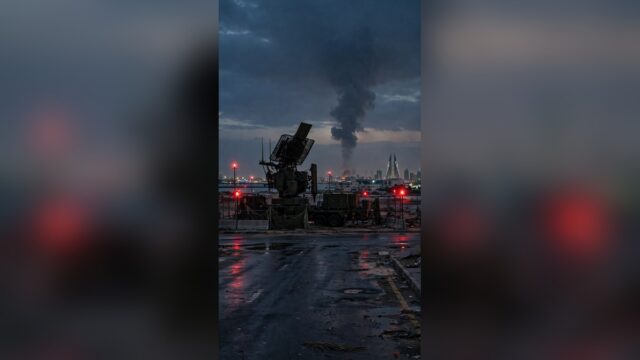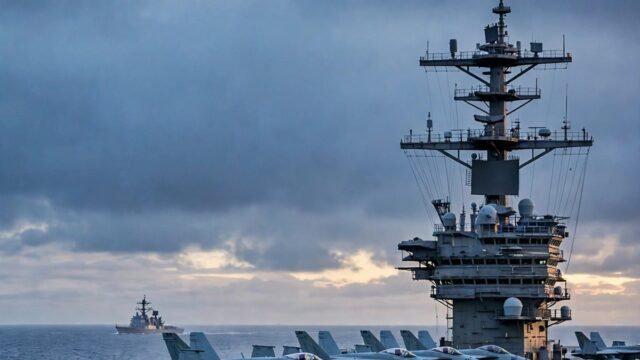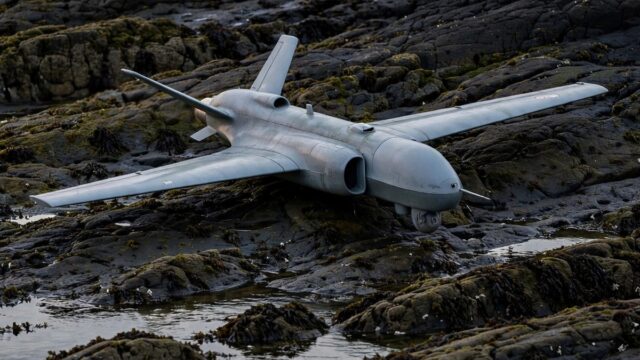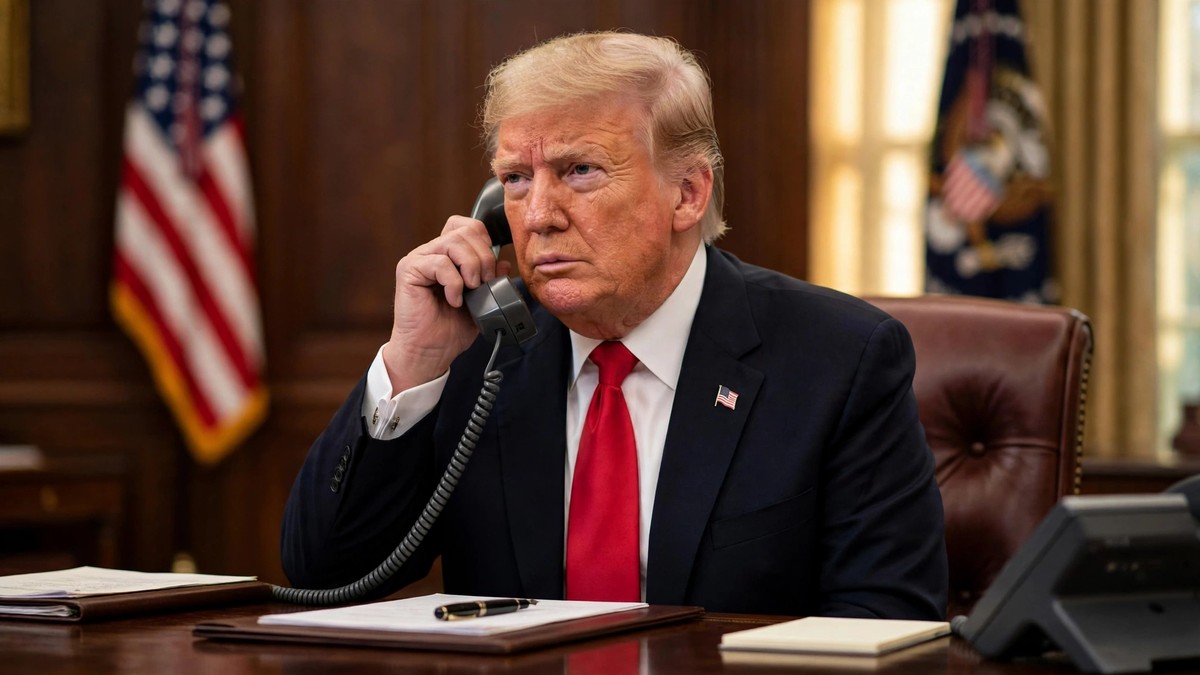
Donald Trump has warned that a renewed American attack on Iran could be about five times bigger than the first strikes, while insisting Gulf states prefer the current blockade and talks to another war.
Key Points
- Trump told C-SPAN’s Washington Journal in a phone interview on Monday night that another US strike on Iran could be “approximately five times bigger than the first hit”.
- He said Qatar, Saudi Arabia, the UAE, Bahrain and Kuwait would rather keep the current approach — the naval blockade and the new land task force — than see another major attack.
- He said the US “may have to hit” Pickaxe Mountain, an underground nuclear site, if Iran acts there, but added that Washington sees no such activity now.
- He claimed Iran wants a deal with Washington, though Tehran has not confirmed that and its top security official has demanded the US “surrender” to seven conditions.
- The warning follows his White House briefing on Monday, when he called the war “effectively over” militarily.
What happened
The president spoke by phone to C-SPAN’s Washington Journal Primetime on Monday night, hours after his surprise appearance in the White House briefing room, where he had declared the war on Iran “effectively over” and said further strikes looked unlikely for now.
On C-SPAN he kept the threat open. Asked how the conflict might end, he said the United States could finish it quickly or over a short period, depending on how events unfold. “We could knock it out fast, or we could knock it out over a short, not a long period of time,” he said.
He then explained why he was holding back. The Gulf states that sit closest to Iran, he said, would rather the present course continue than face another large attack. “The reason I’m doing it this way is because in speaking with Qatar … Saudi Arabia, UAE, Bahrain, Kuwait — basically the neighbors who were attacked pretty violently, by the way — they’d rather do it this way rather than another hit, which would be approximately five times bigger than the first hit,” he said.
He added that he shared their preference, and repeated his claim that Tehran wants an agreement even though it will not say so in public. “I can tell you that Iran would like to make a deal, and we’ll find out whether or not that’ll happen,” he said.
Why the Iran strike warning matters
The warning lands a day after Trump said the war was militarily over, and it shows both halves of his position at once: no new strikes are planned, but the threat of a far larger one is being kept on the table. That is the leverage behind the talks Qatar is mediating, and it is also the risk if the talks stall.
Pickaxe Mountain is the sharpest part of the warning. Trump has threatened the site before — in July he warned the United States could destroy it, and he raised it again on 31 October and in his 60 Minutes interview, broadcast on 8 November, saying Iran’s nuclear material lay buried under thousands of tonnes of rock after earlier US attacks. On C-SPAN he repeated the threat, this time conditionally: “We may have to hit Pickaxe Mountain if they’re going to do something there. We don’t see that.” He said the United States was watching the site closely and had not seen evidence of renewed activity there.
The complex is a tunnel system under a peak south of Natanz, known locally as Kuh-e Kolang Gaz La, estimated at 80 to 100 metres under rock. Iran says it was built to assemble advanced centrifuges and shield them from sabotage; Western intelligence assessments suspect it could serve as a covert enrichment site. Inspectors from the International Atomic Energy Agency have never been allowed inside.
He also claimed the earlier campaign had destroyed Iran’s navy, air force, air defences and leadership, telling C-SPAN: “We won Venezuela, and we won Iran. We wiped out their Navy, we wiped out their Air Force, we wiped out everything — their anti-aircraft; we wiped out their leaders.” Those claims about the scale of the damage have not been confirmed by any outside source.
The warning also sits inside a crowded week at home. Trump told C-SPAN he would be disappointed if Republicans in the House voted to impeach Defence Secretary Pete Hegseth over the war, days after Representative Thomas Massie forced an impeachment vote.
Tehran, meanwhile, has not accepted Trump’s account of the talks. Its top security official, Mohsen Rezaei, has called on Washington to “surrender” to seven Iranian conditions and accused the United States of spreading “fake news” about “imaginary talks”. President Masoud Pezeshkian has said Iran is open to talks but will not surrender to force and bullying. No statement from Tehran backs Trump’s claim that it wants a deal.
What happens next
For now the status quo holds: the naval blockade continues, the new land task force Operation Iron Gate keeps working to cut off weapons and sanctioned goods, and Qatar keeps mediating. Trump has said the Gulf states back that course, and the two-day ceasefire proposal Qatar carried from Tehran is still undecided.
The next test is whether the talks produce anything concrete. If they do, the “five times bigger” threat stays a warning. If they break down, the same interview shows how quickly it could become an order — and Pickaxe Mountain is now the named target. Hegseth is also due to hold a Pentagon news conference at 21:00 +08 on Tuesday, where the impeachment bid and the war are both expected to come up.
Sources: Al Jazeera, Arab Times Online, Kurdistan24, ANI, Gulf News, Minute Mirror, Inquirer, Al Estiklal. Published 10 November 2026, 15:30 +08.